People finishing addiction treatment in Jefferson County, Wisconsin have long faced an uncomfortable choice: stay sober or stay close to home. For years, the county of about 85,000 people wedged between Madison and Milwaukee has had almost no certified recovery housing of its own, meaning residents leaving detox or inpatient programs typically had to relocate to Dane, Waukesha, or Milwaukee counties to find a supervised, substance-free place to live.
Jefferson County Human Services is now moving to close that gap, seeking a developer for a new sober living facility in the county. Key details including the facility's planned size, bed count and budget are not yet public, and county Human Services officials would need to be contacted for specifics.
The timing reflects both mounting need and new money. Wisconsin receives roughly $780 million from national opioid settlements over 18 years, with 70 percent flowing directly to counties. Jefferson County now has settlement funds available and is under pressure to deploy them on tangible recovery infrastructure. Sober living homes, where residents live together in a structured, substance-free environment for months after completing treatment, have become a recognized part of that infrastructure. Research has consistently shown that people who leave treatment without stable, drug-free housing relapse at dramatically higher rates.
Source: NationGraph.
Jefferson County's problem is compounded by geography. Close enough to larger cities that residents can seek help elsewhere, the county has historically been too small to build its own recovery ecosystem. That has meant disrupted family ties, lost jobs and weakened community connections for people trying to rebuild their lives, exactly the factors that recovery specialists say matter most for long-term sobriety.
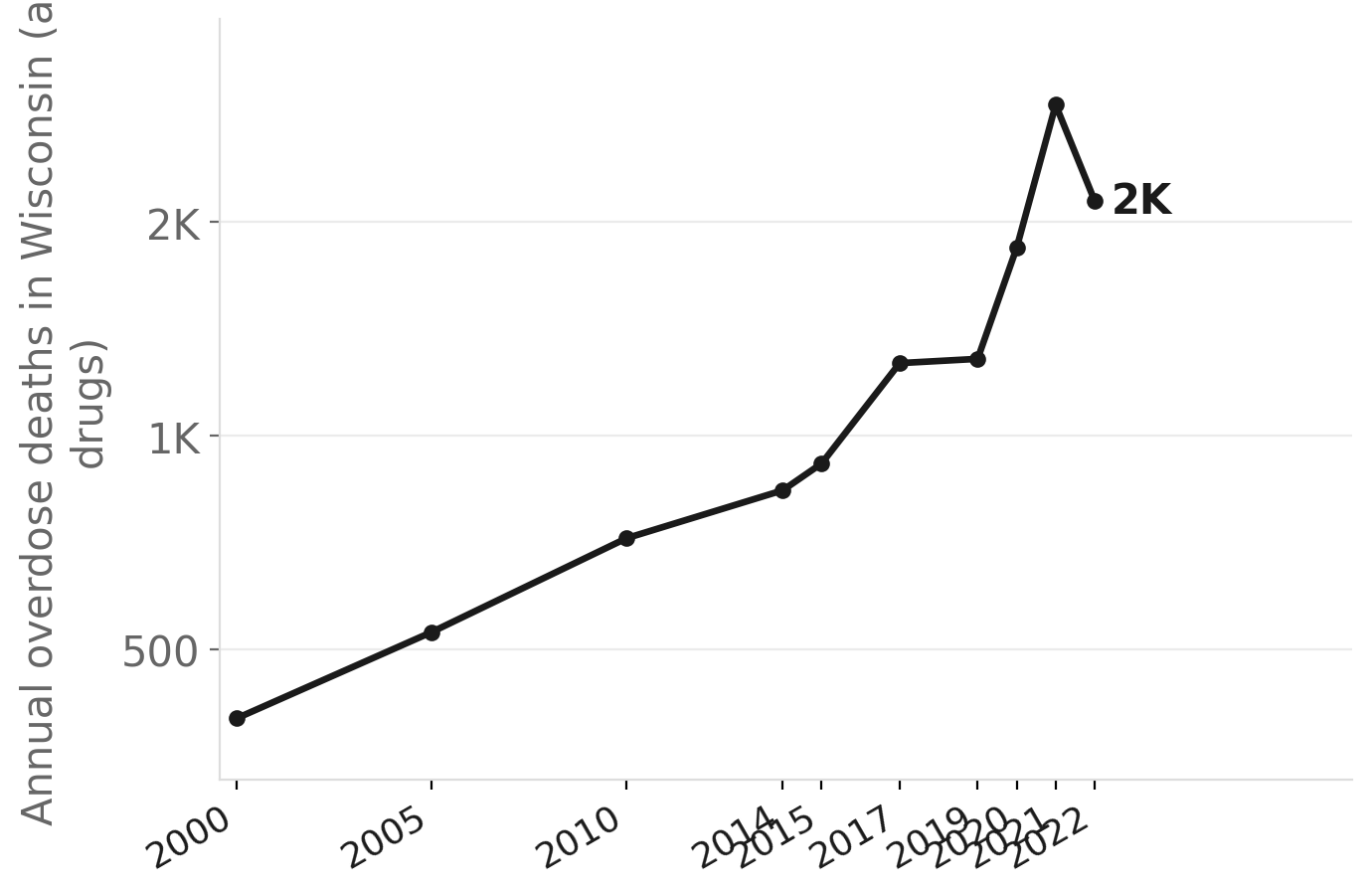
Methamphetamine has been as significant a driver of local need as opioids. Rural Wisconsin counties, Jefferson included, have seen meth-related deaths triple between 2015 and 2022, and local treatment providers have consistently identified meth as a pressing concern alongside fentanyl and heroin.
Wisconsin passed legislation in 2021 authorizing the state Department of Health Services to certify recovery residences, and a statewide network has been slowly expanding. A county-backed facility in Jefferson would represent a formal step toward keeping residents in recovery rooted in their own communities rather than displaced to larger metro areas during a vulnerable stretch of their lives.
How quickly the project moves will depend on what proposals come in and what the county decides to fund.