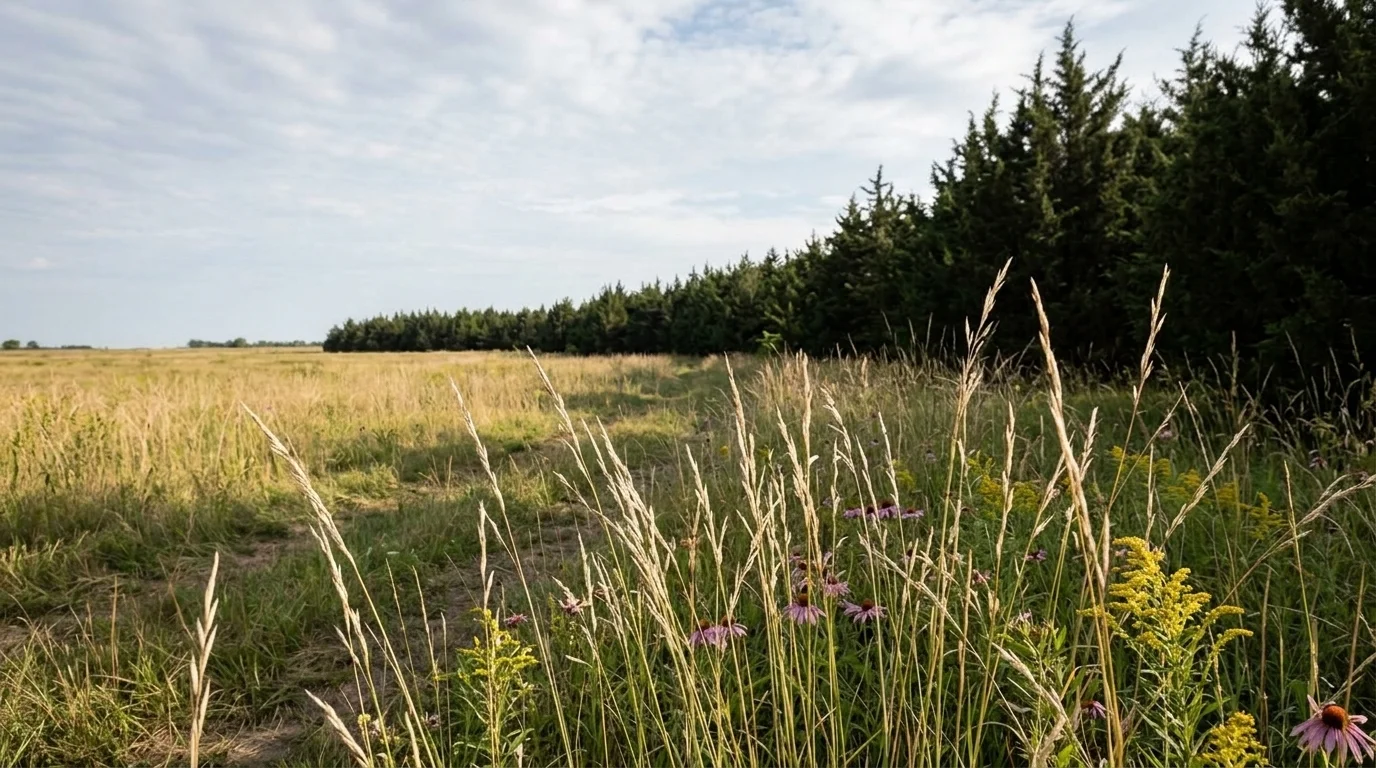
A small patch of native prairie in Humboldt County, Iowa has survived the plow for thousands of years, but it is losing ground to something the pioneers never brought: trees.
The Iowa Department of Natural Resources is hiring contractors to clear up to 9 acres of encroaching trees and brush from a remnant prairie on the East Fork Wildlife Management Area, on land known as the Behounek Tract. The project is listed on the state's procurement portal and was posted Aug. 5.
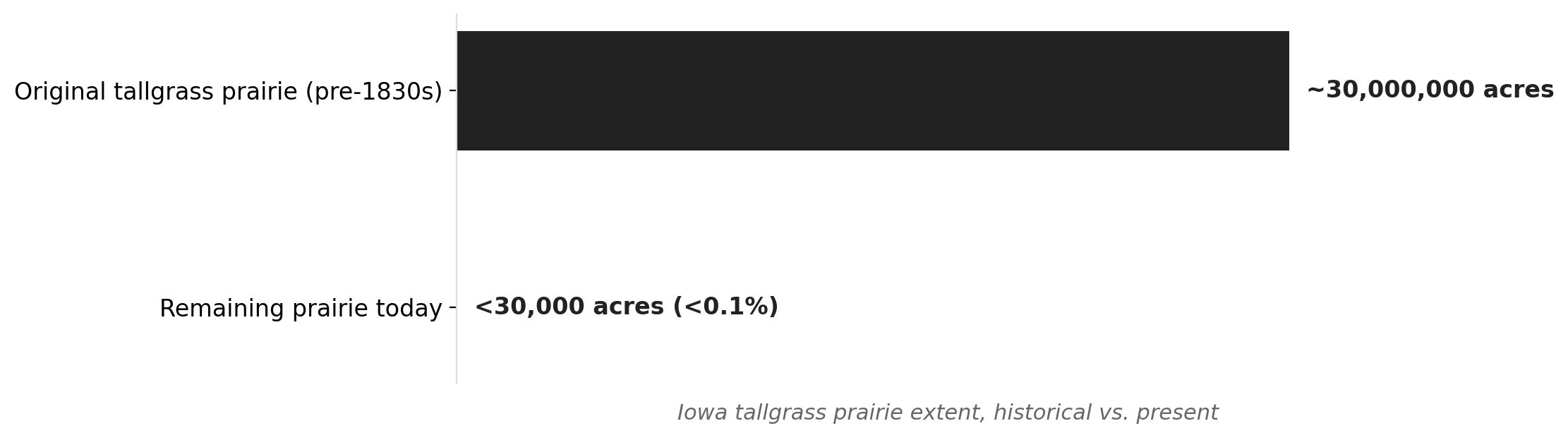
The term "remnant prairie" carries significant weight. It means land that was never broken by a plow, retaining the original soil biology and native seed banks that accumulated over roughly 10,000 years since the last glaciation. Iowa was once about 80% tallgrass prairie, some 30 million acres. Today, less than 0.1% of that survives, making it one of the most endangered ecosystems on earth, rarer by that measure than tropical rainforest. On the Des Moines Lobe in north-central Iowa, where flat, fertile terrain made agricultural conversion nearly total, genuine remnants are extraordinarily scarce.
Source: NationGraph.
The prairie at the Behounek Tract hasn't been lost to farming. It's being smothered. Without the wildfires and bison grazing that historically kept the landscape open, trees such as eastern redcedar, honey locust and elm have been advancing steadily, shading out the sun-dependent grasses and wildflowers below. The native plants are still alive in the soil and root systems, but they can't compete in the dark.
Tree and brush removal is typically the opening move in a longer restoration sequence. Prescribed burns, invasive species control and overseeding usually follow over the course of years. The Behounek Tract name suggests the land came to the DNR from a private family, a common pattern in Iowa conservation where landowners sell or donate parcels specifically to be restored.
The work is funded through a mix of hunting license fees, the federal Pittman-Robertson excise tax on firearms and ammunition, and Iowa's Resource Enhancement and Protection program. Conservation advocates have long argued that REAP is chronically underfunded by the legislature relative to its $20 million annual target, making projects like this one in Humboldt County a visible measure of how far the state's restoration ambitions stretch.
Once a contractor is selected, the clearing work will mark the beginning of what could be a years-long effort to bring the prairie back to something resembling what covered this part of Iowa before the steel plow arrived.