Indiana's poultry farmers have faced a grim reality since 2022: the first sign that bird flu is nearby is often a flock already dying. A new $803,771 federal grant aims to change that by building an early-warning system that detects the virus in the environment before it ever reaches a barn.
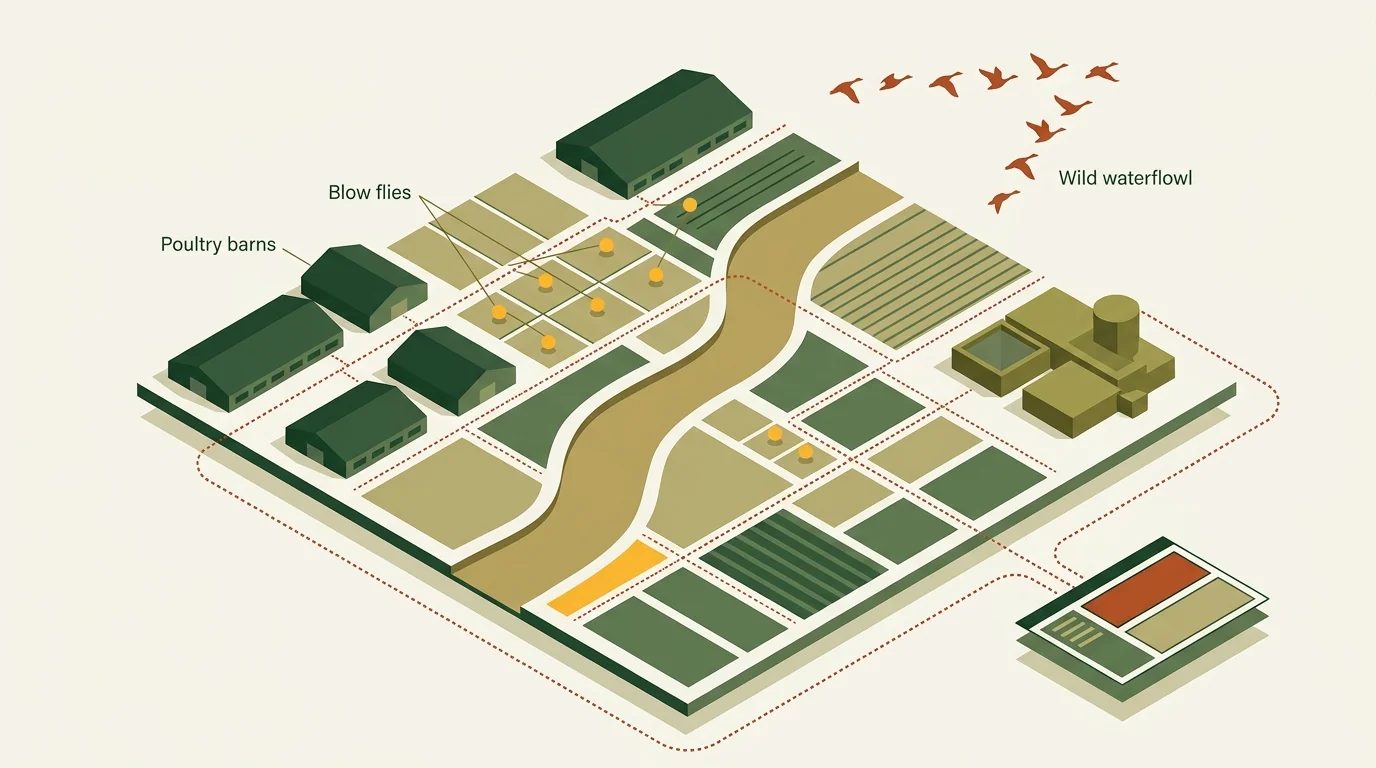
The project, funded through a USDA cooperative agreement, will monitor surface water, wastewater from treatment plants, and an unlikely biological sampler: blow flies. Because these flies feed on animal waste, they pick up genetic traces of whatever pathogens wildlife in an area are shedding. By testing the flies for avian influenza DNA, researchers can get a read on which wild species are infected and where the virus is circulating, days or weeks before a poultry flock shows symptoms.
The approach borrows from a surveillance method that proved its value during COVID-19, when public health officials used wastewater monitoring to detect community spread before clinical testing caught up. Indiana researchers will apply the same logic to avian flu, analyzing environmental samples for influenza genetic material and using DNA sequencing to identify which wildlife species are the source.
Source: NationGraph.
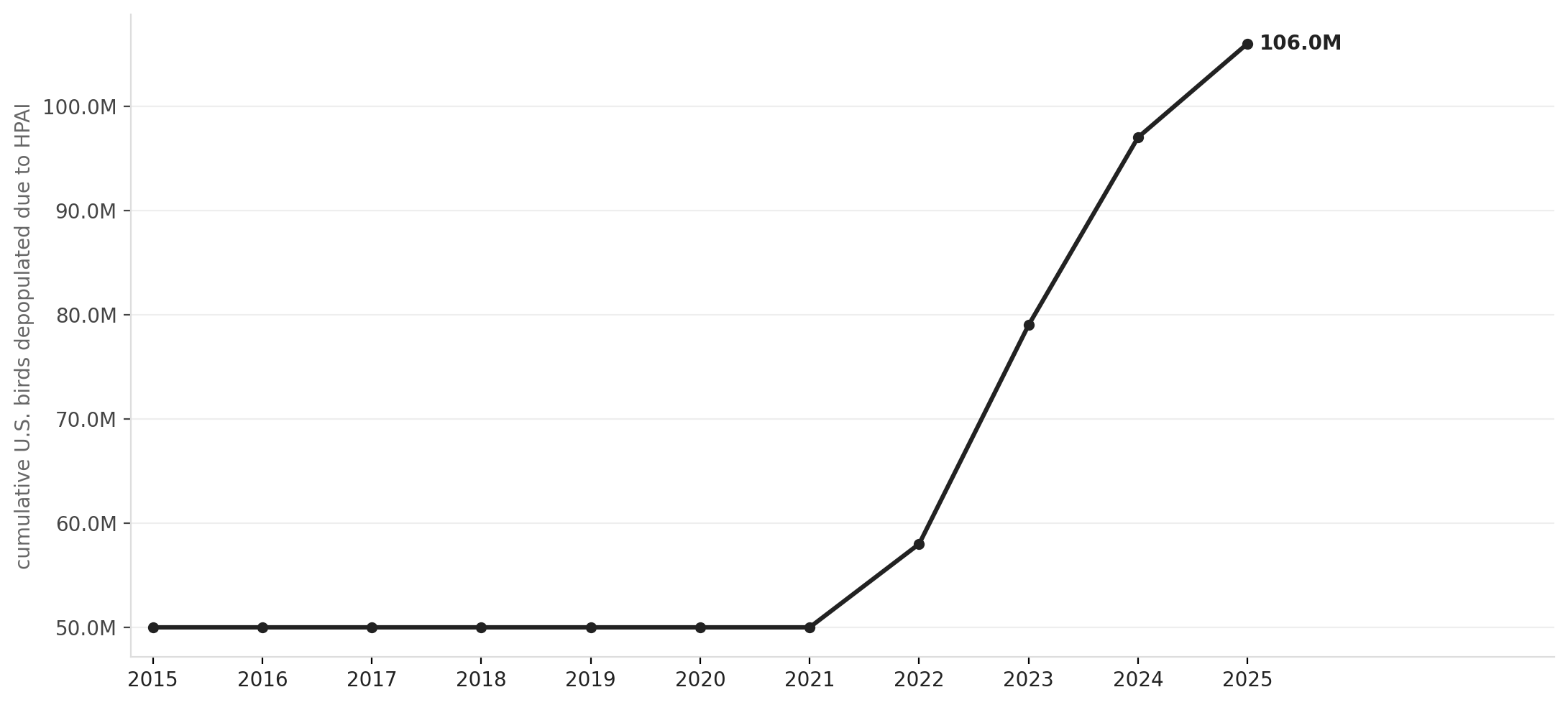
The stakes for Indiana are hard to overstate. The state is the fourth-largest poultry producer in the country, with turkey and egg operations concentrated in Dubois, Daviess, and Jasper counties generating more than $2 billion in annual economic output. Indiana also sits at the intersection of two major migratory flyways, making its farms permanently exposed to wild waterfowl carrying the virus. The state suffered significant losses in the 2022 outbreak wave, including a devastating hit to a large Dubois County turkey operation. Nationally, more than 100 million birds have been depopulated since 2022, the worst animal disease outbreak in U.S. history, and egg prices hit record highs in early 2025 as a direct result.
The current detection system is reactive by design: farmers learn HPAI is in the area when a nearby flock tests positive, which means the virus has already broken through somewhere. This project, developed in partnership with the Indiana Department of Natural Resources, the Indiana Board of Animal Health, and the Indiana State Poultry Association, is designed to push that warning much earlier in the chain.
Results will feed into a public-facing real-time dashboard that commercial poultry farms can check to see whether the virus is circulating in wildlife near them, similar to the COVID wastewater dashboards that health departments used widely in 2021 and 2022. The dashboard is intended to give farmers time to tighten biosecurity before an introduction happens rather than after. Researchers will also run controlled lab studies on how long the influenza virus persists in flies under different conditions, which is essential groundwork since fly-based wildlife disease monitoring has rarely been deployed at this scale.
The system is also built to travel. USDA designed the platform to be scalable so other states can adopt it, a relevant consideration given that avian flu has now reached nearly every state. Arkansas and Missouri have both faced significant poultry outbreaks in recent years, as Indiana University is separately exploring UV-based barn protection in parallel with environmental surveillance efforts like this one.
Researchers will work through the field and lab validation phases before the dashboard goes live for Indiana farms. The timeline for that rollout has not been publicly specified, but the project's focus on identifying the best sampling locations and frequencies suggests the early stages will be focused on calibrating the system before farmers see results in real time.