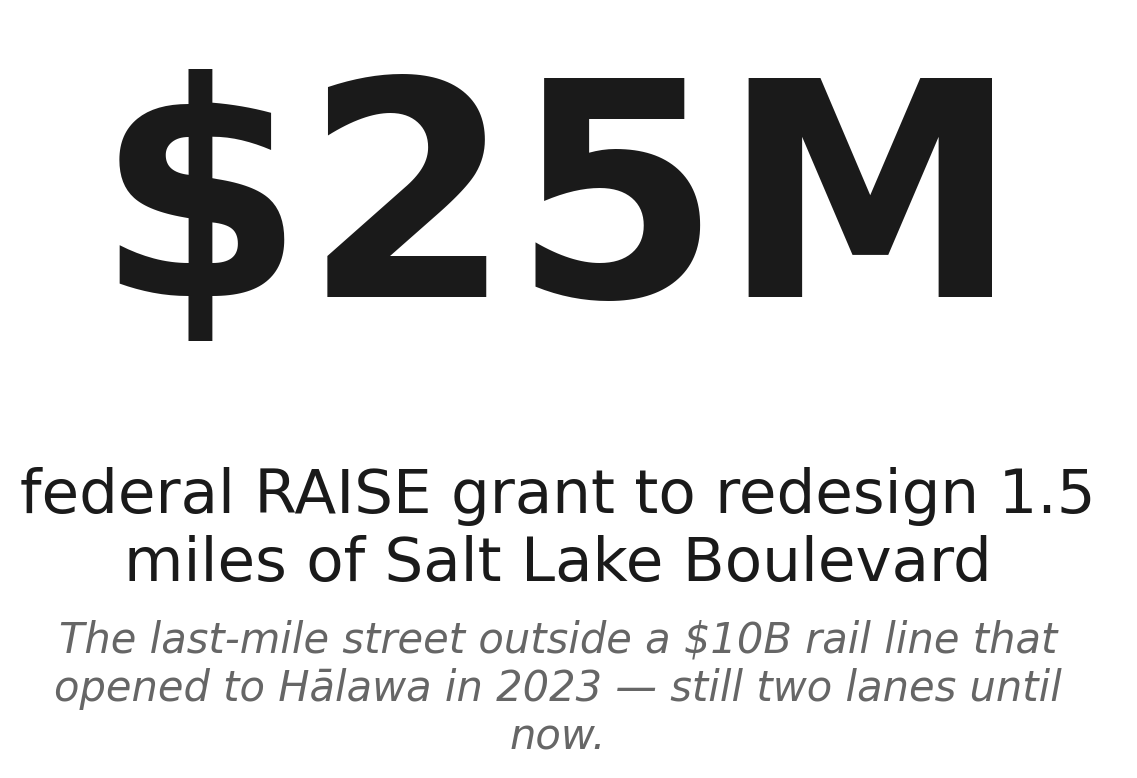
Federal transportation grants to Hawaii have surged 2,270% year over year, from roughly $1.05 million in the same 90-day window last year to $25 million today. The entire increase traces to a single award: a $25M RAISE grant, announced September 3, 2026 by Senator Brian Schatz, for the Salt Lake Boulevard Complete Streets Phase 3B project in Honolulu.
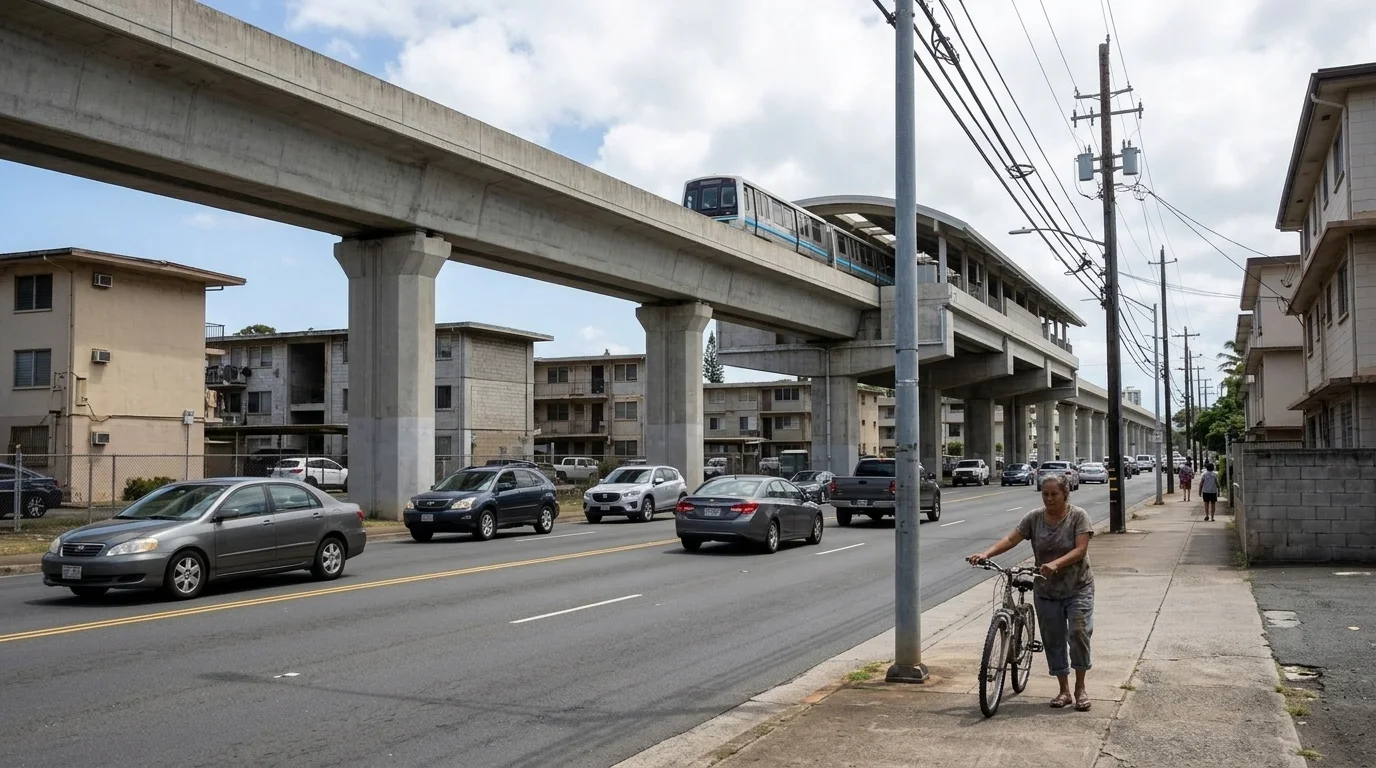
The dollar figure is striking, but the story it tells is more specific than a funding surge. Honolulu spent the better part of two decades and roughly $10 billion building the Skyline, the first new heavy-rail line opened by a major American city in years. The western terminus, Hālawa Rail Station, has been operating since 2023. The main boulevard feeding into it, Salt Lake Boulevard, has remained two lanes. The RAISE grant is the city finally building the door to the train.
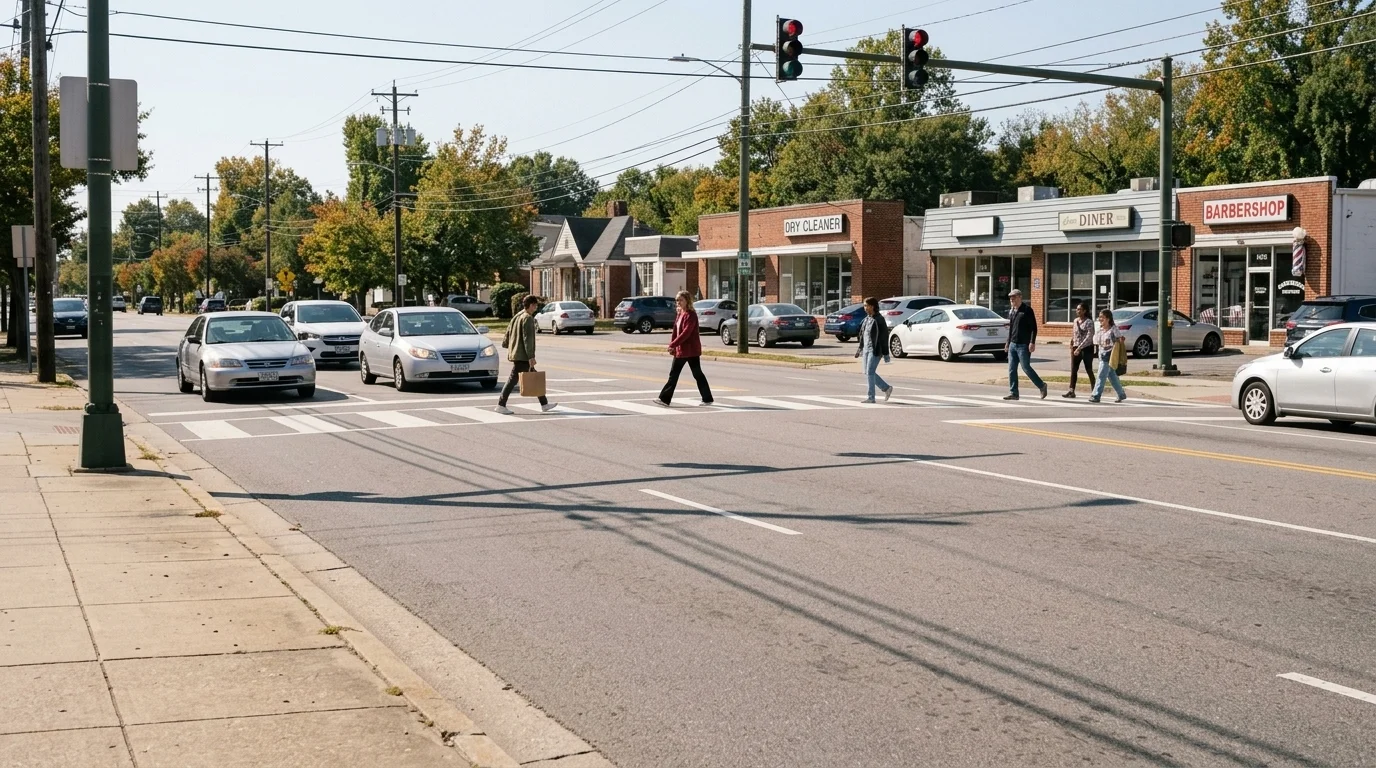
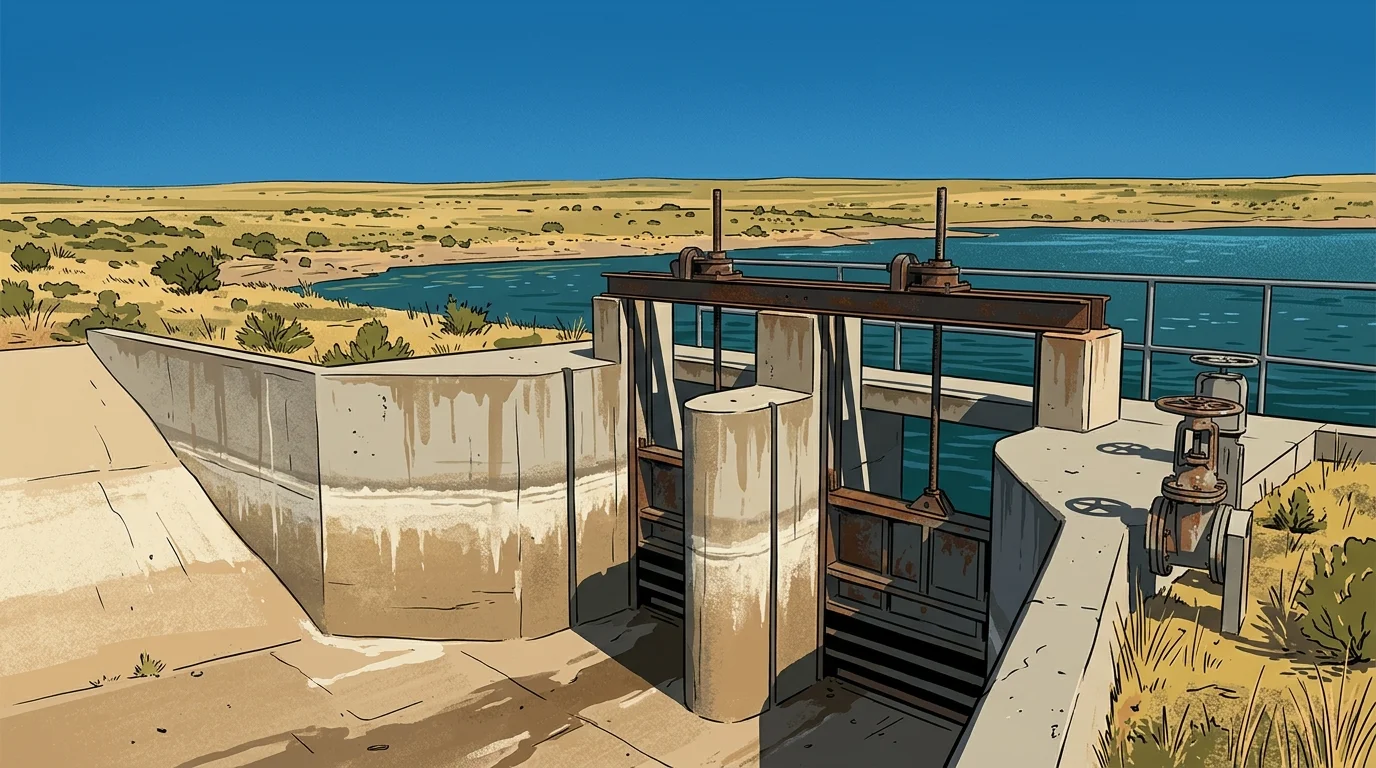
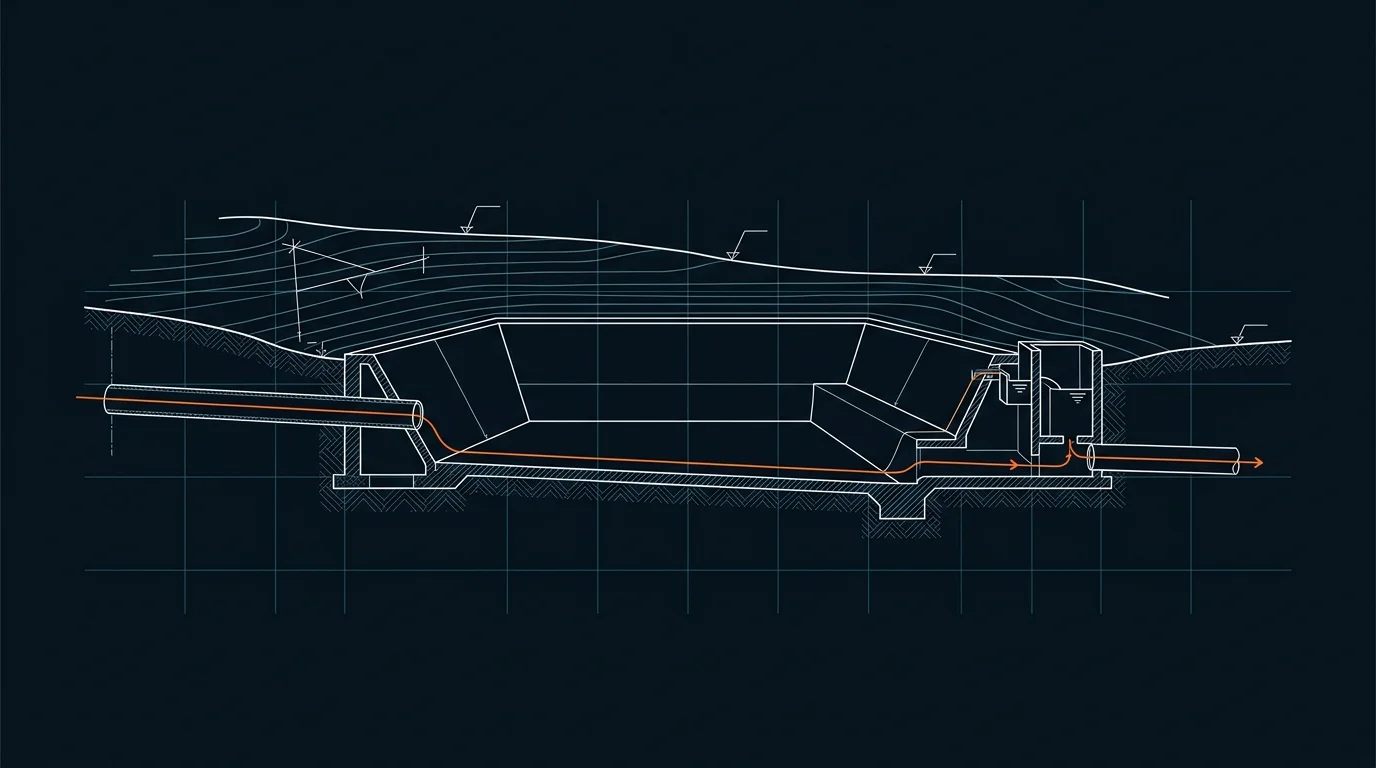
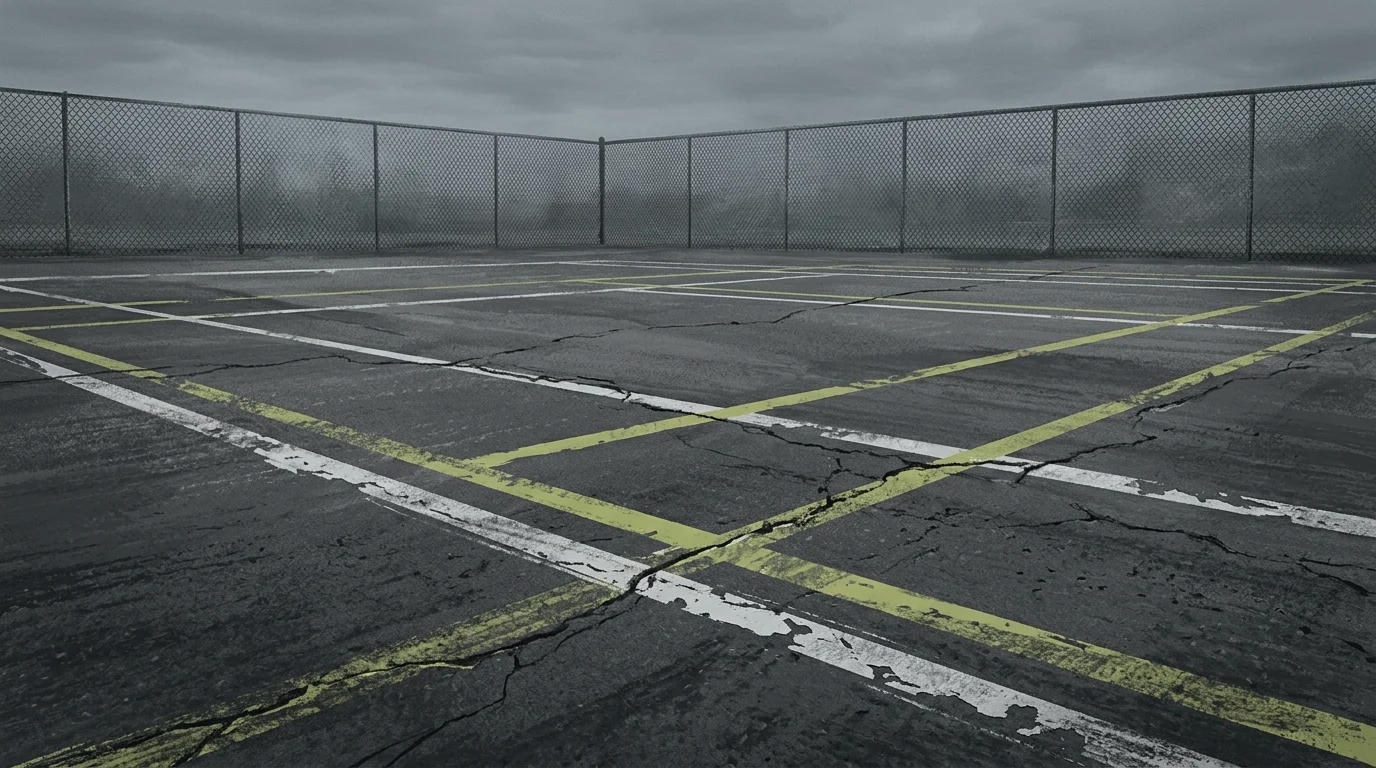
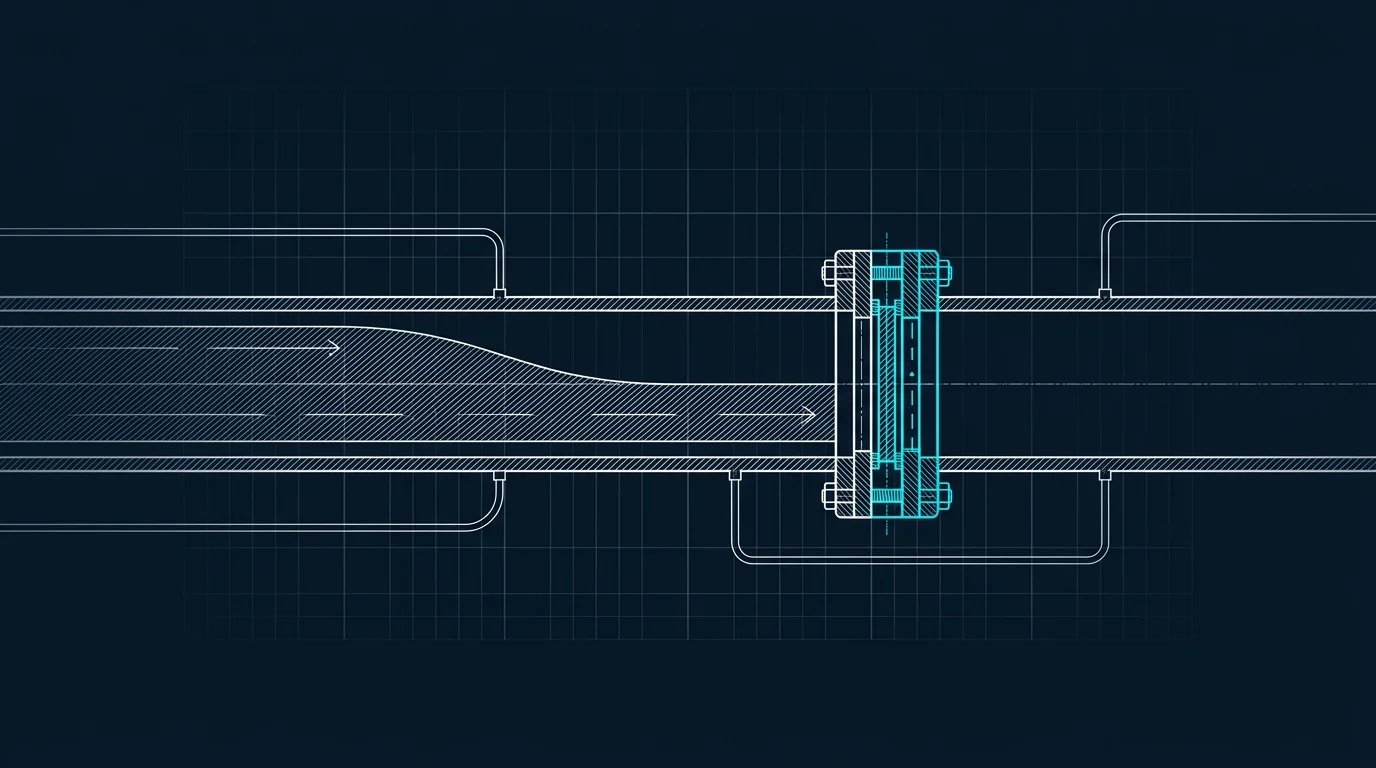
The funded project redesigns a 1.5-mile segment of Salt Lake Boulevard, expanding it from two to four lanes, adding dedicated bike lanes and ADA-compliant sidewalks, upgrading traffic signals, and installing a new stormwater drainage system with underground detention basins and bioswales. That last element, which treats runoff on-site rather than routing it into aging pipes, is what triggered the 'stormwater' classification in federal grant databases and produced the dramatic year-over-year spike. But the drainage work is a design requirement of the street rebuild, not a standalone environmental program. The RAISE grant is a multimodal transportation award under the Infrastructure Investment and Jobs Act; the bioswales come with the pavement.
Source: NationGraph.
Senator Schatz, who chairs the Senate Appropriations Subcommittee on Transportation, worked directly with the Hawaii Department of Transportation on the application and announced the Phase 3B award as part of a broader $42.5 million Hawaii infrastructure package that includes a $17.5M RAISE grant for road reconstruction in Hilo. Schatz framed the combined awards as among the most competitive federal infrastructure grants Hawaii has secured under IIJA.
The federal money is not arriving in isolation. The Honolulu City Council's FY26 capital budget commits $76 million to the broader Salt Lake Boulevard widening project. Bill 23 (2026) separately identifies $38 million in federal funds and $8 million in local funds for the Phase 3B component specifically. The city has already started construction on Phase 3A, the makai (ocean-facing) side of the corridor, with completion expected in fall 2026. Phase 3B, the mauka (mountain-facing) side funded by the RAISE grant, is expected to break ground in Q4 2026 and reach completion by Q4 2028.
The urgency around the RAISE award reflects more than local politics. The IIJA's authorization for surface transportation programs expires September 30, 2026, and Congress has not yet passed reauthorization legislation. Grant recipients and transportation agencies across the country have moved to obligate remaining competitive funds before the window closes. Hawaii's award, with a performance period running through December 2031, locks in the commitment before that deadline.
The gap between the rail line and its surrounding street infrastructure has been a known problem since Skyline planning began. Salt Lake is one of O'ahu's densest residential neighborhoods, and its main arterial connects to the H-1 freeway, but decades of traffic studies and community advocacy were not enough to move Phase 3B forward without a competitive federal grant. Construction industry tracking of the project shows the corridor has cycled through planning phases since at least the early 2000s. The Rail Station opened on time; the street did not.
For residents of Salt Lake and the surrounding neighborhoods of 'Aiea and Pearl City, the practical change is a safer and more direct path to a transit option that currently requires navigating a two-lane arterial with no protected bike infrastructure. For Honolulu's transit planners, the broader question is whether Phase 3B becomes a model for other Skyline stations whose street connections remain incomplete. Hālawa is the western end of the line; future extensions eastward toward downtown and Ala Moana will face similar last-mile questions at each new station.
The next signal to watch is Phase 3B's construction start. HDOT and the Honolulu Department of Design and Construction have both flagged Q4 2026 as the target. If procurement moves on schedule, the two-lane boulevard that has greeted train riders since 2023 could be under active reconstruction before the end of the year.