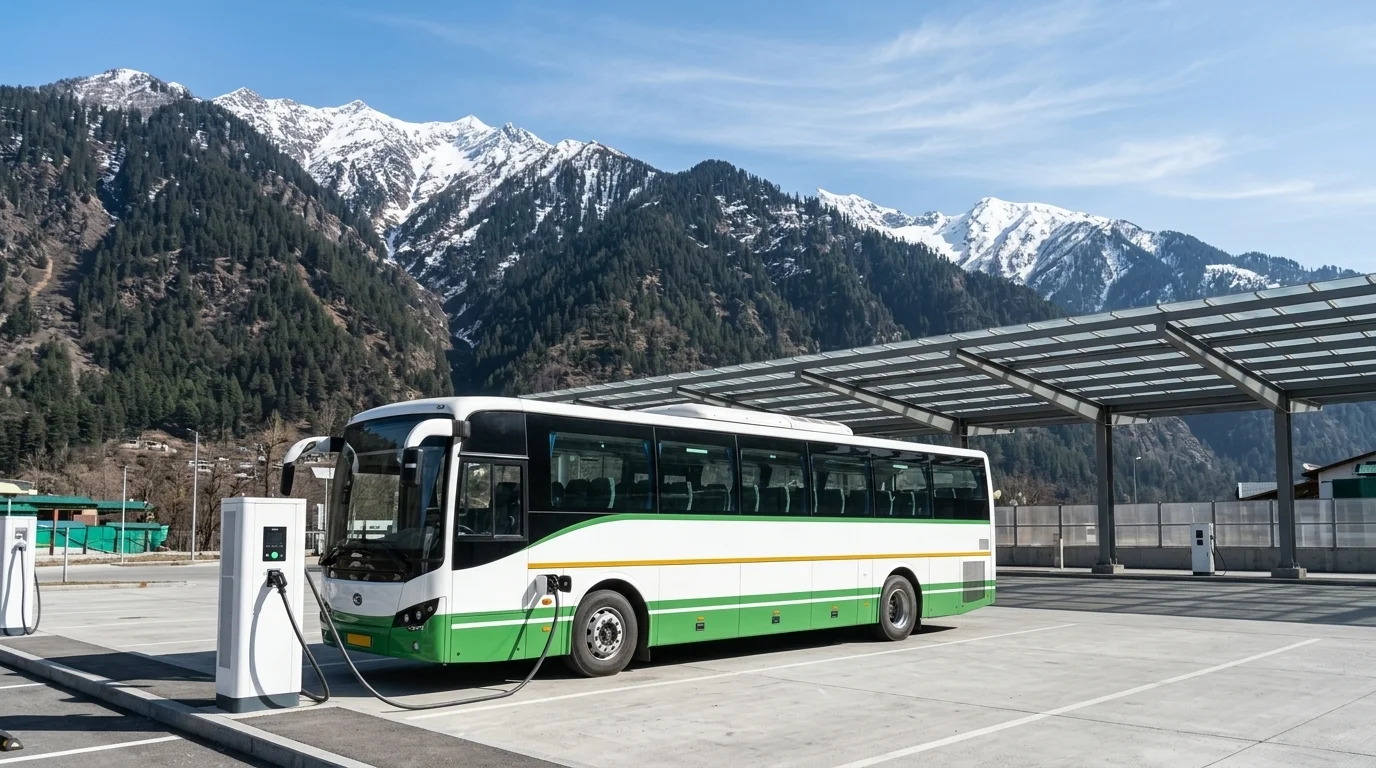
Kullu district in Himachal Pradesh is getting a significant piece of electric bus infrastructure at Patlikhul Bus Stand, a depot that sits roughly 25 kilometers south of Manali on one of India's busiest mountain tourism corridors. The Himachal Road Transport Corporation (HRTC) has posted a tender for civil and electrical charging infrastructure at the site, covering the foundations, transformer connections and charger installations needed before electric buses can operate there at all.
The project is small in isolation but points to a larger challenge facing India's electric bus rollout: the vehicles exist, the subsidies exist, but depots across the country still lack the basic electrical and civil work to charge them overnight. At Patlikhul, that means trenching for cables, erecting canopy structures, upgrading switchgear and connecting to the grid at sufficient capacity. Without it, any e-bus assigned to the depot sits idle.
The Kullu-Manali axis has particular reasons to push this transition quickly. The National Green Tribunal has repeatedly restricted diesel vehicle access in ecologically sensitive zones nearby, including around Rohtang Pass. Diesel engines also lose efficiency on steep Himalayan grades, making the performance case for electric buses unusually strong on mountain routes. Himachal Pradesh generates surplus hydropower, which means charging electric buses there genuinely reduces emissions rather than simply shifting them to coal-fired grids elsewhere.
HRTC has been running electric buses in the hills since a 2017 Manali-Rohtang pilot, one of India's earliest hill-route e-bus deployments, and has since added Olectra and Ashok Leyland electric models on several routes. The corporation has also struggled with persistent financial losses and delayed salaries, making each capital expenditure on EV infrastructure a politically charged decision.
The broader context is Himachal Pradesh's stated ambition, under Chief Minister Sukhvinder Singh Sukhu, to become India's first Green Energy State by 2026. Electric public transport is a flagship part of that pitch, and depot upgrades like Patlikhul are the quiet, unglamorous work that determines whether the ambition becomes operational reality. India's PM E-DRIVE scheme and PM-eBus Sewa program have together committed tens of thousands of crore rupees toward this national transition, with state transport undertakings like HRTC as the primary delivery mechanism.
Patlikhul serves a district of roughly 440,000 residents and millions of annual tourists. Whether this depot comes online on schedule will offer an early read on how quickly Himachal Pradesh can move from policy announcements to working chargers.