Federal electric vehicle grants flowing into Washington state hit $25,648,750 in the trailing 90 days, up 156 percent from $10,032,415 in the same window a year ago. The jump reflects something unusual in American infrastructure finance: a state that sued the federal government to release frozen funds is now signing the grant agreements that the lawsuit made possible.
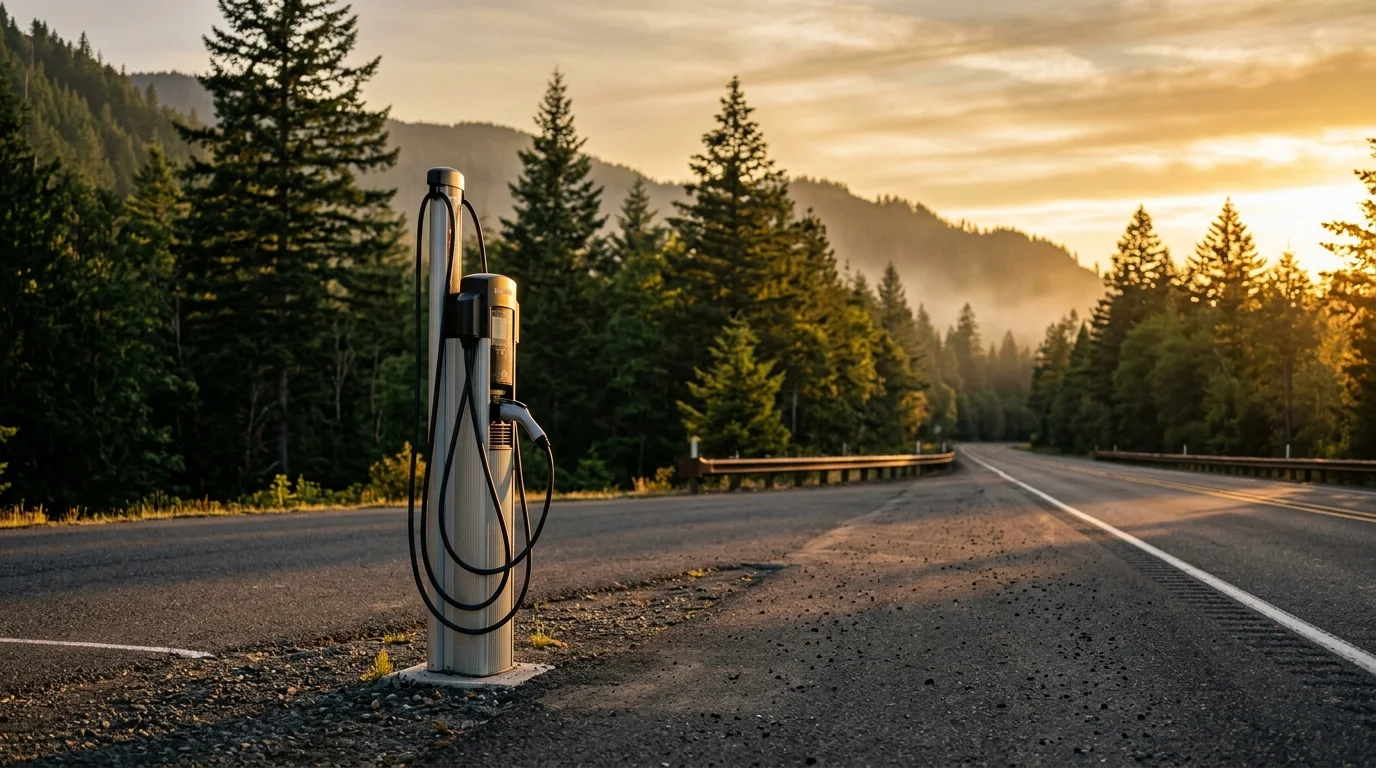
The legal backstory begins on the first day of the Trump administration, when an executive order froze disbursements from the NEVI Formula Program, the $5 billion initiative created under the 2021 Bipartisan Infrastructure Law to plant EV charging stations along designated highway corridors. The Federal Highway Administration followed by suspending all state NEVI plan approvals in February 2025. Washington Attorney General Nick Brown co-led a multi-state coalition with California and Colorado, filing suit in the Western District of Washington. A preliminary injunction restored WSDOT's deployment plan in July 2025. On January 26, 2026, Judge Tana Lin issued a final judgment permanently barring USDOT and FHWA from withholding formula funds, finding the agency had acted "arbitrarily and capriciously." The ruling freed roughly $1 billion in previously withheld funds across 20 states and D.C., as Earthjustice noted after the decision.
Washington's 90-day grant surge is driven by two distinct federal programs doing two distinct things, and conflating them would miss what each one reveals.
The larger award, $25 million, is a DOT RAISE grant to Whatcom County for replacing the Whatcom Chief, a 64-year-old diesel ferry that is the sole link between Lummi Island and the mainland. The grant was originally competed and awarded in August 2022, but the formal obligation, the signed grant agreement that triggers drawdown, landed in September 2026 after the county completed scope revisions, cleared environmental review, and established a dedicated Whatcom County Ferry District in July 2026 to cover the local share of the roughly $50 million project. Washington State contributed an additional $5.3 million. Senator Maria Cantwell championed the award, which is the largest federal grant Whatcom County has ever received. The replacement vessel will be a diesel-electric battery hybrid; terminal construction bids are expected in November 2026, vessel bids in January 2027, and the new ferry is scheduled to enter service in March 2029. The Whatcom Chief serves more than 175,000 passengers annually, crossing to an island situated on Lummi Nation land.
The RAISE grant has no mechanical connection to NEVI. It is a competitive DOT discretionary grant, not a highway formula allocation. But its September 2026 obligation date lands in the same administrative moment as the second award, a $648,750 NEVI top-up to WSDOT obligated in July 2026 and running through 2034. That smaller grant is the one that traces directly to the courtroom: it is a downstream product of the restored NEVI deployment pipeline, activated after Judge Lin's ruling cleared the legal cloud over FHWA's disbursement authority. WSDOT had already positioned itself to move, having submitted a 44-site, $46.2 million Round 2 deployment plan. In January 2026, the agency announced $12.16 million in NEVI awards to expand EV charging across the state.
What links the two programs editorially is institutional readiness. Washington entered the post-ruling window with its NEVI plan already on file, its legal standing established, and its project pipelines advanced enough to obligate quickly. The state's total active EV federal grant portfolio now stands at approximately $153.7 million across 16 active grants, placing it seventh nationally by active EV grant volume. California leads at $2.2 billion; New York sits second at $782 million. Washington's five-year NEVI formula allocation is $70.87 million, and active WSDOT NEVI grants already exceed $75 million, with instruments running as far out as 2039.
For residents, the near-term signal is physical: charging stations along Washington's Alternative Fuel Corridors will advance from planning documents to construction contracts in the next 12 to 18 months, and a new hybrid ferry will replace a vessel that has been running since 1962. For the broader NEVI story, Washington's trajectory is a leading indicator. The January ruling applied its protections nationally, but states that had already done the plan-submission work when the freeze lifted are the ones converting that ruling into obligated dollars first.
The open question is what happens at the appropriations level. The Consolidated Appropriations Act of 2026 redirected a portion of NEVI's FY2026 apportionment to other FHWA programs, introducing some uncertainty about the full deployment window before the program's authorization expires. WSDOT's 44-site plan assumes $46.2 million in Round 2 NEVI funds; how much of that survives the appropriations calendar will determine whether Washington's charging network build-out matches what the agency has on paper.