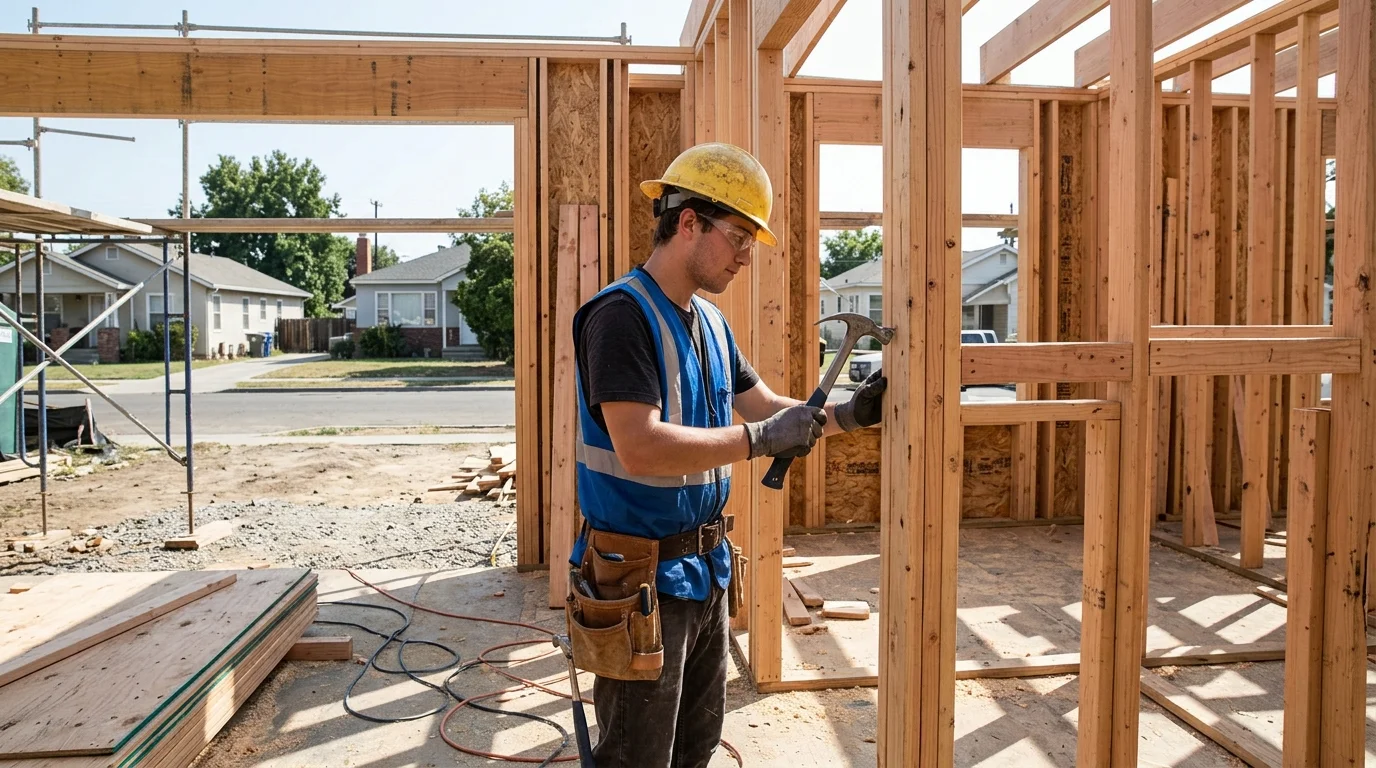
Greenville, North Carolina is moving into the next stage of an ambitious plan to build 50 affordable homes in 10 years by doing something unusual: putting community college students to work as the construction crew.
The city's 50-in-10 Affordable Housing Initiative pairs the City of Greenville with Pitt Community College and a coalition of local and private partners to produce affordable housing while simultaneously training a new generation of electricians, plumbers and carpenters. Each home built is both a housing unit for a low-income family and a hands-on classroom for students in Pitt's skilled trades programs.
The city is now seeking contractors for Phase II, covering site preparation, foundation work, utility connections and home installation services, a sign the initiative has moved well past the pilot stage and is scaling up in earnest.
The timing is pressing. Greenville, a city of roughly 88,000 anchoring Pitt County in eastern North Carolina, has seen housing costs climb sharply amid East Carolina University enrollment growth, expansion at ECU Health and in-migration that have pushed up rents in a region where median household income sits around $45,000 to $50,000, well below state and national averages. Historically Black neighborhoods like West Greenville face particular pressure, with decades of disinvestment now giving way to displacement concerns as prices rise.
Nationally, home prices surged roughly 40 to 50 percent between 2020 and 2023. That wave hit smaller cities like Greenville hard, where wages haven't kept pace and the construction trades workforce has been squeezed since the 2008 housing crash gutted apprenticeship pipelines. Pitt Community College, with strong programs in construction, HVAC, electrical and plumbing, offers a direct answer to that labor gap.
The model has drawn federal support as well. HUD's HOME and Community Development Block Grant programs, along with North Carolina's Workforce Housing Loan Program, have become more accessible to municipalities pursuing exactly this kind of workforce-integrated housing production.
With Phase II contractors now being selected, the first homes under this expanded effort could begin taking shape in the months ahead.