Georgia is expanding agricultural training at its juvenile detention facilities, betting that hands-on poultry work can give incarcerated teenagers a foothold in the state's most powerful industry.
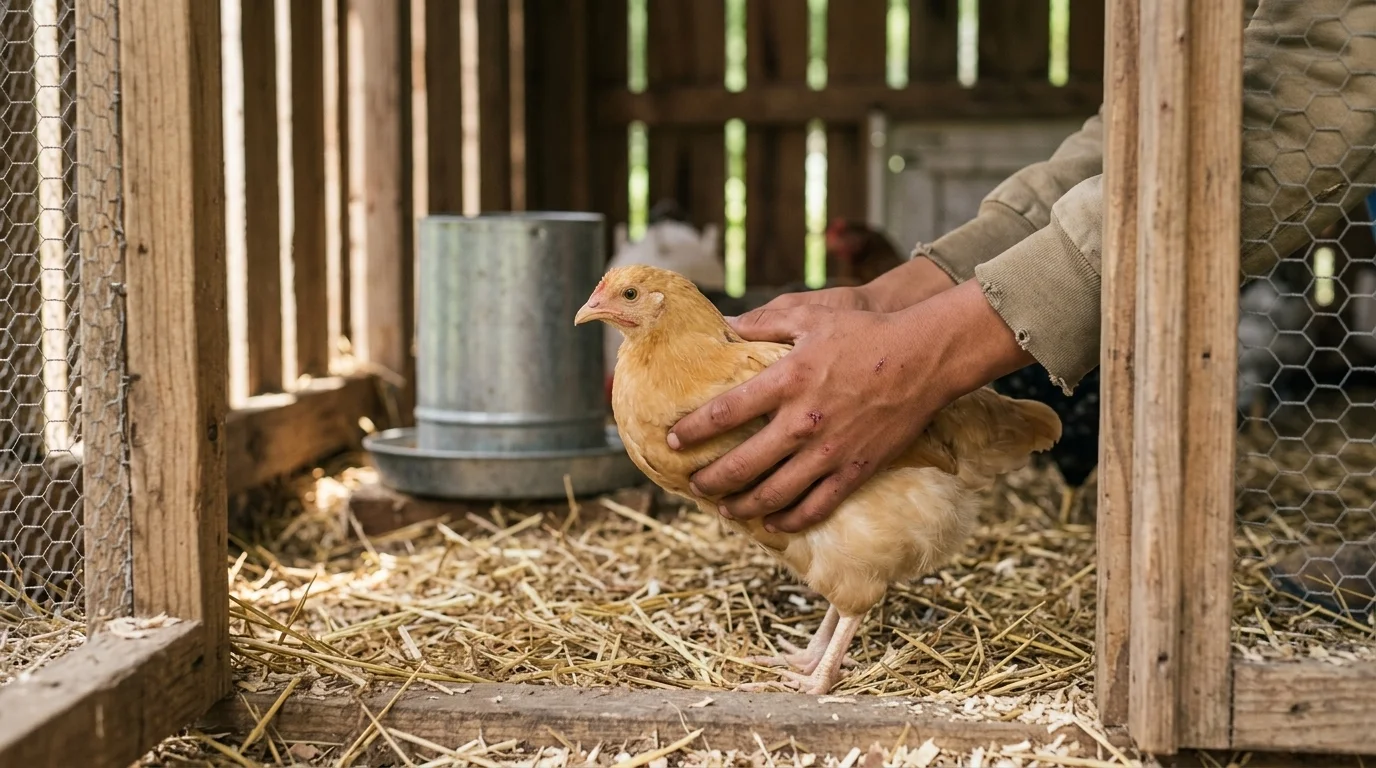
The state's Department of Juvenile Justice recently posted a solicitation for pullets, young female chickens just weeks from laying age, for use at its network of more than 25 secure campuses across Georgia that house youth between the ages of 13 and 21. The purchase is a small one, but it points to a deliberate strategy: train detained youth in poultry husbandry and send them out the door with skills that are in demand across rural Georgia.
No state has more at stake in that pipeline than Georgia. The state is the nation's leading broiler producer, with poultry accounting for roughly half of all agricultural output and generating over $4 billion annually. Gainesville, northeast of Atlanta, is known nationally as the Poultry Capital of the World. Processing plants and farms concentrated throughout North Georgia employ tens of thousands of workers, and the industry has faced persistent labor shortages.
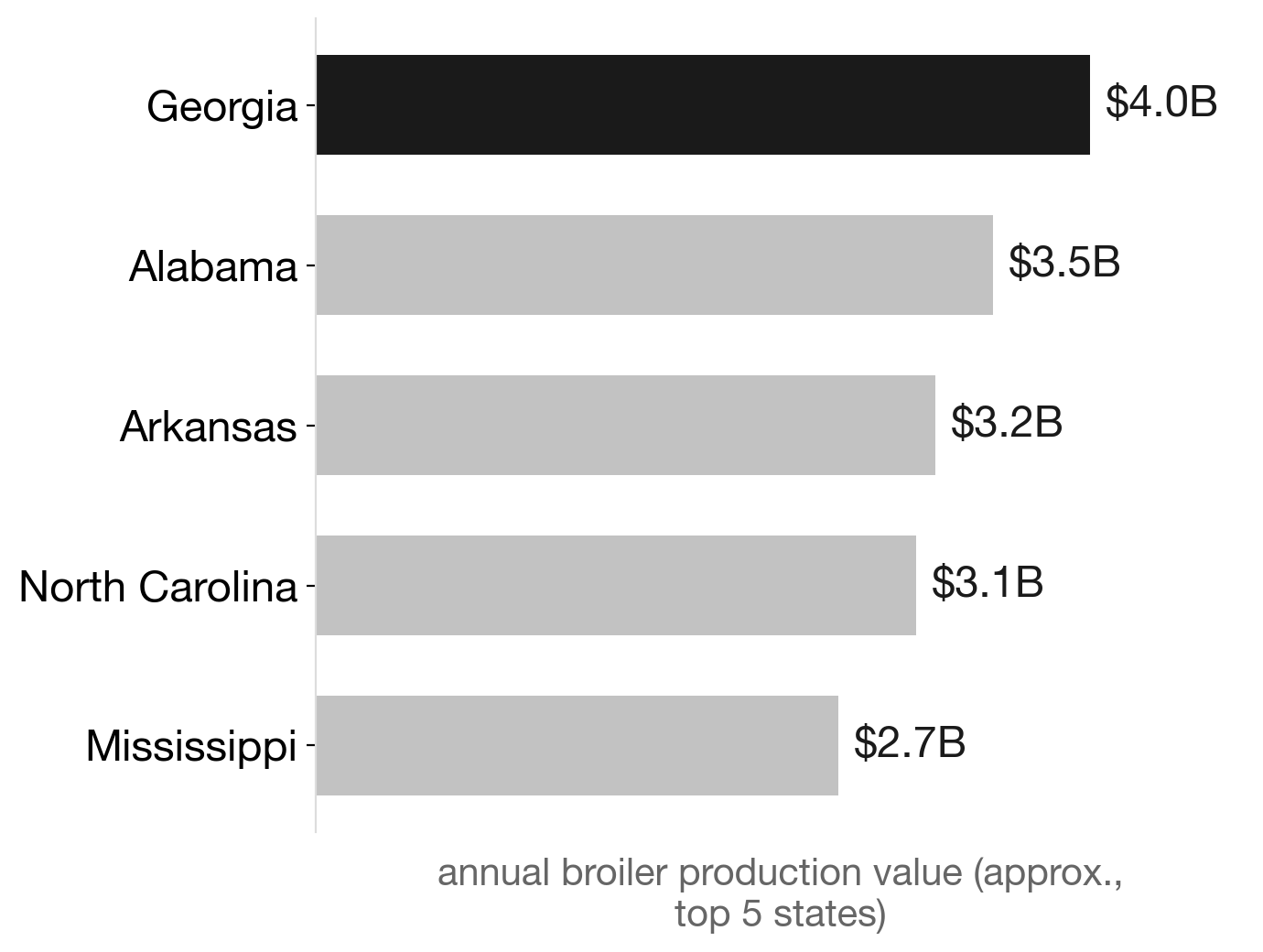
Source: NationGraph.
For DJJ, the poultry program fits into a broader vocational curriculum that also includes culinary training, welding, barbering and other trades. The practical argument is straightforward: youth in Georgia's juvenile system are disproportionately from rural communities where poultry work is one of the most accessible jobs available. Teaching animal husbandry, basic food safety and flock management gives them something concrete to carry home.
The approach reflects a national shift in juvenile justice philosophy. Since Georgia launched a sweeping Criminal Justice Reform initiative in 2013 under then-Governor Nathan Deal, the state has prioritized rehabilitation programming for youth who remain in secure facilities, not just diversion away from them. Federal reauthorization of the Juvenile Justice and Delinquency Prevention Act in 2018 reinforced that push, tying funding to evidence-based programming aimed at reducing recidivism.
DJJ has faced significant scrutiny in recent years over staffing shortages, facility violence and youth safety conditions. Vocational programs like the farm operations have generally drawn more favorable attention as concrete examples of what rehabilitation can look like inside the fence.
Governor Brian Kemp has signed multiple bills in recent years aimed at expanding employment access for people with criminal records, and workforce development has been a consistent theme in state juvenile justice policy. For teenagers who will age out of the system and need to find work, a practical skill tied to Georgia's largest industry is the clearest off-ramp the state can offer.