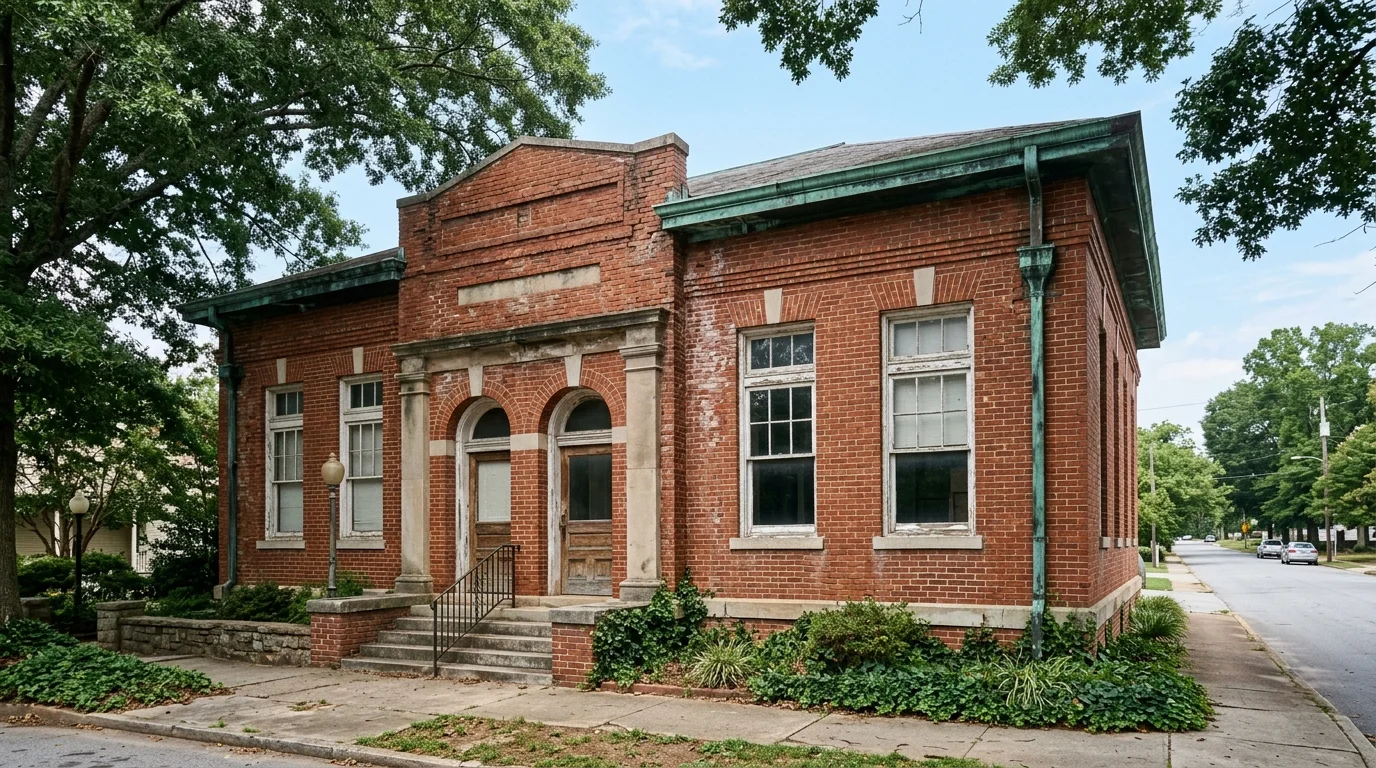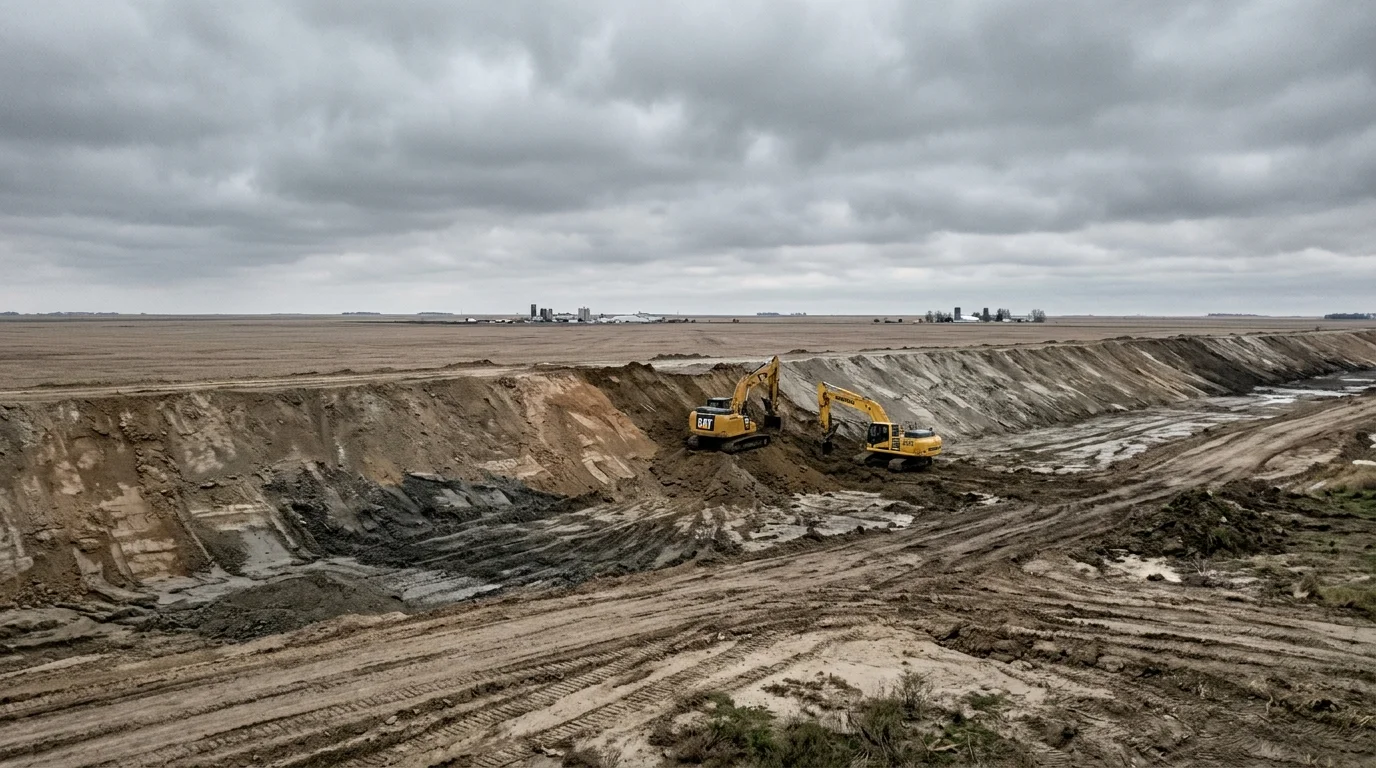
Dubuque, Iowa is moving to pull roughly 210 more lead water pipes from the ground this construction season, continuing a multi-year effort to eliminate toxic service lines that have long connected the city's water mains to homes in its oldest neighborhoods.
The city posted a bid for Phase 2 of its lead service line replacement program on June 25, targeting lines scattered throughout its water distribution system. As one of Iowa's oldest cities, founded in 1833 with a large share of pre-World War II housing stock, Dubuque has a higher concentration of lead pipes than newer communities. Iowa as a whole has an estimated 160,000 or more lead service lines, among the highest per-capita counts in the Midwest.
Lead pipes were standard in American water infrastructure from the late 1800s through the mid-1950s. Millions remained in the ground even after Congress banned new lead plumbing in 1986. The Flint, Michigan crisis of 2014 to 2016, where a water source change caused widespread lead contamination and elevated blood lead levels in children, shifted federal policy and public urgency around the issue. The EPA finalized its most sweeping response in October 2024, requiring utilities to replace virtually every lead service line in the country within 10 years.
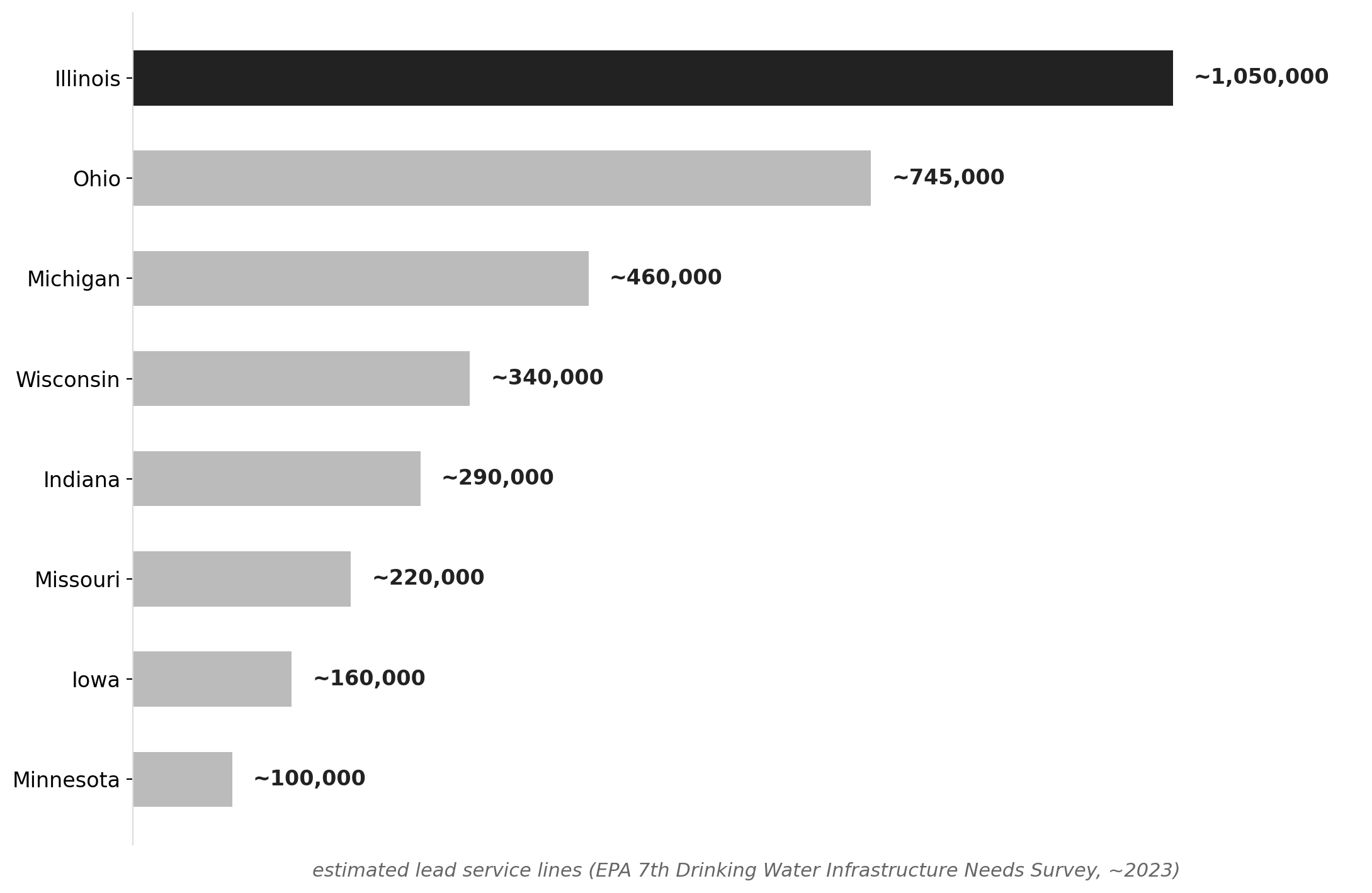
Source: NationGraph.
The Bipartisan Infrastructure Law, passed in 2021, committed $15 billion to accelerate that work nationally, with Iowa receiving tens of millions through the EPA's Drinking Water State Revolving Fund. Dubuque submitted its complete service line inventory to the Iowa DNR by the October 2024 federal deadline and has structured its replacement effort around annual construction seasons tied to that funding.
Dubuque's phased approach puts it ahead of many peers. Cities like Trenton, New Jersey are now on their sixth phase of replacements, while others are only beginning, and Minneapolis is tackling a system serving 500,000 residents.
With the federal clock running, Dubuque's pace in the coming construction seasons will determine whether it can clear its remaining inventory well ahead of the decade-end deadline.