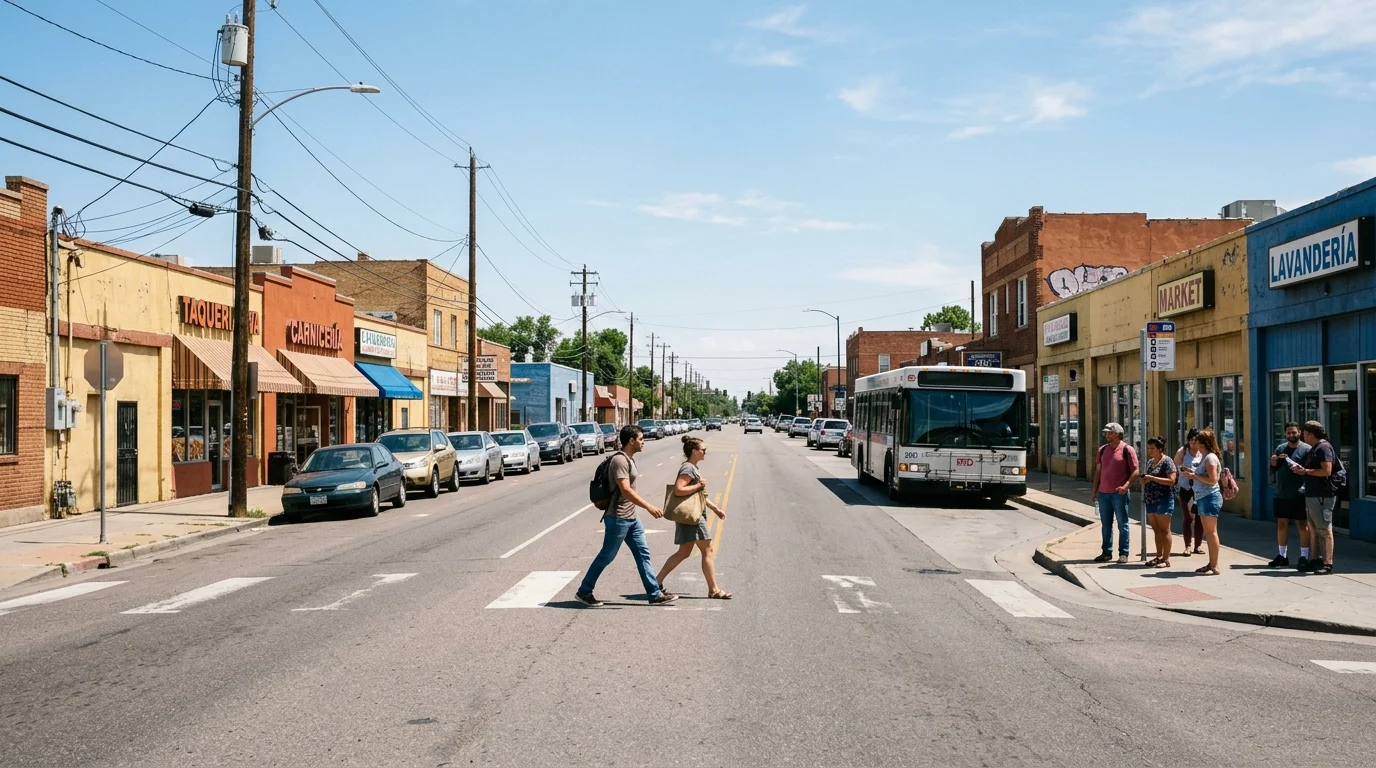
Federal Boulevard has long been two things at once: one of the busiest transit corridors in the Denver metro area and one of its most dangerous roads. Now the city is moving to build bus rapid transit along all 12 miles of it, from Dartmouth Avenue in southwest Denver to 120th Avenue deep into Adams County.
The corridor carries RTD's Route 31, one of the highest-ridership bus lines in the region, through neighborhoods where car ownership is low and residents are heavily dependent on public transit. It also runs through Westwood, Barnum, Chaffee Park and Federal Heights, communities where 40 to 60 percent of residents are Latino. A 2022 Denver analysis identified Federal as the single most dangerous road in the city for pedestrians, and it has generated years of fatality coverage from local news outlets.
Planning for BRT on Federal dates back to at least the mid-2010s, when Denver's Blueprint Denver and the 2019 Denver Moves: Transit plan formally designated it as a high-capacity transit priority. What changed in recent years was money: the 2021 federal Bipartisan Infrastructure Law opened up new FTA grant funding for exactly these kinds of projects, and Colorado's own 2021 transportation funding bill added state dollars for multimodal corridors.
The Colfax BRT project, which broke ground in 2024 as Denver's first true bus rapid transit line, is the template. Federal is next in line and a significantly more complex undertaking: it crosses multiple jurisdictions, requiring coordination among Denver, Adams County, Federal Heights, Westminster and the Colorado Department of Transportation.
The project faces real headwinds. Some suburban governments and business owners along the corridor have raised concerns about construction disruption, lane reductions and parking loss. Residents and advocates in Latino neighborhoods have flagged worries about displacement and gentrification following any major investment. Those tensions will likely define the public process as the project moves from planning into construction.
To manage that complexity, the city posted a solicitation on the Rocky Mountain E-Purchasing System for an owner's representative, a consultant who will oversee the project on the city's behalf through design and construction. The total project cost has not been disclosed publicly. A construction timeline has not yet been announced.