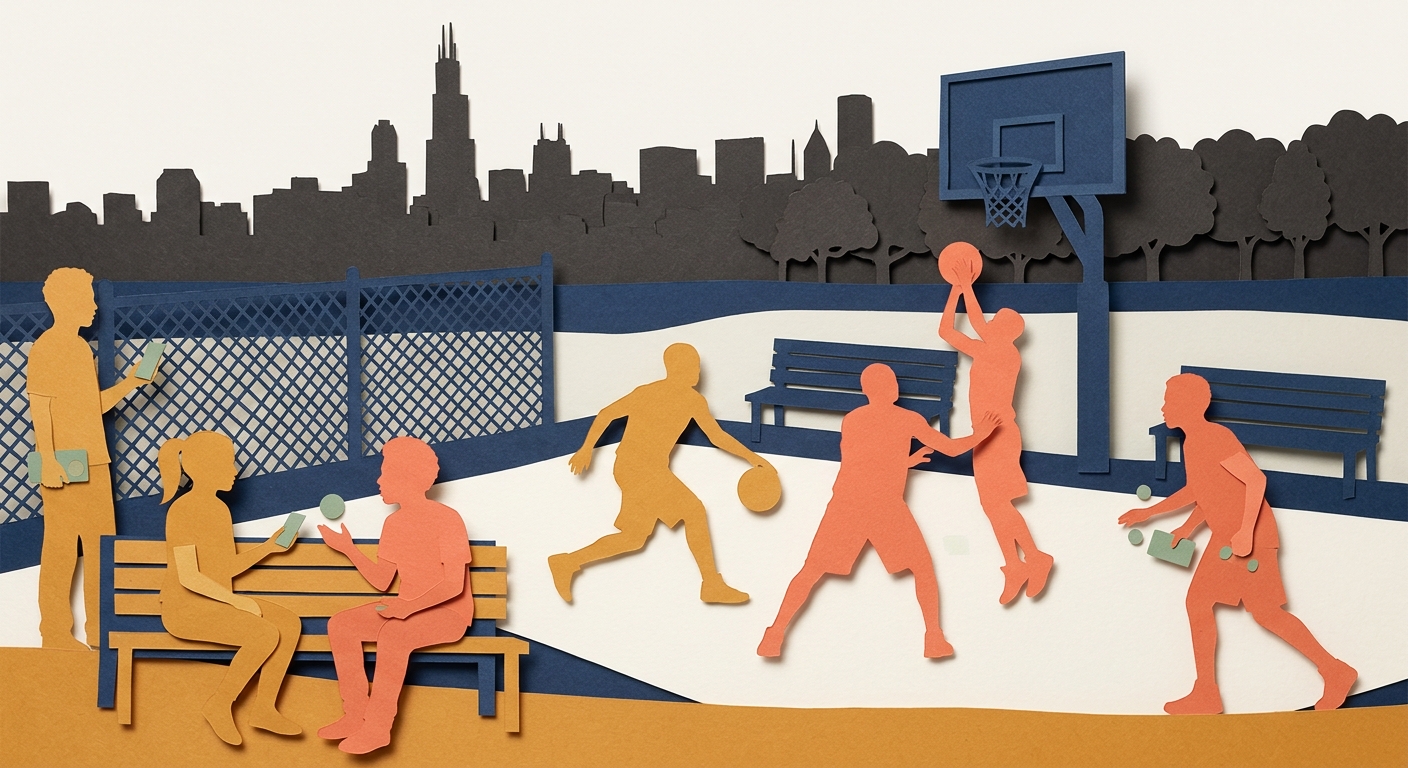
With youth depression and anxiety at historic highs and Chicago's public mental health infrastructure still scarred by clinic closures a decade ago, a federally funded research pilot is taking a different approach: bringing mental health screening to teens where they already are, at the park.
A $721,485 grant from the National Institute of Mental Health will fund the design and early testing of a digital mental health tool built specifically for Chicago Park District (CPD) teen programming. The Chicago Park District is the largest municipal park system in the country, with more than 600 parks spanning all 77 community areas and over 40,000 youth served daily. The pilot tool, called CPKD D-LITE (Digital Low-Intensity Treatment), is designed to screen teens for anxiety and depression and connect those who need more help to clinical care.
The core bet is that parks can succeed where clinics have failed. Fewer than half of adolescents with a diagnosable mental health condition receive any treatment, and rates are far worse for Black and Latino youth and those in low-income communities. Since 2012, when the city closed six of its twelve public mental health clinics under then-Mayor Rahm Emanuel, access gaps have deepened in neighborhoods on the South and West sides. The park district, despite its own institutional challenges, remains one of the most consistently present institutions in those same communities.
The project unfolds in two phases. First, researchers will co-design the digital tool with CPD's existing Youth Advisory Board, teen program participants, caregivers, and park staff, an approach meant to avoid the fate of most mental health apps, which teens abandon within weeks because adults built them without meaningful youth input. Once a working version is ready, the team will run a small randomized trial comparing the tool against a digital workbook to measure whether teens find it useful and whether they show reduced symptoms of anxiety and depression.
This is early-stage pilot research, not a system-wide rollout. The NIMH planning grant mechanism is designed to test whether an idea is feasible before larger investment follows. But the underlying urgency is not hypothetical: between 2009 and 2021, the share of U.S. high school students reporting persistent sadness or hopelessness rose from 26% to 44%, according to CDC data, and emergency department visits for adolescent mental health crises surged during and after the COVID-19 pandemic.
If the pilot data are promising, the researchers would pursue larger-scale funding to expand the program across CPD sites. For now, the question is whether a basketball court or an arts program can quietly become the front door to mental health care for teenagers who would never walk into a therapist's office.