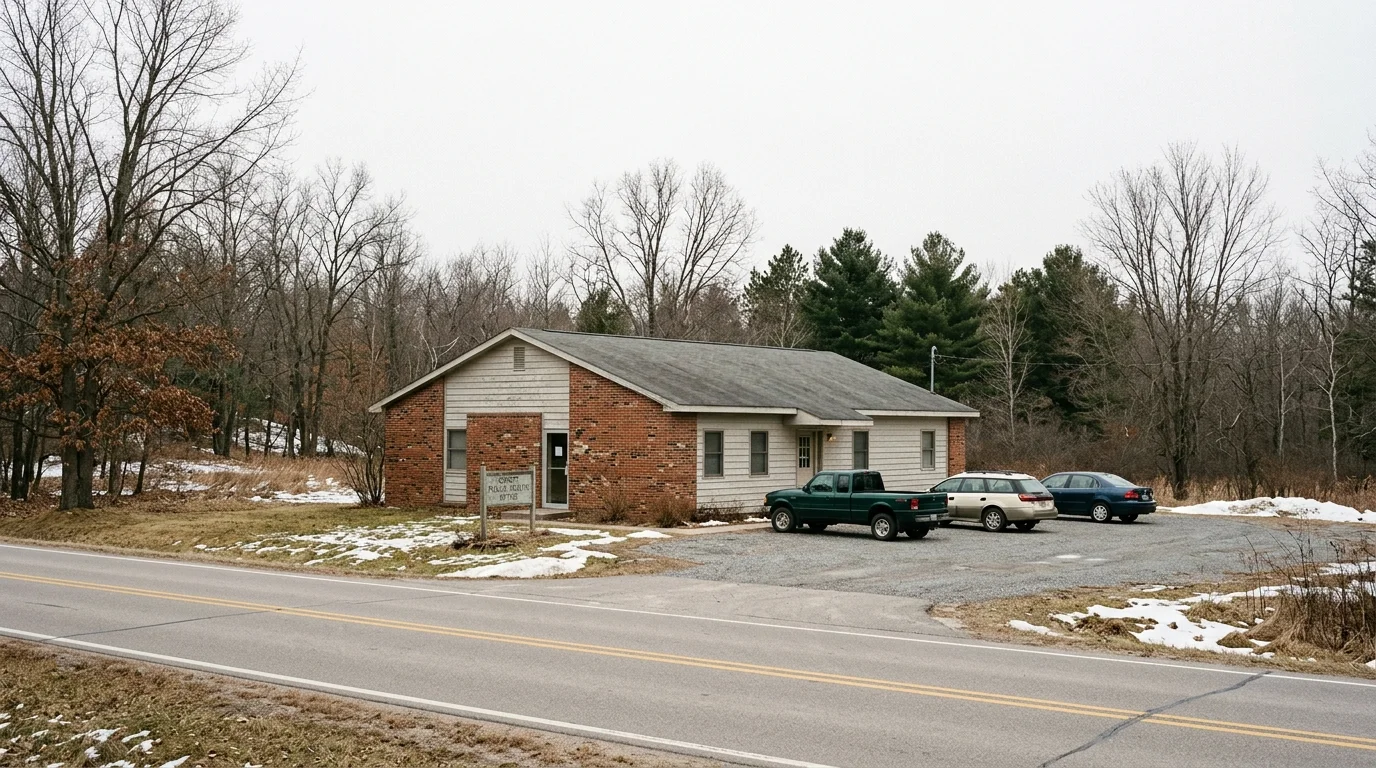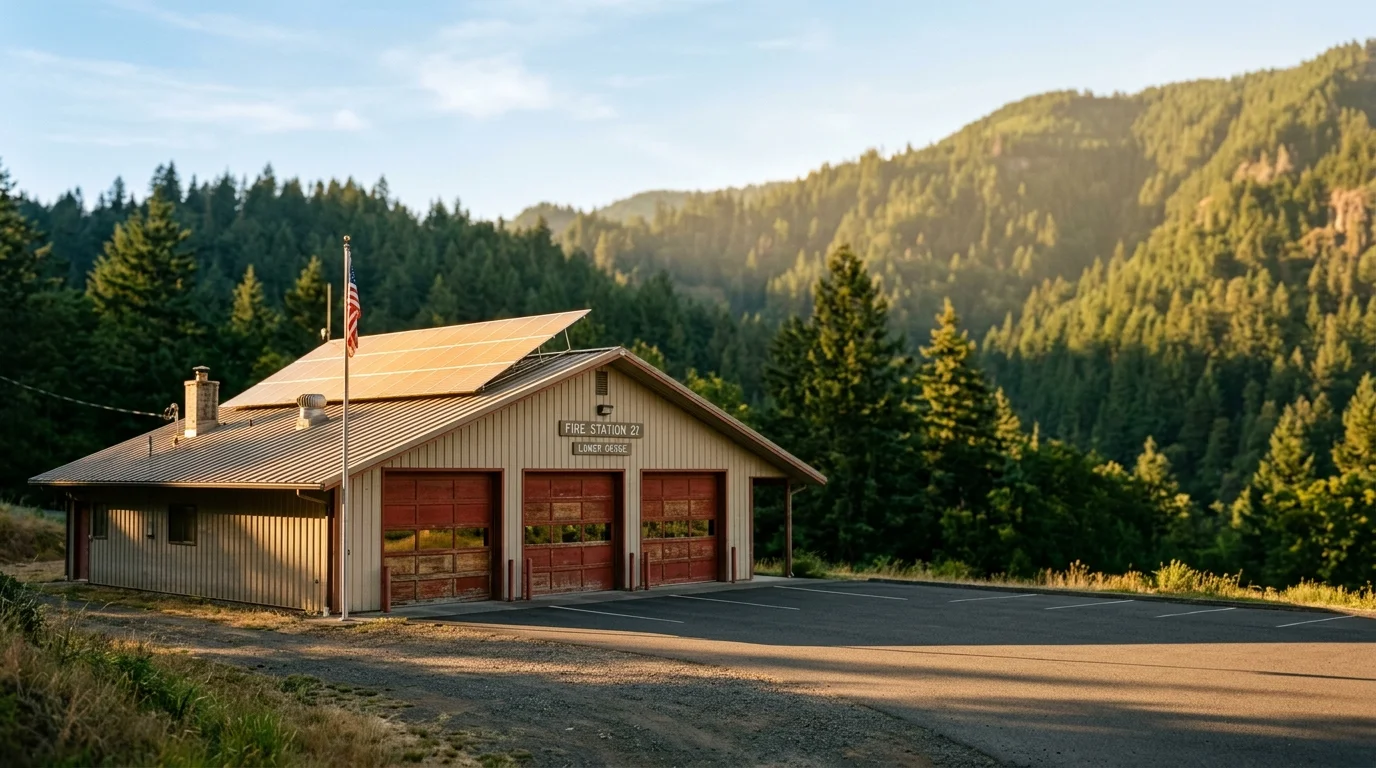
Cascade Locks, Ore., a town of about 1,300 people wedged between the Columbia River and steep forested slopes, is moving to make its fire station power-independent, able to run on solar panels and battery storage even when the grid goes dark.
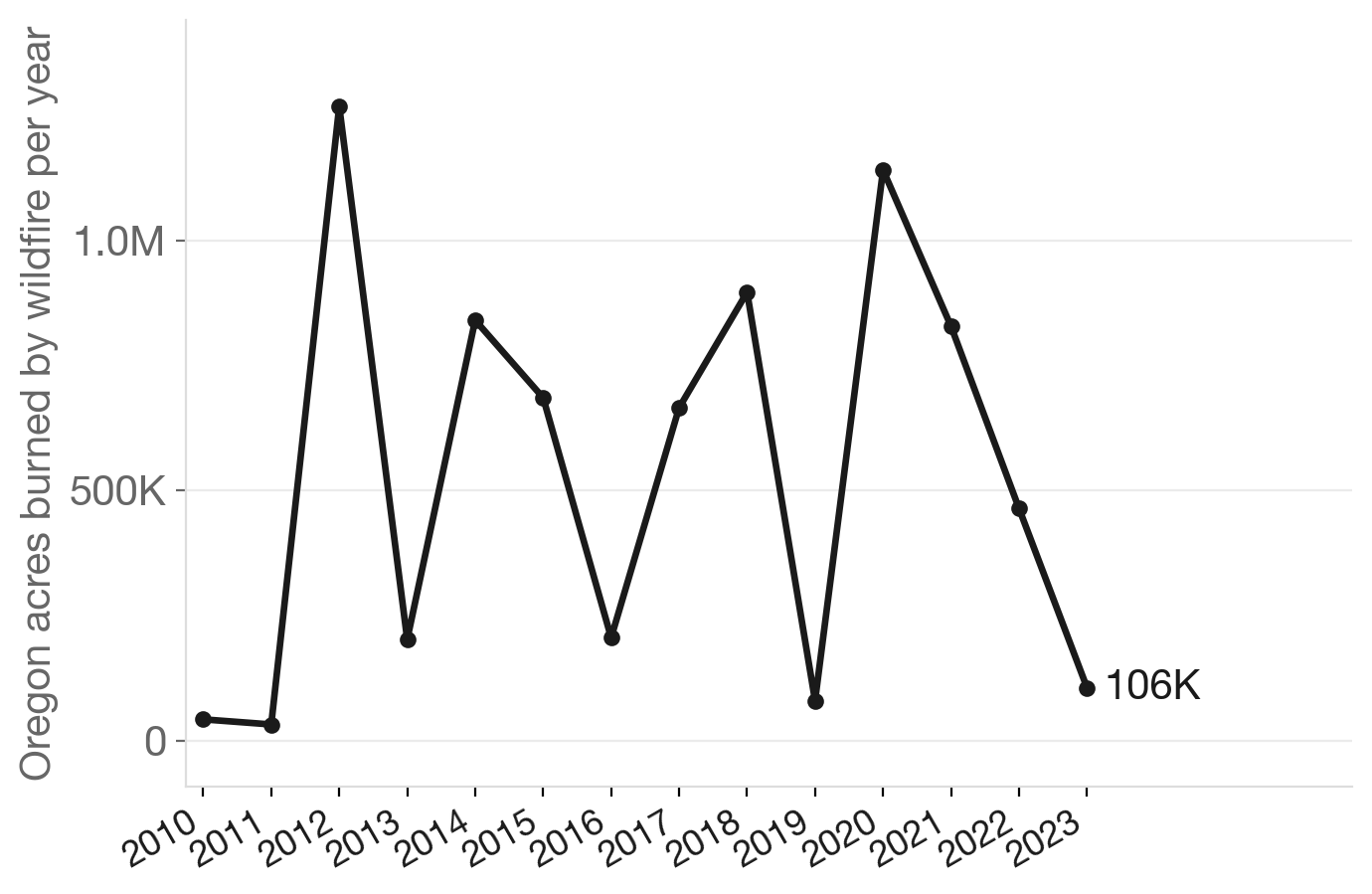
The project hits close to home for this community. In 2017, the Eagle Creek Fire burned 48,000 acres at Cascade Locks' doorstep, trapping hikers and forcing evacuations. Since then, Pacific Power has periodically cut electricity to Columbia River Gorge communities during high fire-risk winds, a practice called Public Safety Power Shutoffs, deliberately pulling the plug exactly when fire stations need power most. A solar-plus-storage microgrid solves that problem by letting the station disconnect from the grid and keep running on its own, a capability engineers call islanding.
The fire station is almost certainly the town's emergency command post and community shelter, not just a place that houses trucks. For a city with a single highway in and out (Interstate 84, which closes regularly for wildfire, ice and landslides), keeping that building functional during a disaster is a community survival question.
Source: NationGraph.
The timing reflects a shift in how small governments can pay for this kind of infrastructure. Before 2023, federal solar tax credits were available only to private developers. The Inflation Reduction Act changed that through a provision called elective pay, which lets cities and fire districts claim the 30% investment tax credit as a direct cash payment. Oregon has stacked additional funding on top through its Community Renewable Energy Grant Program, which has already backed similar microgrid projects at fire stations in Beaverton, Ashland, and other rural communities across the state.
The city is seeking a design-build contractor through OregonBuys, a delivery method that puts engineering and installation under one contract to speed the timeline. The contract value has not been publicly disclosed.
For a former mill town that has struggled economically for decades, the project represents federal clean-energy dollars flowing to a place with one of the most concrete reasons to want them.