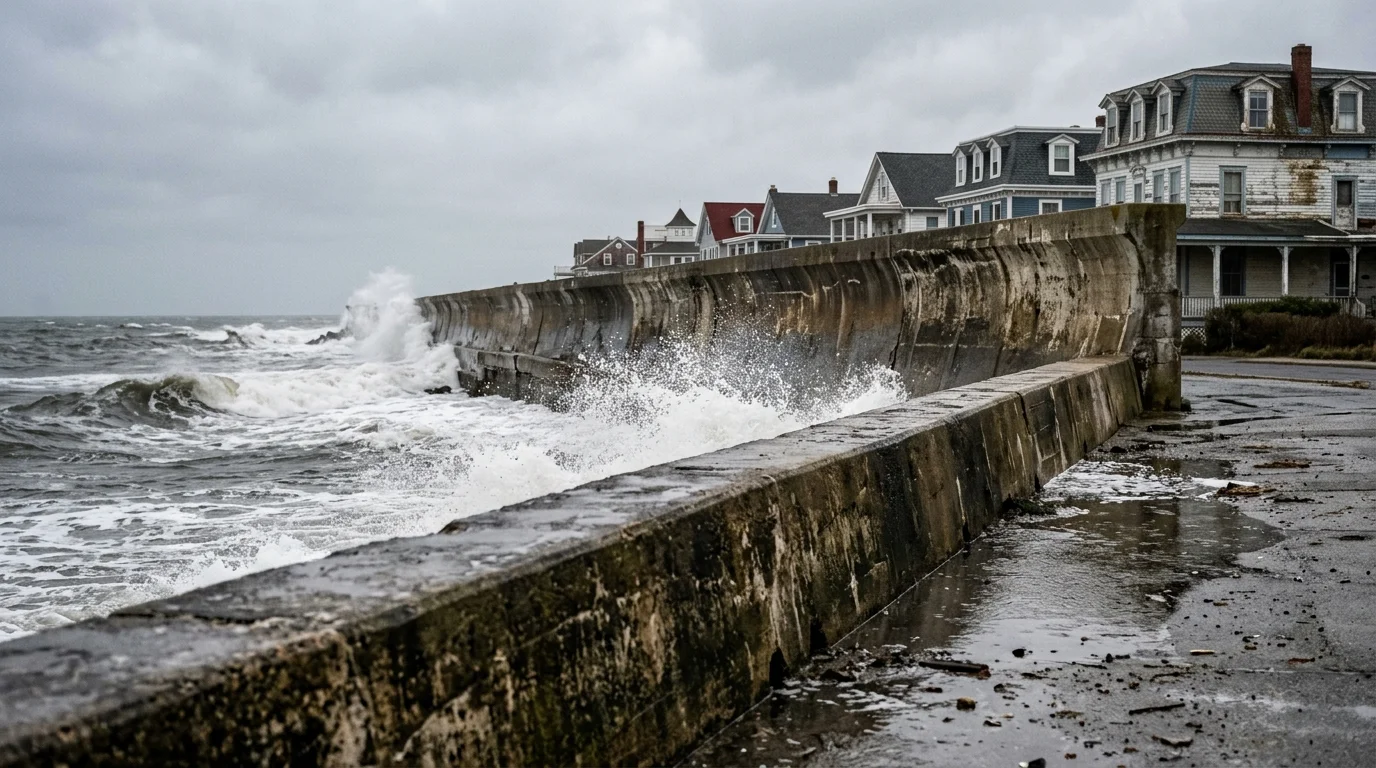
Cape May, N.J., is moving to harden a key section of its oceanfront seawall along Madison Avenue, where "sunny day" tidal flooding has become a routine problem as sea levels along the Jersey Shore climb faster than almost anywhere else on the East Coast.
The city has posted a bid solicitation for flood protection and climate resiliency improvements to the Madison Avenue section of the seawall, one of the most exposed stretches of the barrier that guards Cape May's beachfront neighborhoods. The city has not publicly disclosed a construction cost estimate or funding source for the project.
The stakes are high for a city this small. Cape May's year-round population sits around 2,800, but the city anchors a tourism economy that generates roughly $7 billion in annual visitor spending across Cape May County. Its Victorian-era architecture, the largest collection in the United States, earned the entire city designation as a National Historic Landmark, which means any changes to the seawall must navigate historic preservation review on top of standard engineering requirements.
The urgency is not abstract. Sea levels along the New Jersey coast have risen about 18 inches since 1911, more than twice the global average, partly because the land itself is slowly sinking. NOAA projects an additional 1.4 to 2.1 feet of rise by 2050. The Madison Avenue corridor and other low-lying streets now flood regularly during high tides, even without storms.
Cape May's seawall has been rebuilt and extended repeatedly over the past century, with the most significant federal investment following the Ash Wednesday Storm of 1962. The current generation of climate-resilience spending traces largely to Hurricane Sandy in 2012 and the wave of federal and state grant programs it triggered, including FEMA's BRIC program and the 2021 Bipartisan Infrastructure Law.
The city's dependence on high-value seasonal and second-home properties adds financial pressure. Rising flood insurance costs under FEMA's updated Risk Rating 2.0 system have begun to weigh on property values, giving local officials additional reason to invest in physical flood barriers rather than leave homeowners exposed.
A contractor will be selected after bids are reviewed. The full project timeline and budget will come into sharper focus once the city releases more details from the bid package.