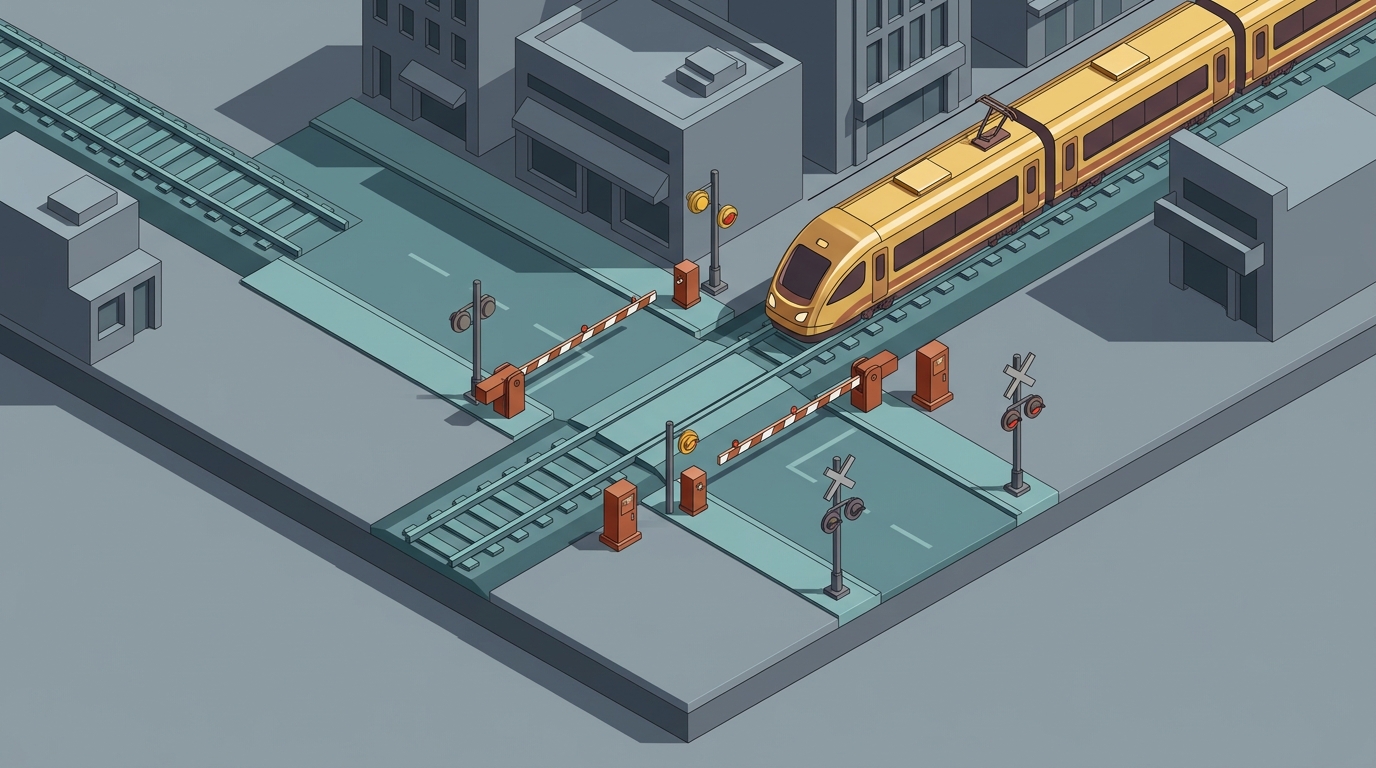
Caltrain's 77-mile Peninsula corridor has one of the worst safety records of any commuter rail system in the country, and the recent switch to quieter electric trains has made its roughly 42 remaining at-grade crossings more dangerous, not less. Now, a $1 million federal grant is heading to the system to address safety at those crossings, where roads and pedestrian paths intersect the tracks at ground level.
The award, posted March 30, 2026, comes through the Department of Transportation as congressionally directed spending, the modern version of what used to be called earmarks. The funds are designated for improvements across existing at-grade crossings in San Francisco, San Mateo, and Santa Clara counties, serving a combined population of more than 3 million people and more than 20,000 weekday commuters.
The safety stakes are real. Between 2000 and the early 2020s, Caltrain recorded more than 200 fatalities on its tracks, a toll driven by a mix of vehicle collisions, trespassing, and suicides at crossings. Cities like Palo Alto and Burlingame have seen repeated fatalities that prompted years of community debate about solutions.
Caltrain completed its conversion to electric trains in late 2024, a historic shift that made it the first electrified commuter rail system on the West Coast. Electric trains are faster and significantly quieter than the diesel locomotives they replaced, which safety advocates warn makes it harder for pedestrians and drivers to detect an approaching train at crossings.
The long-term fix is grade separation: building overpasses or underpasses so cars and pedestrians never cross the tracks at ground level. But those projects cost anywhere from $100 million to $500 million each. San Mateo County alone has identified more than $10 billion in grade separation needs along the corridor. At that scale, $1 million is a starting point, not a solution. The funds are more likely to go toward upgraded warning systems, improved gates, better signage, or pedestrian barriers at the highest-risk crossings.
Local governments along the corridor have been debating how to fund and prioritize grade separations for years, with disagreements over designs, cost-sharing, and construction timelines. The San Mateo County Rail Corridor Program, a 25-city planning effort, has been working through exactly those questions.
Caltrain has not yet announced which specific crossings will receive improvements or when work will begin.