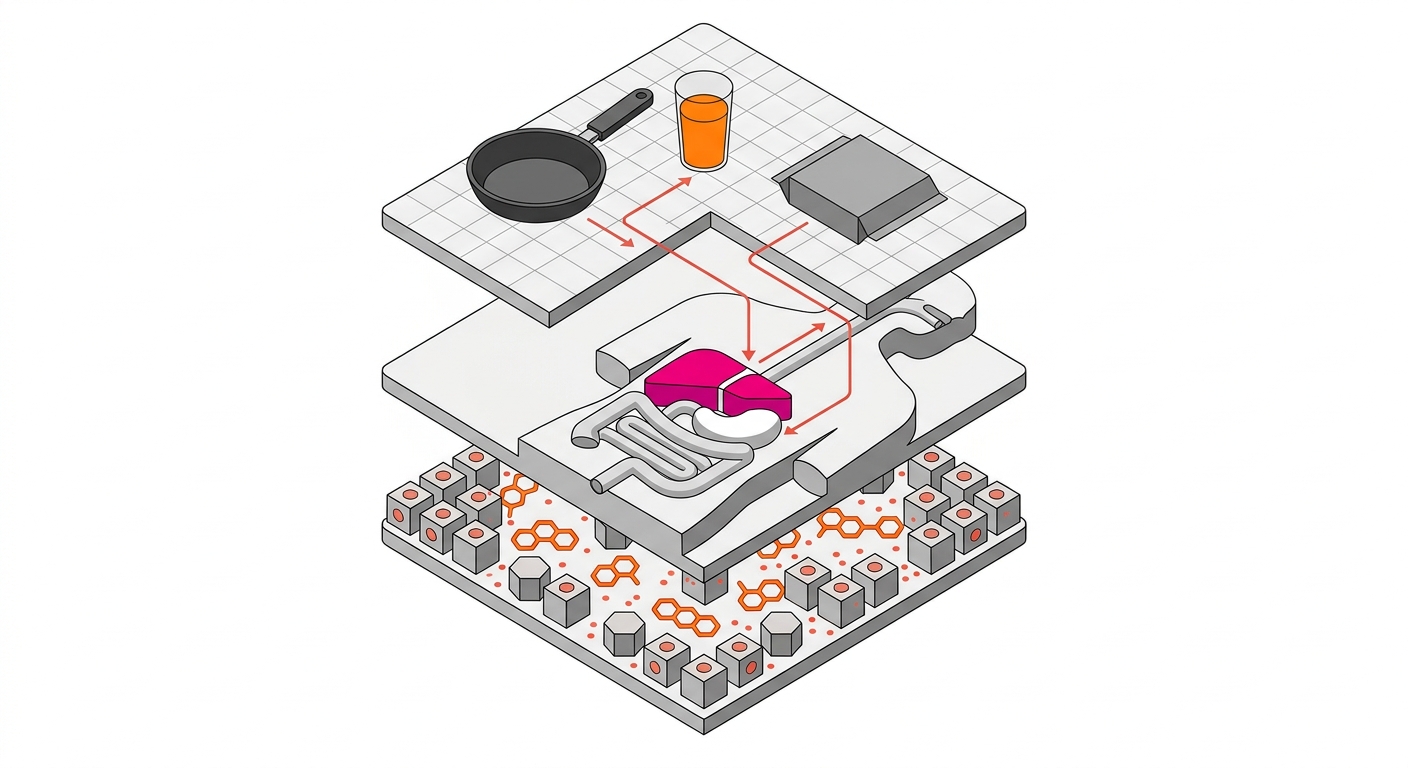
Liver cancer kills most people it touches, with just a 22% five-year survival rate, and California researchers are now investigating whether the "forever chemicals" found in everything from cookware to drinking water are making the problem worse.
A federally funded grant of $681,676 through the Department of Health and Human Services is supporting what researchers describe as the first study of its kind: a direct investigation into whether per- and polyfluoroalkyl substances, commonly known as PFAS, contribute to hepatocellular carcinoma (HCC), the most common form of liver cancer.
The timing reflects a shifting landscape in liver cancer. Cases tied to hepatitis viruses are declining, but a different form of the disease, linked to metabolic liver dysfunction, is rising and is projected to become the leading cause of HCC. Scientists suspect environmental chemical exposures may be fueling that trend by triggering chronic inflammation and metabolic disruption in the liver, but the connection has never been rigorously tested.
PFAS are among the most widespread synthetic chemicals on the planet. They don't break down in the environment or in the human body, and prior research has linked them to liver damage. Whether they actually raise cancer risk, and how, remains an open question.
To answer it, the research team will draw on more than two decades of health data and blood samples from the Multiethnic Cohort Study, a long-running population study that offers a rare window into pre-diagnosis chemical exposure across a diverse group of participants. Alongside that epidemiological work, lab experiments using human liver tissue and single-cell analysis will map the biological pathways through which PFAS might trigger cancer development.
The team also plans to use machine learning to build personalized risk profiles that account for PFAS exposure, genetics, and other molecular factors, an approach that could eventually help identify who is most vulnerable before disease develops.
Results from the study could inform regulatory decisions about PFAS exposure limits and point toward new strategies for preventing one of the hardest cancers to survive.