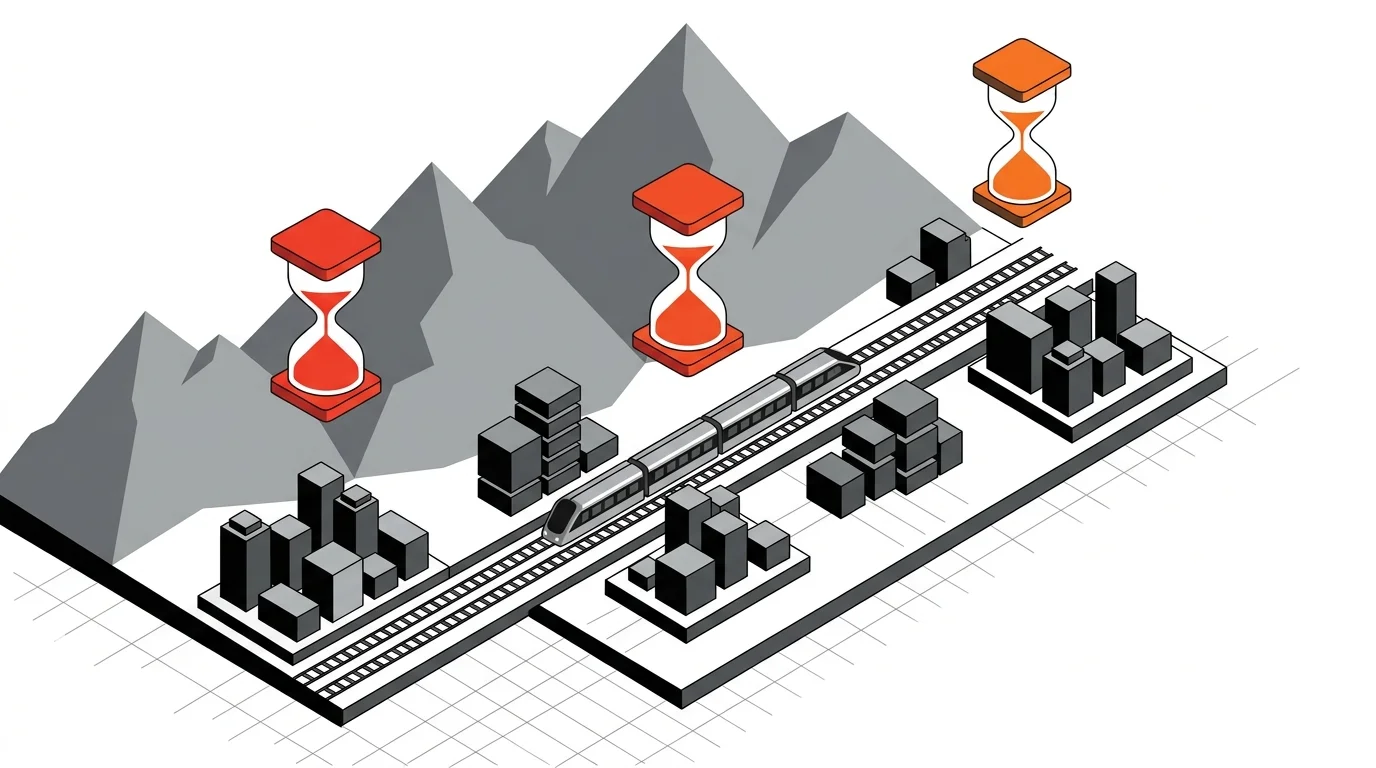
California public agencies issued 148 electric vehicle-related RFPs in the last 30 days, against a 12-month monthly average of about 31.6, a 4.7x surge that puts California's procurement volume at more than four times second-place Washington's 35. The agencies driving this aren't all chasing the same dollar or complying with the same rule. They are racing three separate clocks simultaneously, and at least one of those clocks expires this fiscal year.
The first clock is federal. FY2026 is the final year of the IIJA's National Electric Vehicle Infrastructure formula program, which delivered $384 million to California over five years. The California Energy Commission, the single most active issuing entity in the current 30-day window, with 13 RFPs, is in the middle of its active Solicitation 6 (GFO-25-603), one of the last competitive rounds before NEVI formula money phases out. A June 2025 federal court ruling unlocked previously frozen NEVI funds, clearing the backlog and compressing the remaining spend timeline further. According to the CEC's federal EV infrastructure program page, California has seen roughly $444 million in newly committed NEVI grants since January 2025, running through 2035, but the formula allocation itself ends this year.
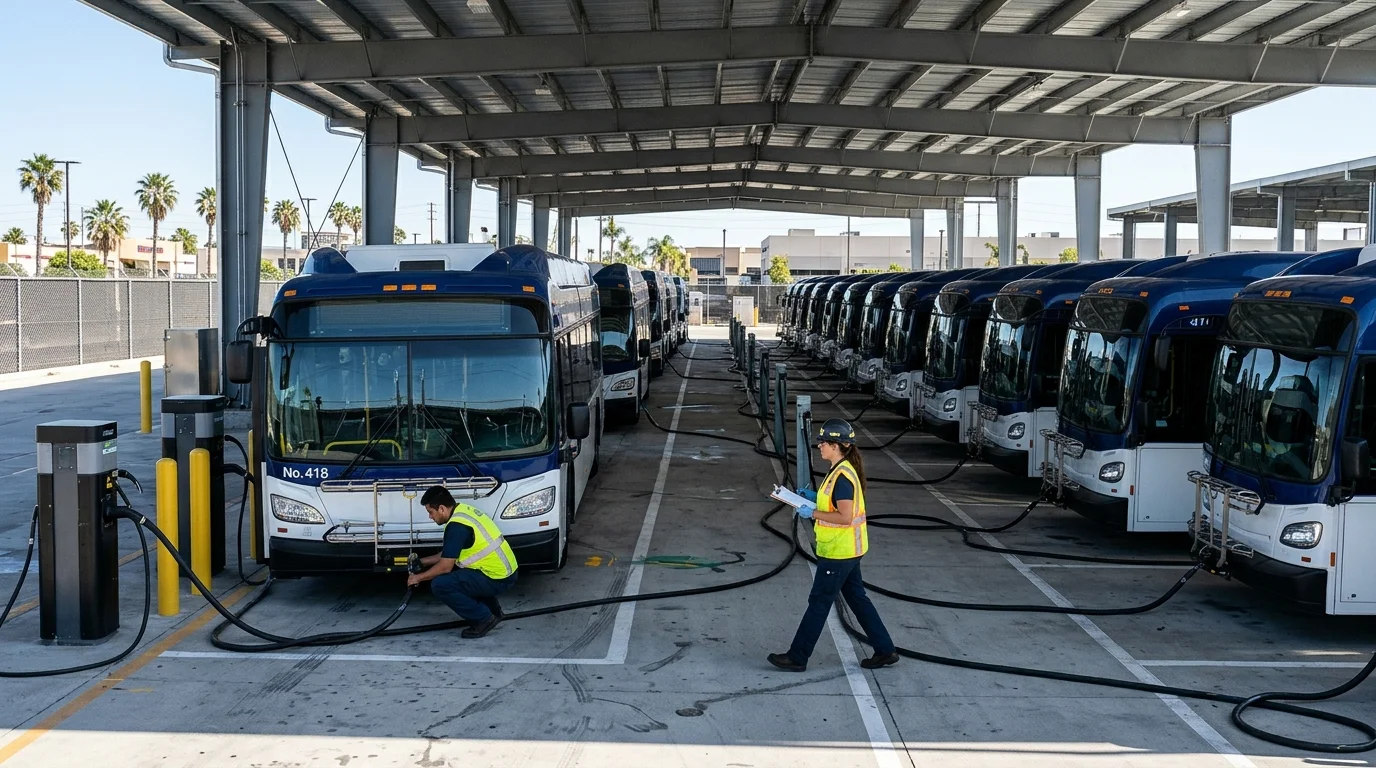
The second clock is a CARB mandate. The Advanced Clean Fleets regulation, approved in April 2023 and amended in 2025, requires state and local government agencies to ramp to 50% zero-emission vehicle fleet purchases now, reaching 100% by 2030. Transit agencies and municipal fleet managers aren't acting on principle; they are acting on a compliance schedule. Riverside Transit Agency, the City of San Jose, the City of Long Beach, and Sonoma County are all among the busiest issuers in the current 30-day window, and their RFPs skew toward fleet bus replacement and depot charging infrastructure, exactly what the ACF regulation targets. Researchers at Stanford's Bill Lane Center have documented that local agencies are struggling with procurement capacity, funding logistics, and technical assistance under the ACF timeline, which helps explain why so many are issuing bids simultaneously rather than spacing them out.
The third clock is a building code. California's 2025 Title 24/CALGreen edition took effect January 1, 2026, requiring EV-ready wiring at nearly every assigned parking stall in new multifamily construction. That is a different mechanism from NEVI and a different mechanism from ACF, targeting developers and the municipalities issuing permits and installation contracts. The Bay Area Air Quality Management District, which appears among the leading issuers in the current window, reflects in part this municipal permitting layer.
These three policies are doing separate things. NEVI moves federal grant dollars into physical charging infrastructure along corridors and in communities; the grant ends, the unspent money doesn't roll over. ACF moves public fleet managers toward ZEV purchase milestones under regulatory threat; the compliance windows are fixed by CARB rulemaking. Title 24 moves installation bids into the market because new buildings legally cannot be permitted without EV wiring; the mandate applies the moment a construction project breaks ground in 2026. The convergence is coincidental in design but cumulative in effect, and 148 RFPs in a single month is what cumulative effect looks like.
Governor Newsom added a political layer in 2025 by signing an executive order reaffirming the state's ZEV commitment after the Trump administration challenged the 2035 sales mandate. That order didn't create new money, but it signaled that state procurement pipelines would continue regardless of federal political pressure, an important signal for agencies deciding whether to accelerate bids or wait. In August 2026, Newsom announced a $95.2 million state investment in ZEV infrastructure, including $48 million for light-duty DC fast charging and $30.2 million for medium- and heavy-duty infrastructure, funded through state appropriation rather than federal formula grants. That money layers on top of the federal expiration rather than replacing it.
The federal EV grant portfolio in California extends beyond NEVI. EPA Clean Ports Program grants committed $411 million to the City of Los Angeles and $322 million to the Port of Oakland for port electrification. South Coast AQMD holds a $500 million EPA Climate Pollution Reduction Grant active through 2029. FTA Low/No Emission bus grants committed $39.5 million to San Francisco, $20.3 million to Santa Clara VTA, and $4.4 million to Petaluma in the last 90 days alone. Those programs have longer runways, but they are purpose-bound: port equipment, transit buses, and clean air programs. They don't substitute for the NEVI corridor and community charging dollars that phase out this year.
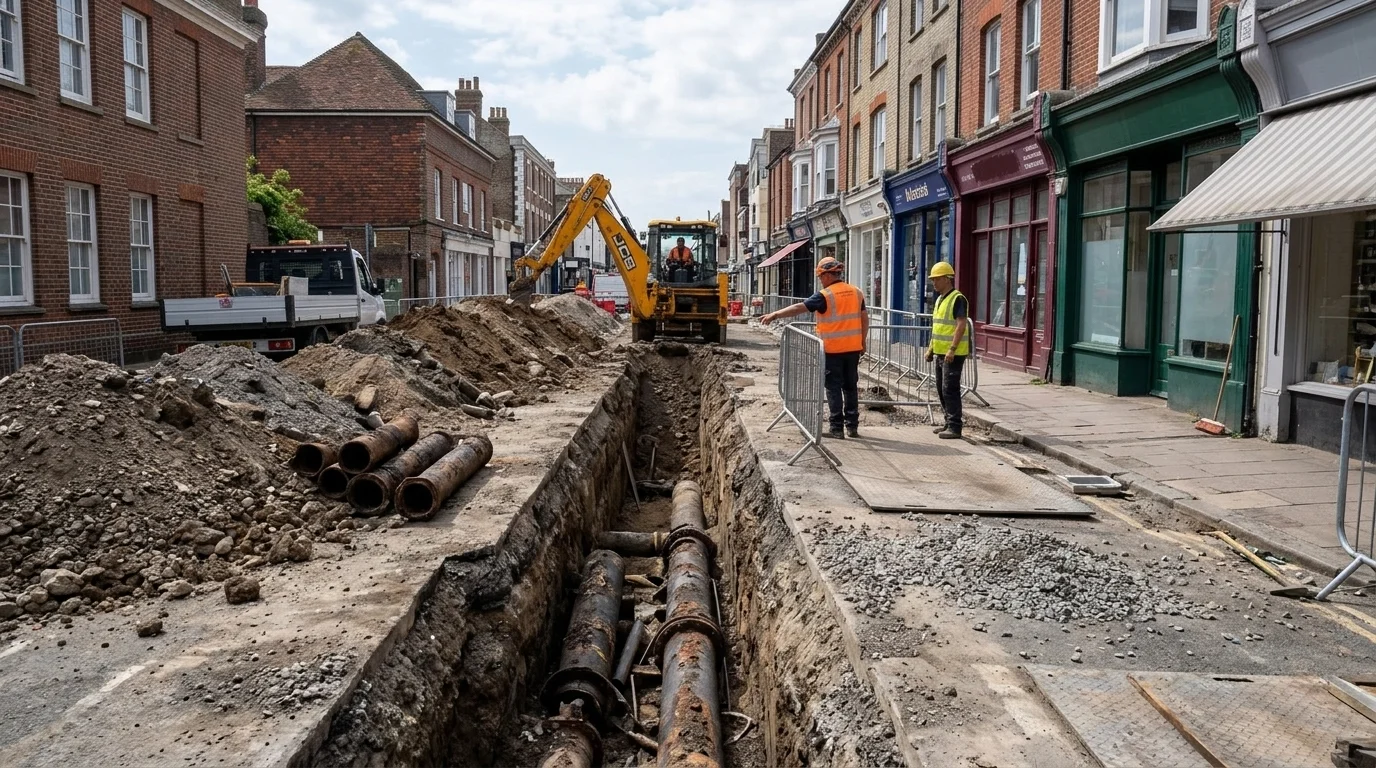
For residents, the near-term consequence is visible: permitting queues at city building departments, public bids for charging station construction, and transit agencies retiring diesel buses on accelerated schedules. For anyone watching the procurement data, the next signal to track is CEC Solicitation 6 award announcements, expected in late 2026, and whether ACF compliance audits begin producing enforcement actions against agencies that failed to hit their first ZEV purchase milestones. The sprint ends when the money is spent or the deadline passes; in California right now, both are happening at once.