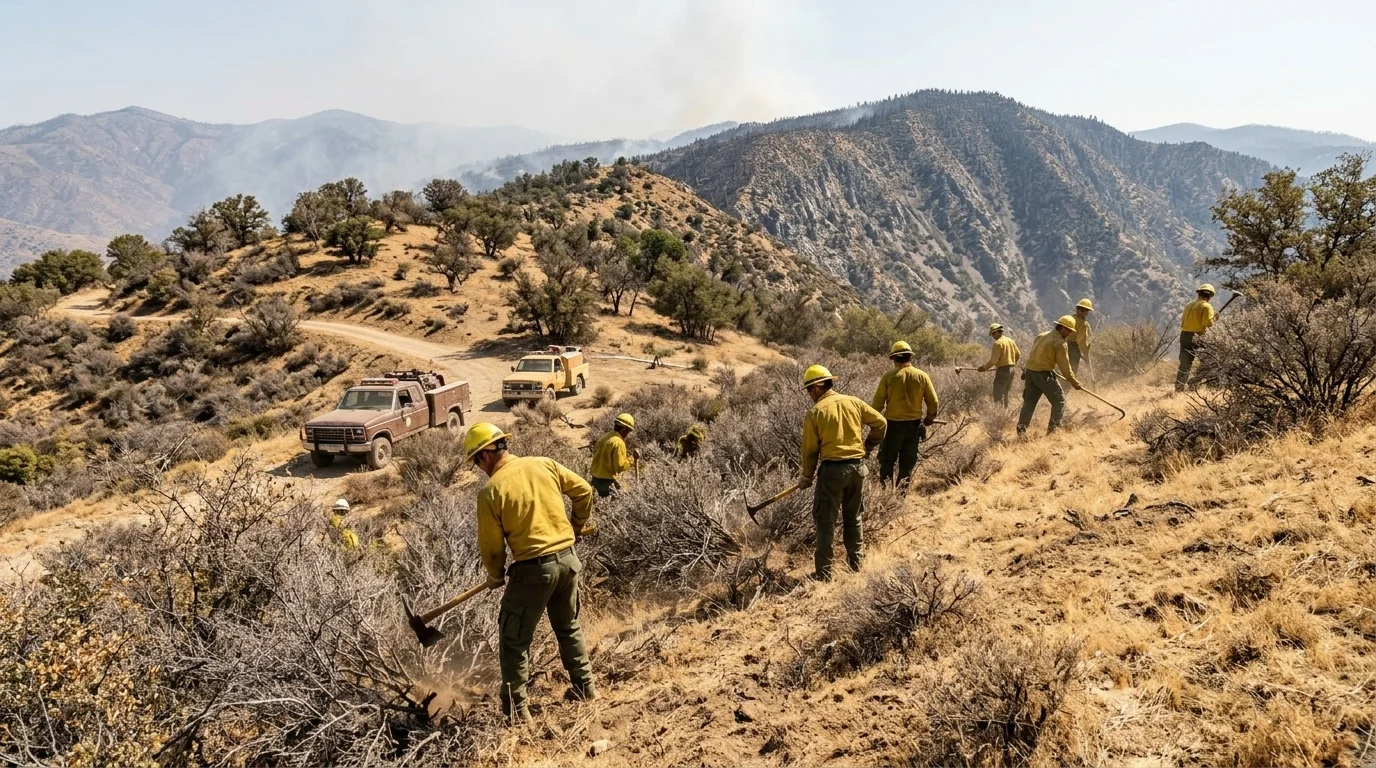
California wildfire procurement has roughly doubled in the last 30 days, with 36 open solicitations hitting the pipeline against a 12-month average of about 18 per month. The spike has almost nothing to do with the fires burning right now. It is the product of a voter mandate, a governor's strategic counter-offensive against federal forestry cuts, and a cluster of grant deadlines that all converged in the same summer window.
The mechanism is Proposition 4, the November 2024 California Climate Bond, which dedicated approximately $1.5 billion of its $10 billion total to wildfire and forest resilience. CAL FIRE began executing that mandate in earnest this spring: $70 million in Wildfire Prevention Grants were announced May 7, followed by $30 million in Regional Wildfire and Landscape Resilience Grants on May 13. Concept proposals for the regional program closed June 30; the prevention grants closed July 8. The 2026 Wildfire Resilience Block Grants and Tribal Wildfire Resilience Grants landed on top of that. The result is a procurement surge unlike anything California has produced in a single season.
The agencies showing up in the solicitation record reflect that statewide scope. CAL FIRE, the Sierra Nevada Conservancy, the San Diego River Conservancy, North Tahoe Fire Protection District, Sonoma County Water Agency, and Mendocino County all issued substantive RFPs in the June-to-August window. The geographic spread, from the Sierra to the coast to the Oregon border, is deliberate: Prop 4 eligibility was written broadly, and Sacramento wanted uptake everywhere.
Source: NationGraph.
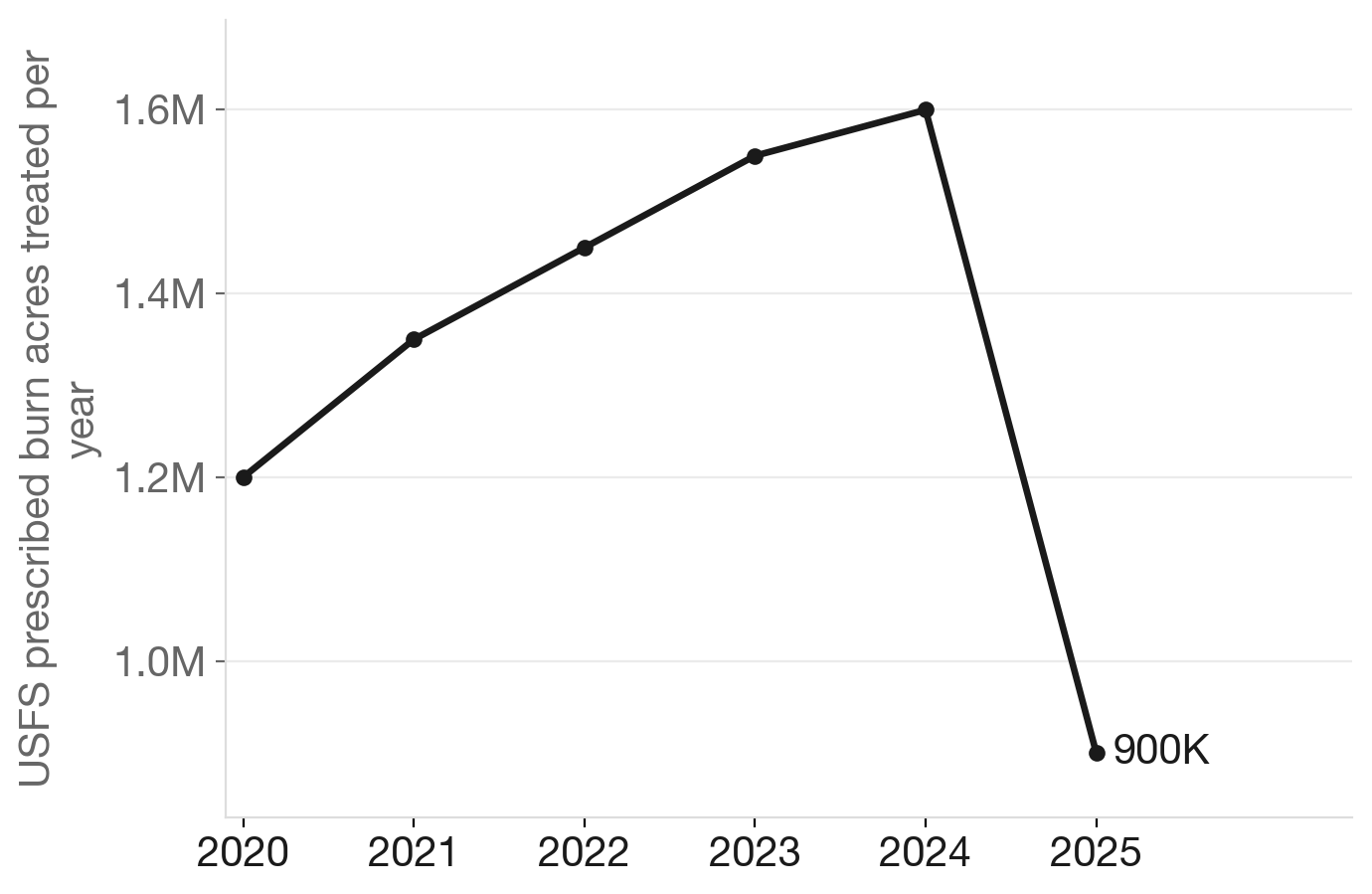
But the bond alone does not fully explain the urgency. California is also absorbing the fallout from federal forestry retractions that have no historical precedent in modern wildfire policy. The Trump administration cut U.S. Forest Service wildfire landscape treatments by 1.5 million acres ahead of the 2026 season and reduced prescribed burns by nearly 50 percent year-over-year, from roughly 1.6 million acres in 2024 to around 900,000 acres in 2025. In April 2025, it canceled a $35 million resilience grant to Napa County. California is now challenging 86 other cut hazard mitigation projects in court.
Governor Newsom's response has been explicit. An October 2025 executive order directed state agencies to expand prescribed burns and reduce permitting friction for forest treatment. In March 2026, the administration announced 300 wildfire projects fast-tracked in 300 days. CAL FIRE's budget has nearly doubled under Newsom, from $2 billion to $3.8 billion, and its workforce has grown from 5,829 to 10,741 positions. More than half of California's forestlands are federally managed, which means state crews are now actively managing fuels on U.S. Forest Service and BLM land to fill gaps the federal government has left open.
The timing matters because the 2026 fire season is not cooperating. Sierra snowpack, which stood at 75 to 80 percent of normal in early spring, collapsed to 20 to 30 percent by late May. Dead fuel moisture is low across the Sierra foothills and the North Coast. CAL FIRE's own seasonal forecast called for above-normal large fire activity in July and August, and 1,720 fires have already burned 53,981 acres year-to-date. California's active wildfire grant portfolio already totals $294 million across the Departments of Forestry and Fire Protection, USDA, the Interior Department, and the Coastal Conservancy. The new Prop 4 solicitations are building on top of that base, not replacing it.
For California residents, particularly those in the wildland-urban interface from Tahoe to Temecula, the procurement wave signals something concrete: the projects likely to receive funding this fall are preventive treatments, vegetation clearing, prescribed fire programs, and community defensible space work. These are not responses to a disaster that has already happened. They are bets placed before one does.
What to watch next: CAL FIRE is expected to announce awards for the $70 million prevention grant round in late fall 2026. The Regional Resilience grants will follow. Whether the state can absorb and execute $1.5 billion in Prop 4 spending without bottlenecks in contractor capacity and environmental permitting is the open question. California has the money and the mandate. The constraint now is implementation speed.