Berkeley, California has spent years as one of the loudest skeptics of police surveillance technology in the country. Now it's shopping for all of it at once.
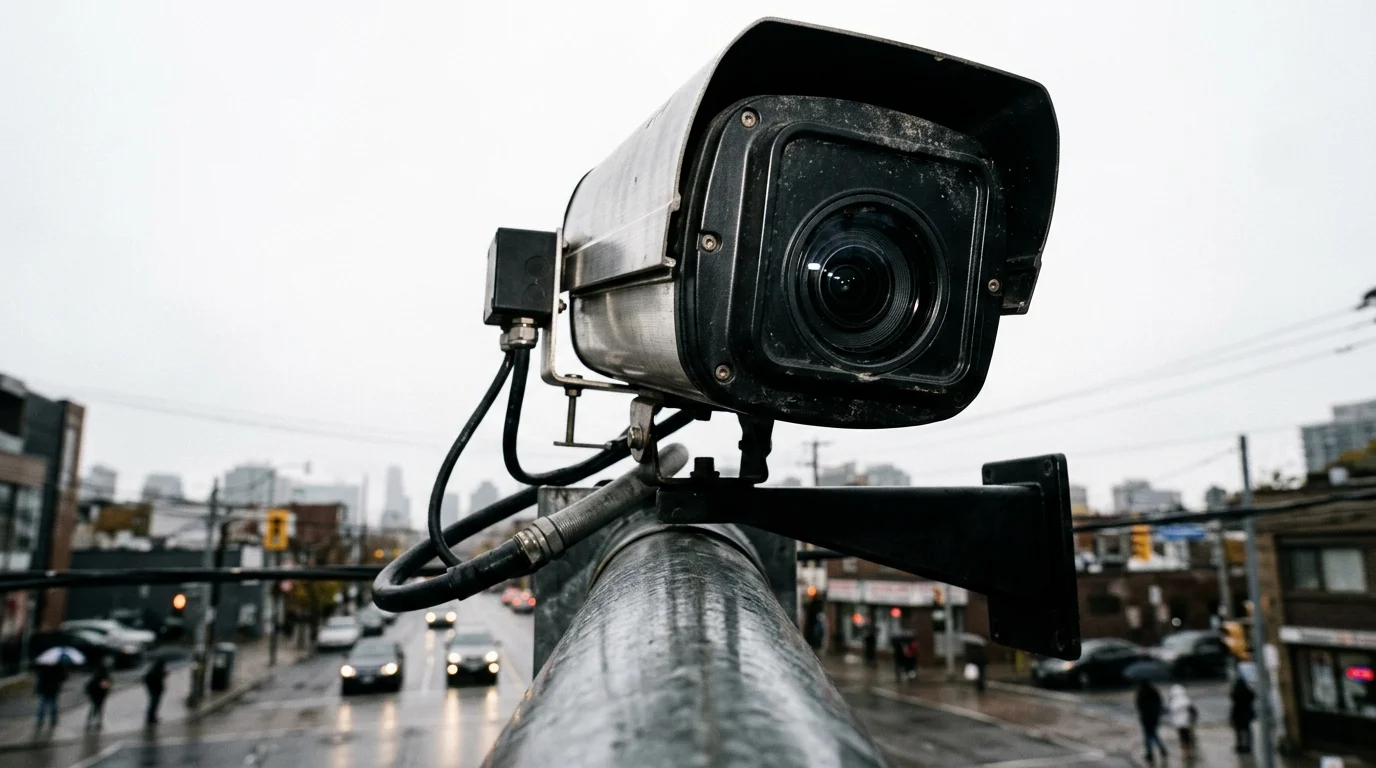
The city is actively seeking vendors for a sweeping package of public safety tools: automated license plate readers, fixed pan-tilt-zoom cameras, drones that launch autonomously in response to 911 calls, field-deployed drones, software to pull in video feeds from private businesses, and investigative software. The solicitation is posted on the city's bid portal.
The breadth of the package is striking for a city that banned facial recognition in 2019, passed one of the country's first surveillance oversight ordinances in 2018, and spent years debating whether to allow license plate readers at all. That 2018 law, modeled on ACLU-backed legislation, requires the City Council to approve any surveillance tool and mandates annual public reporting on its use. The Berkeley Police Department, which has roughly 150 officers and has faced persistent staffing shortages, has long operated without the tracking infrastructure that neighboring cities like Oakland and San Francisco have deployed.
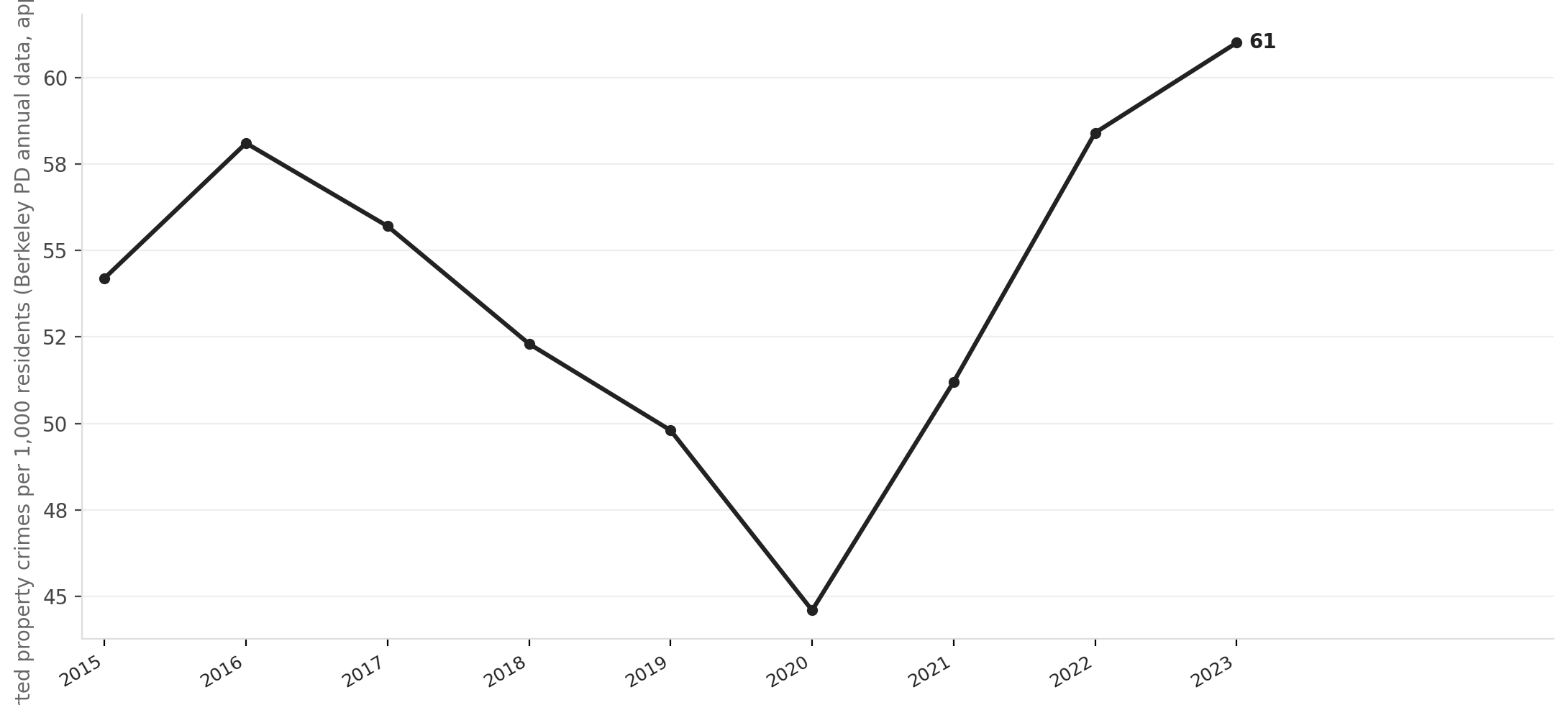
Source: NationGraph.
The political ground shifted amid years of rising property crime across the Bay Area, a 2023 City Council vote authorizing exploration of license plate readers, and a broader statewide turn toward stricter enforcement signaled by California voters passing Proposition 36 in November 2024, which increased penalties for theft and drug crimes.
The community video stream integration piece of the package is particularly notable: programs like this typically allow police to tap into camera feeds from local businesses and private property owners, centralizing footage that would otherwise require individual outreach during investigations.
Purchasing the technology is only the first step. Under Berkeley's surveillance ordinance, each tool would still require its own City Council approval, a public use policy, and a surveillance impact report before officers could deploy it. How rigorously those reviews proceed will determine whether the 2018 law functions as a meaningful check or a procedural formality.
Proposals were due Aug. 20, 2026. The city has the option to split the contract among multiple vendors or reject all submissions.