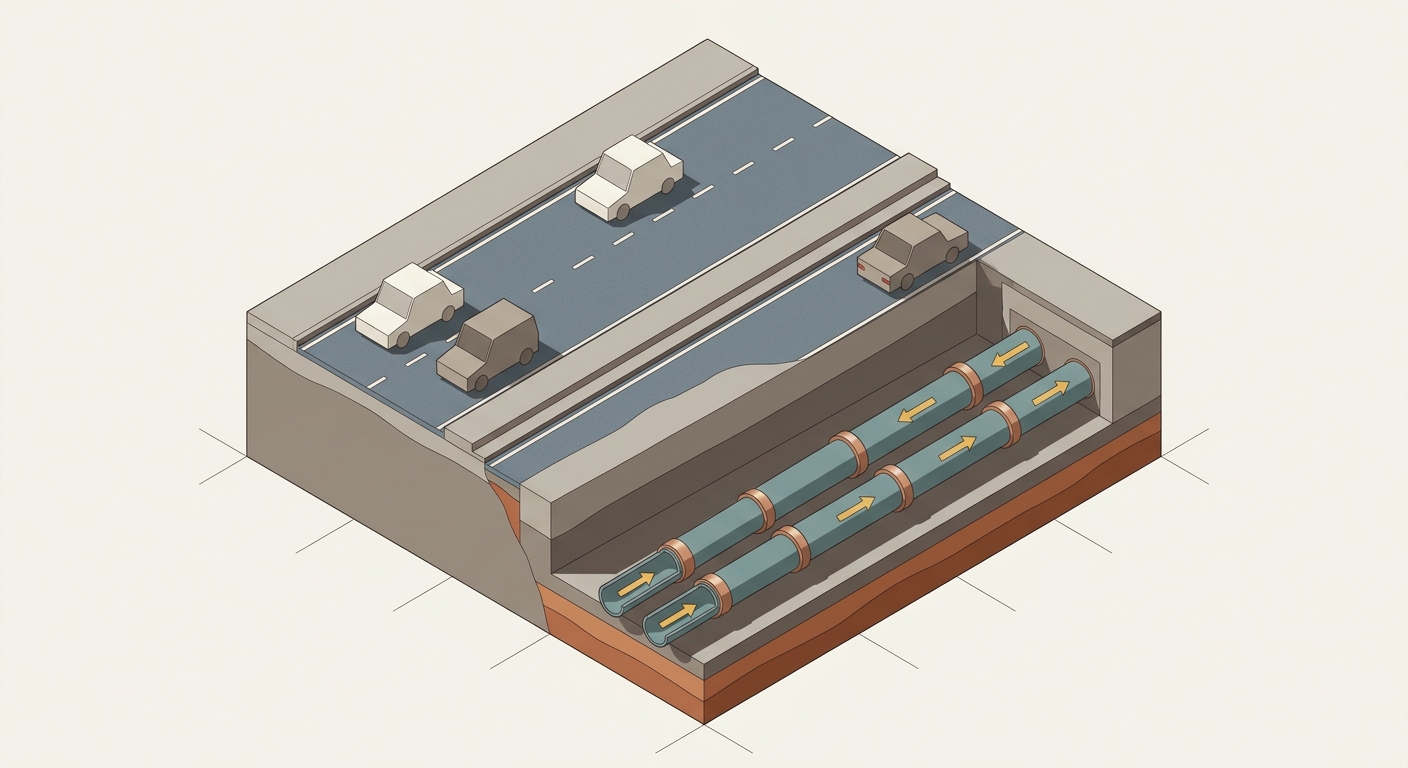
A pair of underground sewer pipes running beneath Woodbine Avenue in the Greater Toronto Area are out of full service, and York Region is now moving to bring them back online before the gap in wastewater capacity becomes a serious problem.
The pipes are forcemains, meaning they operate under pressure to push wastewater uphill or across terrain where gravity alone won't move it. That pressurized design makes them more efficient than traditional gravity sewers, but also more prone to catastrophic failure. A burst forcemain can release raw sewage into streets, basements, and nearby waterways with little warning. The fact that there are two parallel pipes suggests this corridor was built with redundancy in mind, which also points to how critical the route is for moving waste through the region's sewer network.
The region is seeking an engineering firm to handle detailed design, oversight during construction, and on-site inspection. Hiring a single firm for all three phases is a common approach for complex sewer work, where having the same engineers who drew up the plans also watch over construction helps catch problems before they become expensive mistakes.
Woodbine Avenue runs north from Toronto through Markham and into Whitchurch-Stouffville, threading through some of the fastest-growing communities in Canada. York Region's population has climbed from roughly 730,000 in 2001 to more than 1.2 million today, with provincial growth targets pushing that figure toward 2 million by 2051. Infrastructure built during the postwar suburban boom of the 1960s through 1980s was never designed to handle flows at that scale, and the region has been racing to upgrade aging systems while simultaneously building new capacity for incoming residents.
The details of when the forcemains went offline, what caused the problem, and how long the region has been relying on other infrastructure to compensate are not part of the public record.
With detailed design still ahead, construction is likely at least a year or two away. Work along a heavily traveled arterial like Woodbine Avenue will eventually mean disruption for thousands of daily commuters, though the timeline for breaking ground won't be clear until design work is complete.