Woodridge, Illinois is turning to one of nature's oldest tools to restore what suburban development nearly erased: the tallgrass prairie and oak savanna that once blanketed the Midwest.
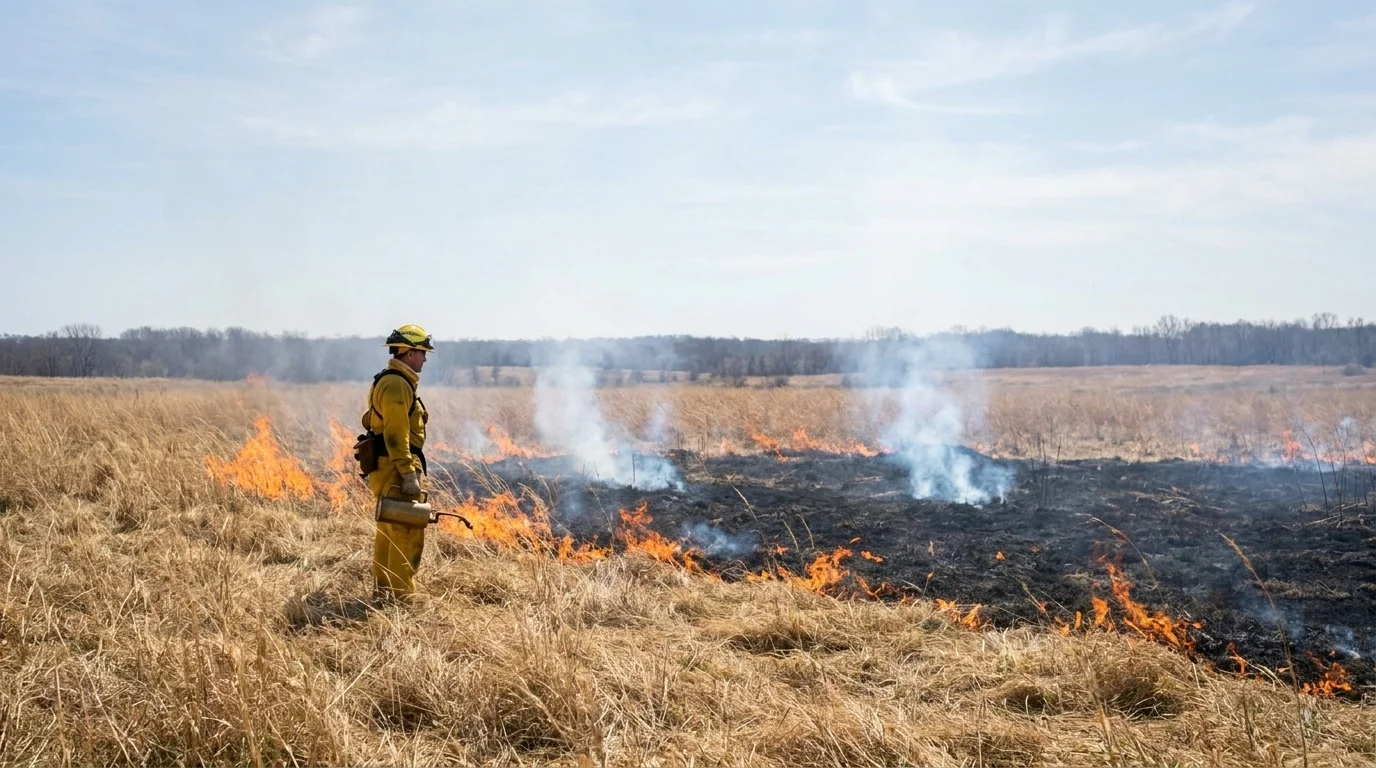
The Woodridge Park District, which manages roughly 50 parks and natural areas in this DuPage County suburb of about 34,000 people, is hiring a contractor to conduct prescribed burns across its natural areas during the 2026 and 2027 seasons. Burns typically take place in narrow spring and fall windows when humidity, wind speed, and fuel moisture create conditions that allow crews to control them safely.
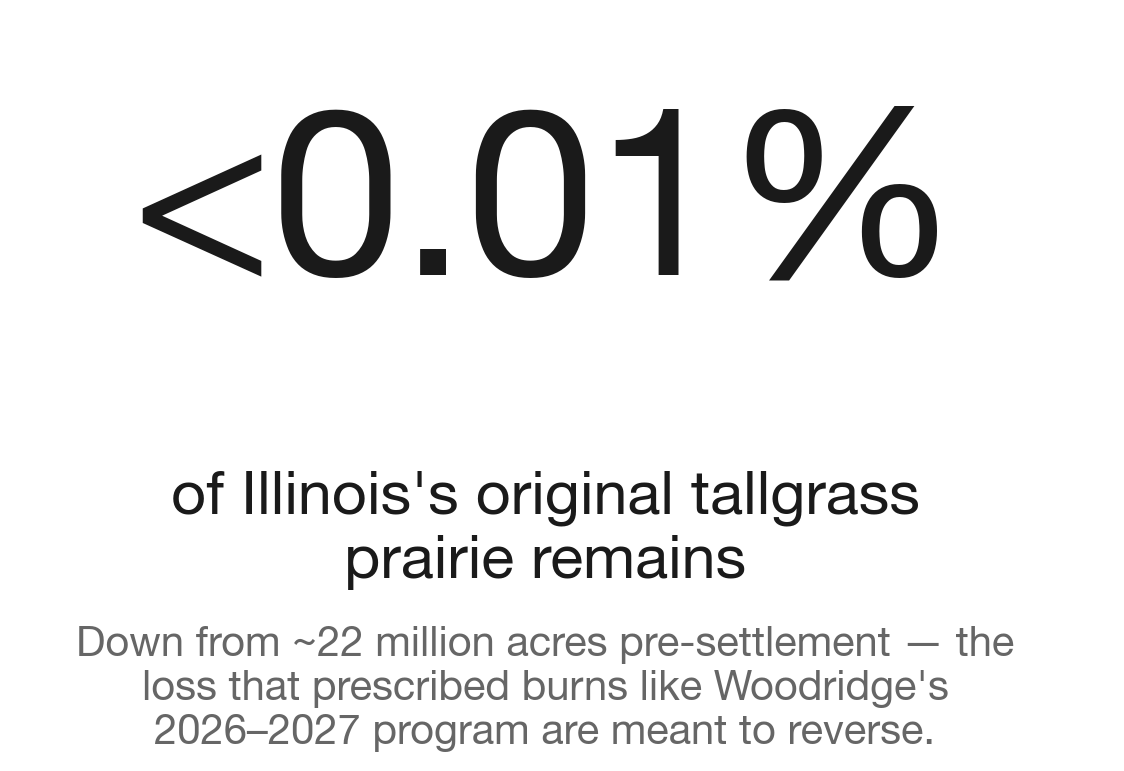
The ecological logic is straightforward. Illinois prairie evolved alongside fire for thousands of years, set by Indigenous peoples and lightning long before European settlement arrived. When burning stopped, invasive shrubs like buckthorn and honeysuckle moved in, choking out native grasses and wildflowers. Today, less than 0.01% of Illinois's original prairie survives. Prescribed fire kills those invasives, releases heat-dependent native seeds, and prevents the woody encroachment that gradually turns open savanna into dense woodland.
Source: NationGraph.
DuPage County has been a leader in this kind of suburban restoration work since the 1990s, with the county forest preserve, local park districts, and conservation organizations conducting annual burns across the region. Woodridge fits into that established pattern. The district's natural areas include savanna and prairie remnants, some of which sustained additional tree canopy damage from an EF-3 tornado that struck the area in June 2021, adding context to ongoing land management priorities.
The contract amount has not been publicly disclosed. The district has posted the solicitation on its bids and RFPs page, where additional details are available. Burns are regulated by the Illinois EPA, which issues open burning permits, and are typically coordinated with the Illinois Department of Natural Resources.
Residents near park natural areas can expect to see smoke on burn days, which the district announces in advance. The two-year contract covers burns planned for both the 2026 and 2027 seasons.