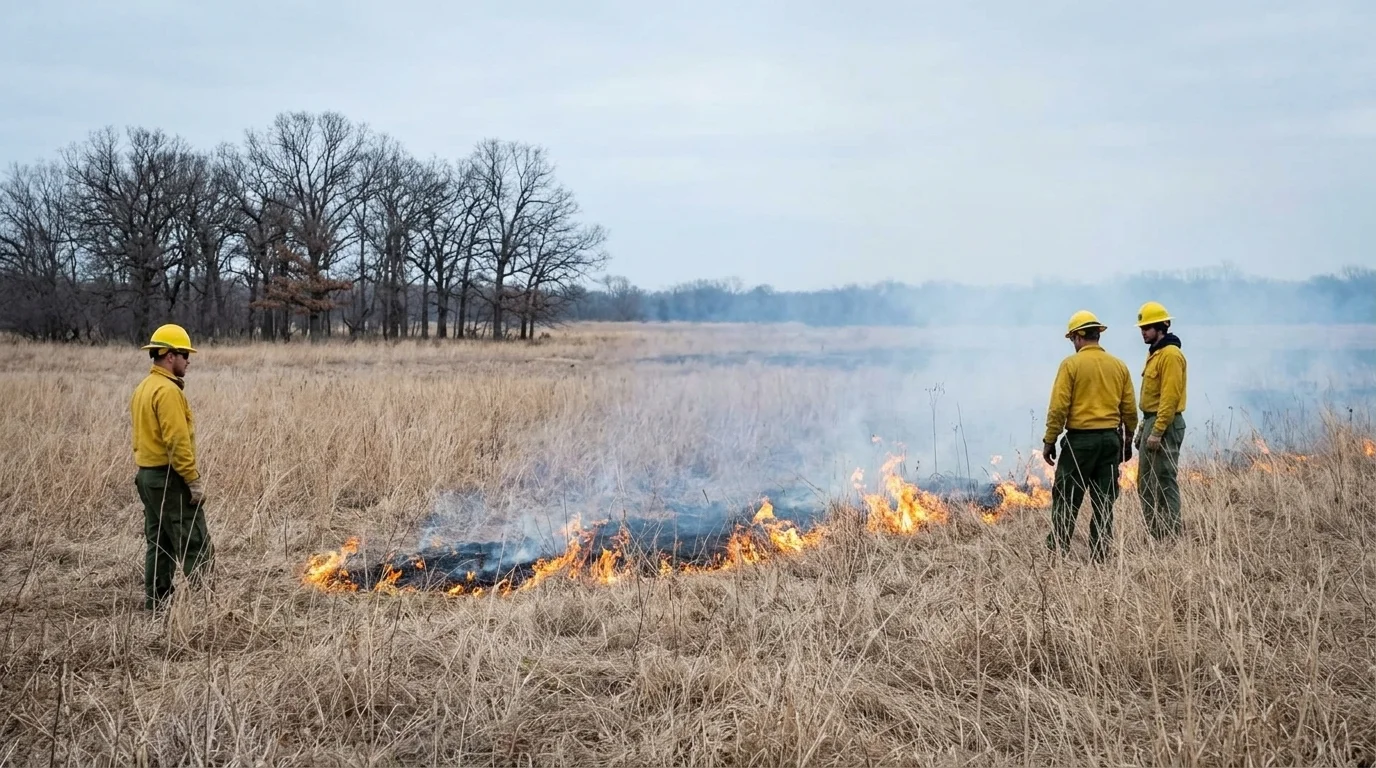
Woodridge, Illinois is bringing fire back to its parks, hiring certified crews to conduct prescribed burns across the village's natural areas in 2026 and 2027 as part of a broader effort to rescue tallgrass prairie and oak woodland ecosystems that have been slowly dying without it.
The Woodridge Park District, which manages more than 700 acres across roughly 50 parks in DuPage, Will and Cook counties, has posted the contract opportunity on its bids page to lock in a burn team for the next two seasons. The move is less about wildfire prevention, a concern more associated with the West, and more about restoring the natural fire cycle that shaped Illinois landscapes for thousands of years.
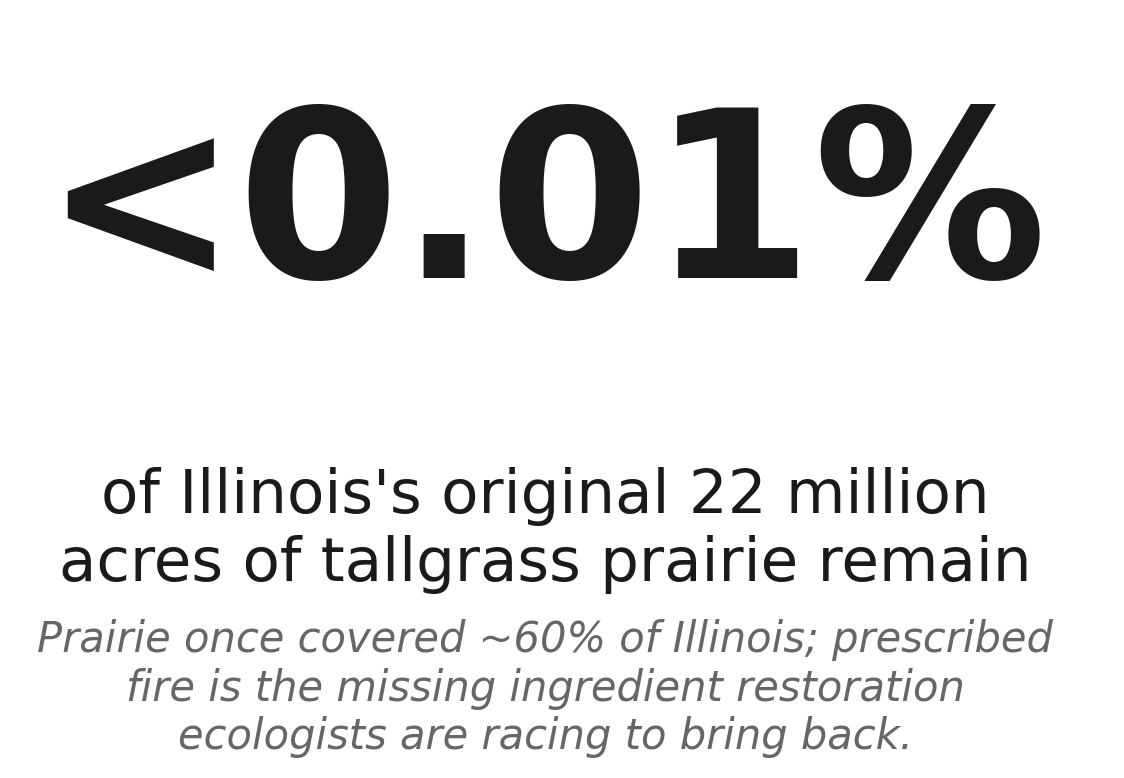
Before European settlement, tallgrass prairie covered nearly 22 million acres of Illinois, about 60 percent of the state. Today, less than 0.01 percent of that original prairie survives, making it one of the most endangered ecosystems in North America. The collapse began when settlers suppressed fire in the mid-1800s, allowing invasive shrubs like buckthorn and honeysuckle, along with fire-intolerant maples, to crowd out the oaks and native grasses that had coexisted with regular burning for millennia. Indigenous peoples, including the Potawatomi and Miami in this region, had actively managed the land with fire long before that.
Source: NationGraph.
Modern prescribed burning in the Chicago suburbs traces back decades, with the Chicago Wilderness alliance, formed in 1996, helping make controlled burns a regional standard. DuPage County's Forest Preserve District now burns thousands of acres annually, and Woodridge is part of that same ongoing effort. Under the Illinois Prescribed Burning Act, all burns must be led by or conducted under a state-certified burn manager, a credential that ensures crews can execute burns safely within tight seasonal windows. In northern Illinois, those windows fall in March and April, then again in October and November, when wind, humidity and fuel moisture conditions align.
The district's two-year contract structure reflects that reality: burn seasons are short and conditions unpredictable, so securing a qualified contractor well in advance is standard practice across the region.
For longtime Woodridge residents, this work may look familiar. The district has used controlled burns before as part of its natural area stewardship, as covered in earlier reporting on the district's restoration efforts. Occasional 911 calls from residents mistaking prescribed burn smoke for a wildfire are a recurring footnote in Chicago-area burn seasons, particularly since the 2023 Canadian wildfire smoke episodes heightened sensitivity to any haze on the horizon.
The burns are expected to cover the 2026 and 2027 seasons. The district has not publicly specified which natural areas are scheduled to burn first.