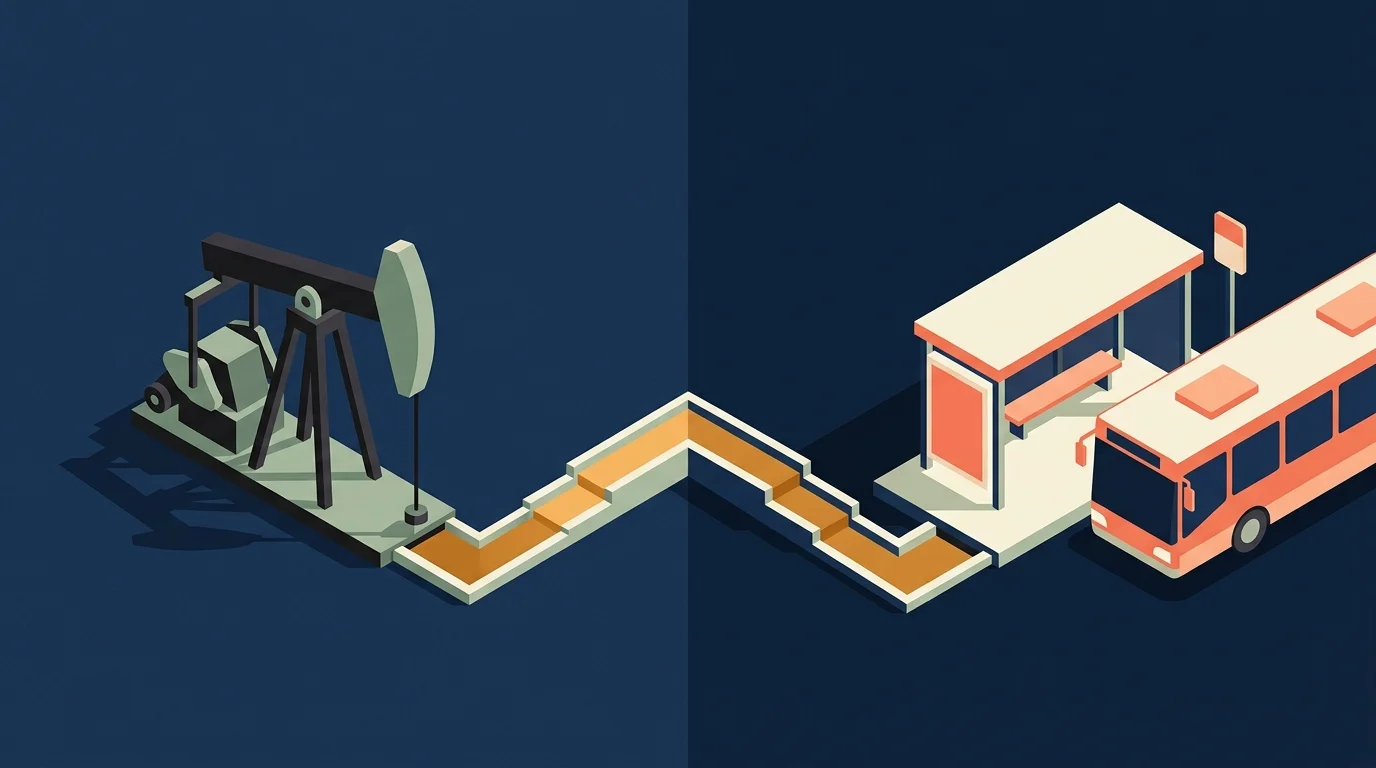
Federal electric vehicle grants flowing into Washington state have surged to $9.4 million in the past 90 days, a 2,183% increase over the same window a year ago, and almost none of it is going toward the highway charging stations most people picture when they hear "EV infrastructure." The money is heading to the waterfront.
The spike is anchored by a single April 15, 2026 DOT National Infrastructure Investments grant: $9.4 million to the Port of Bremerton, with a performance period running through February 2029. That award alone dwarfs the $411,795 baseline from the same window last year. But the more telling number sits behind it: WSDOT currently holds 11 active NEVI-related grants totaling $85.5 million in obligated federal funds running through 2039, with only roughly $993,000 disbursed so far. Washington has won the money. Most of it hasn't moved yet.
The reason both the freeze and the thaw happened traces directly to a legal fight Washington helped start. The Federal Highway Administration rescinded NEVI program guidance in February 2025, effectively halting the entire grant pipeline. Washington joined 16 states as a lead plaintiff in a federal lawsuit against FHWA, and a judge ordered the funds released in June 2025. A second ruling on January 26, 2026 confirmed the withholding had been unlawful. According to FHWA, the forced release restarted not just NEVI disbursements but the full schedule of EV infrastructure commitments under the Bipartisan Infrastructure Law. WSDOT reinstated its paused awards program in July 2025 and announced Round 1 NEVI grants in January 2026: $12.16 million to five companies for 14 DC fast-charging stations along I-90, US 97, US 195, and US 395.
Source: NationGraph.
Those highway awards matter, but they are not where Washington's electrification challenge is sharpest. Washington State Ferries burns roughly 19 million gallons of diesel annually carrying about 20 million passengers, making it the largest source of direct transportation emissions the state directly operates. The full electrification plan covers up to 16 terminals, is estimated to cost $6 billion, and has $1.68 billion currently funded. The Bremerton terminal is a named node in that buildout, with Puget Sound Energy providing shore-power upgrades to support electric vessel charging. WSDOT's ferry system electrification program frames the terminal grants not as amenities but as load-bearing pieces of a decades-long capital program.
Kitsap Transit is running a parallel track nearby. Senators Cantwell and Murray, along with Representative Kilmer, announced a $7.7 million federal grant for Kitsap Transit's zero-emission passenger ferry program, a fast-foil electric vessel that would connect the same Puget Sound communities the state ferry system serves. The clustering of maritime EV investment around Bremerton and the broader Kitsap waterfront is deliberate: the geography concentrates both the emissions problem and the infrastructure opportunity in one body of water.
What makes the current moment structurally unusual is what has disappeared on the consumer side at the same moment federal infrastructure dollars are accelerating. Washington's state sales tax exemption for EV purchases expired July 31, 2025. The state's EV Instant Rebate program has been fully claimed. The incentives that pulled individual buyers toward electric vehicles are gone, even as Washington's Clean Cars II standard requires 100% zero-emission new passenger vehicle sales by 2035, beginning with model year 2026 requirements. Public money is now concentrated almost entirely on the infrastructure layer, not the purchase layer.
That concentration creates its own constraints. Washington SB 5528, effective January 1, 2026, requires EV chargers installed on public works projects to use EVITP-certified electricians. The certification requirement is designed to ensure quality and workforce standards, but it arrives exactly as grant volume is surging, creating a skilled-trades bottleneck that could slow disbursement even after the legal battles to unlock the money are won. With $84.5 million in obligated NEVI funds still sitting largely unspent, the pipeline pressure is building.
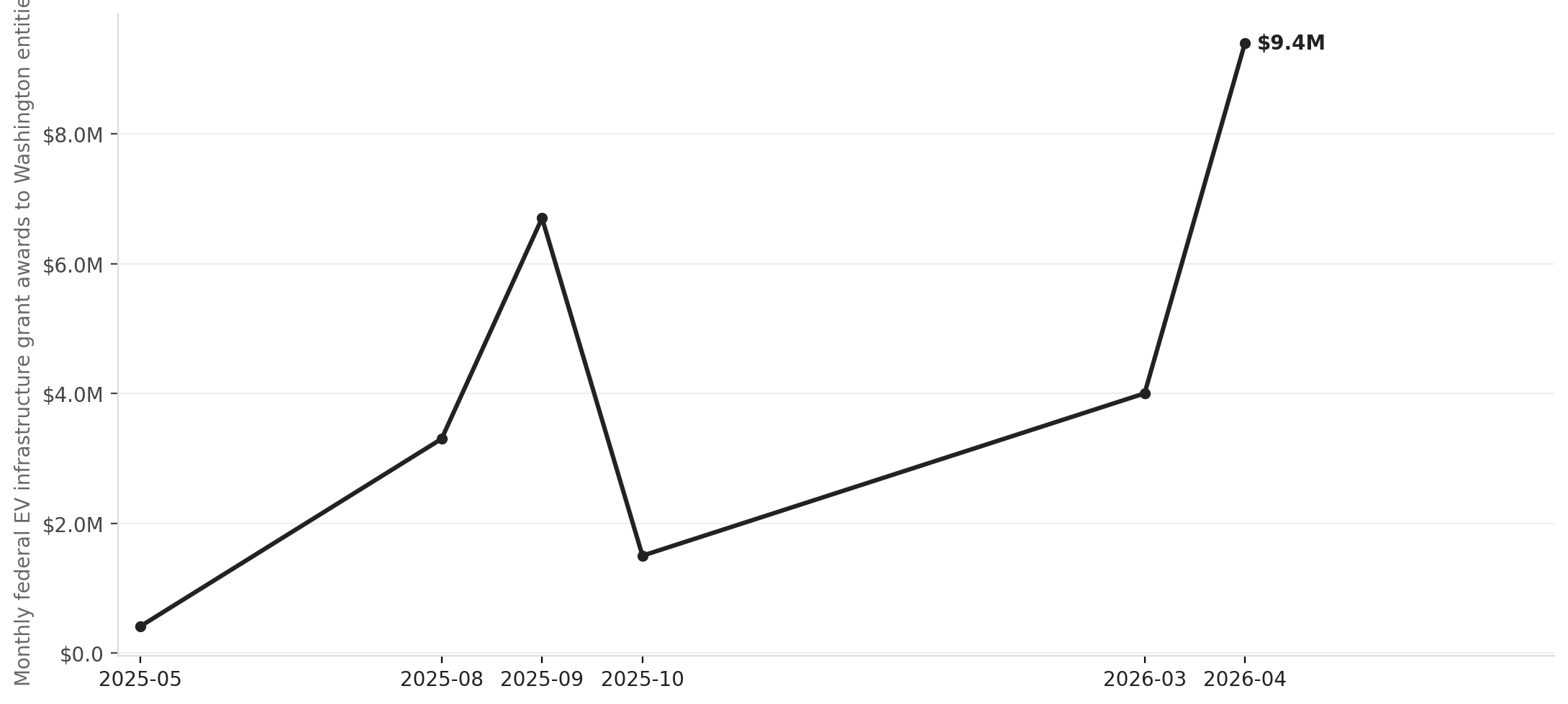
The monthly award time series makes the acceleration visible: $3.3 million in August 2025, $6.7 million in September 2025, a pause, then $4 million in March 2026 and the $9.4 million Bremerton award in April. Washington Commerce opened Round 2 of its state EVSE Grant Program in October 2025 with $19.4 million in additional allocations. The stair-step pattern is consistent with a grant pipeline that was legally frozen, then forcibly reopened, and is now working through a backlog of projects that were planned but not funded.
The next signal to watch is disbursement pace. Obligated dollars become real infrastructure only when they are drawn down against active contracts. With $85.5 million committed and less than $1 million spent, and with a new electrician certification requirement adding friction to every public installation, the question for Washington's EV buildout is no longer whether the money exists. It is whether the terminals, the workforce, and the procurement timelines can absorb it fast enough to meet a 2035 mandate that is now less than a decade away.