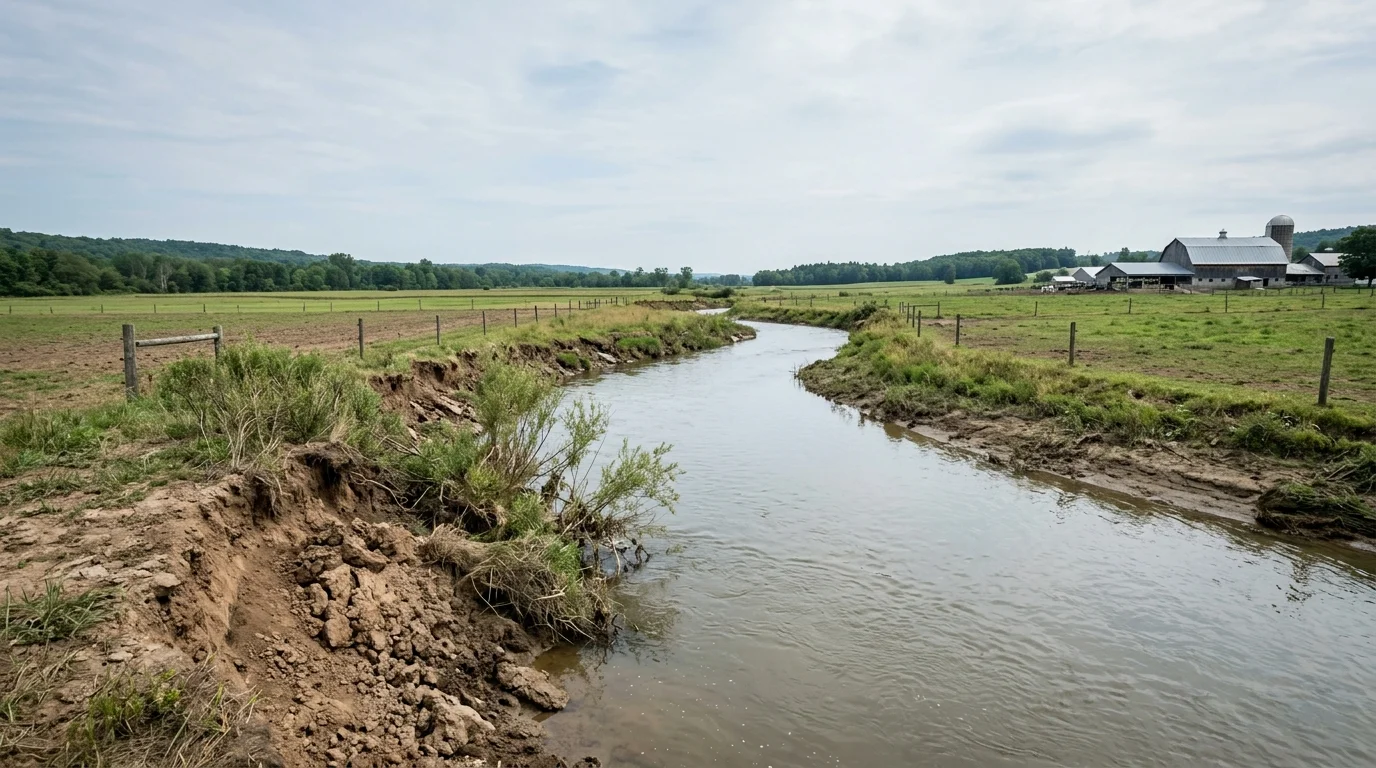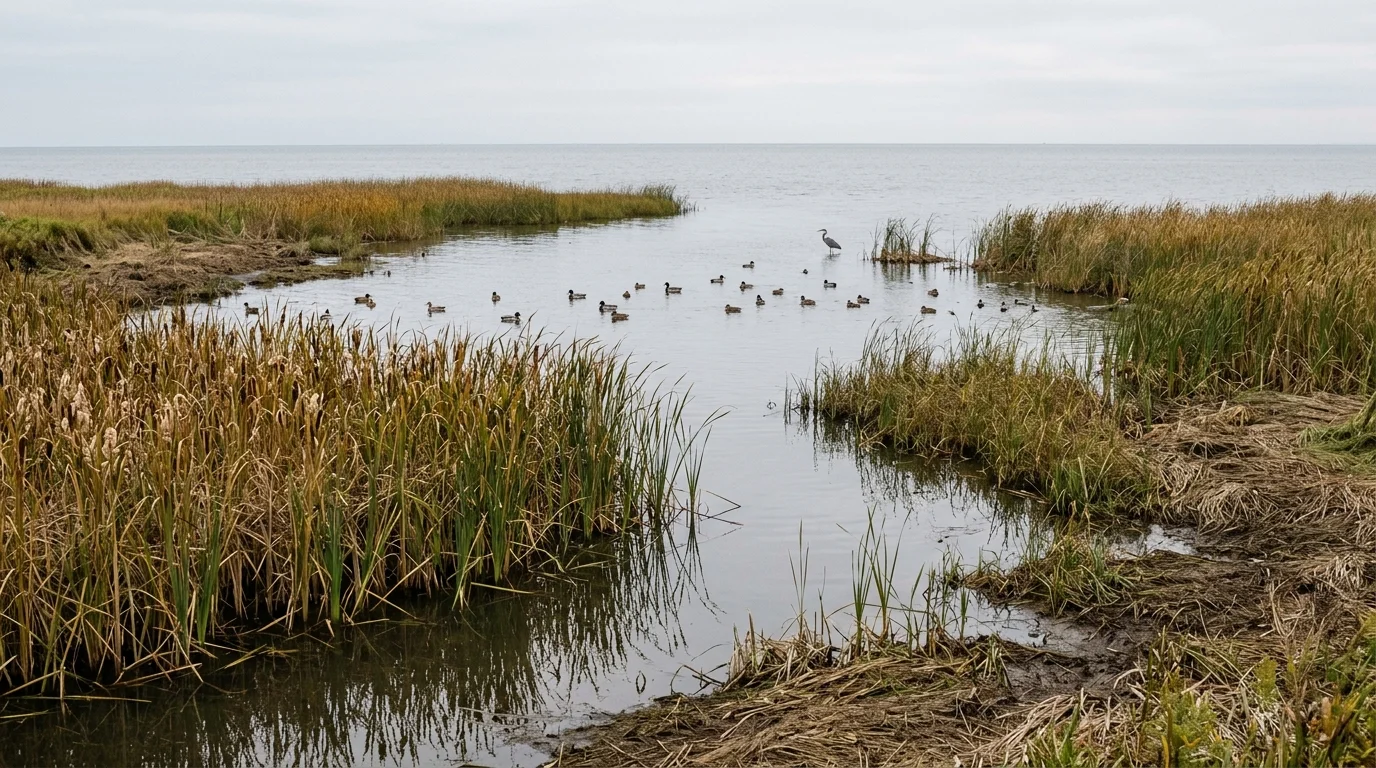
A stretch of Crane Creek running through the Ottawa National Wildlife Refuge east of Toledo, Ohio is about to get 55 acres of wetlands, open water, and submerged fish habitat rebuilt, the latest move in a decades-long effort to undo industrial damage to western Lake Erie.
The Toledo-Lucas County Port Authority, working with Ohio EPA, the U.S. Fish and Wildlife Service, and the U.S. Geological Survey, is hiring a design/build firm to restore what's known as the creek's "lacustuary," the freshwater estuary where Crane Creek meets Lake Erie. The $1.4 million project is funded by a Great Lakes Restoration Initiative grant and is targeted for completion by September 2027. The authority has posted the request for qualifications on its public notices page.
The work matters well beyond its acreage. The Maumee River watershed is the largest draining into the Great Lakes and the single biggest source of phosphorus that feeds the toxic algae blooms plaguing western Lake Erie. The Maumee Area of Concern, designated in 1987 as one of 43 binational pollution hot spots under the U.S.-Canada Great Lakes Water Quality Agreement, carries nine of the 14 possible "beneficial use impairments," a technical term for ways a waterway has stopped functioning normally. Three of those impairments, degraded fish populations, damaged bottom-dwelling organisms, and loss of aquatic habitat, are exactly what this project targets.
Source: NationGraph.
The backdrop is both ecological and historical. Northwest Ohio was once covered by the Great Black Swamp, a 1,500-square-mile wetland drained almost entirely for farmland in the 1800s. The Ottawa National Wildlife Refuge, established in 1961, preserves some of its last remnants and draws hundreds of thousands of visitors annually as a prime migratory bird stopover. Less than 10 percent of the original wetlands survive. Restoring spawning and nursery habitat along Crane Creek is one of the specific actions Ohio EPA says it needs before it can formally delist the Maumee AOC, a goal the state is pushing toward in the early 2030s.
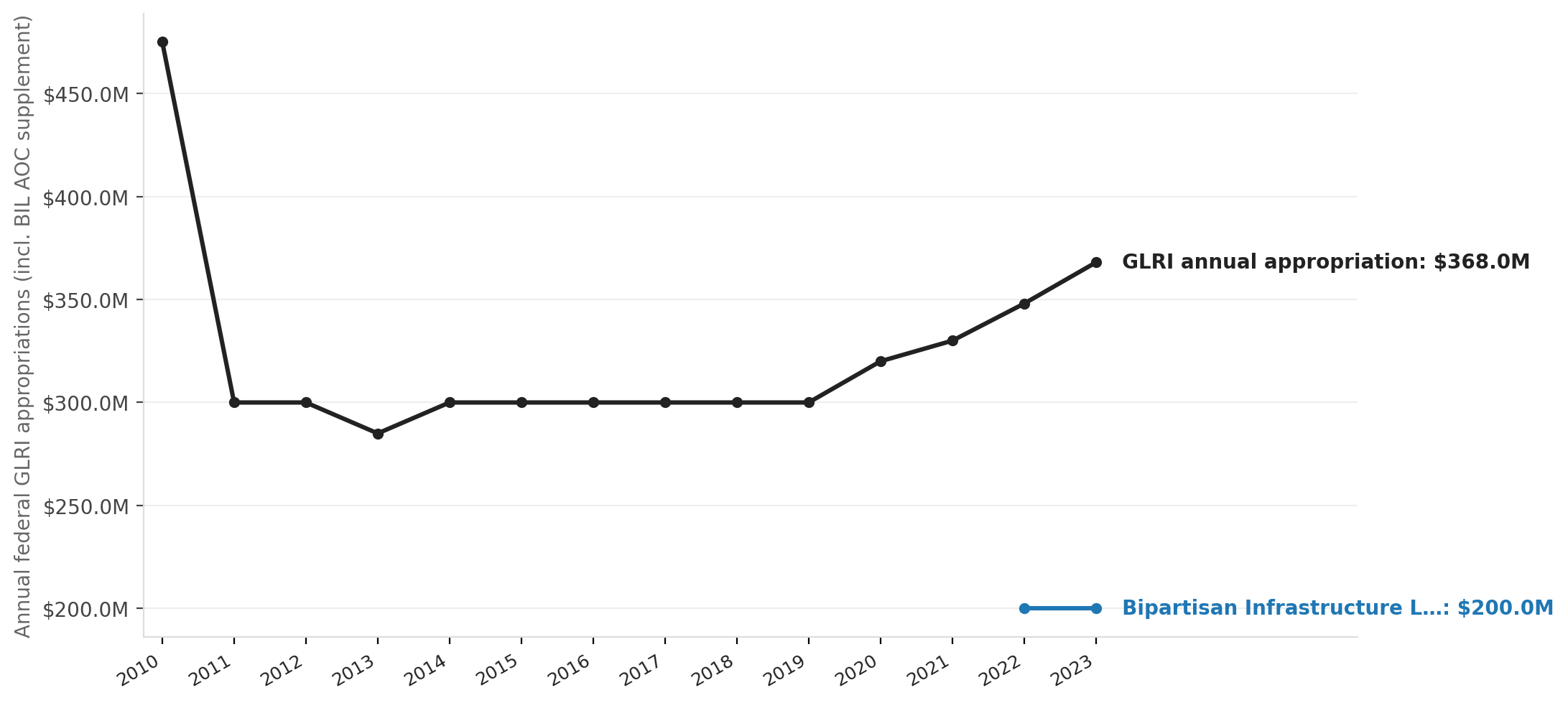
The funding comes from the Great Lakes Restoration Initiative, a program launched in 2010 that has put more than $3.7 billion into the basin. Congress added another $1 billion specifically for AOC cleanup through the 2021 Bipartisan Infrastructure Law, giving Ohio and Michigan projects like this one an unusual financial runway amid recurring federal budget pressures.
The Crane Creek work is part of a string of Maumee AOC restoration projects completed or underway in recent years, including expansions at Howard Marsh and work at Duck Creek and Cullen Park. Ohio EPA has framed these projects collectively as the management actions needed to move the Maumee AOC toward delisting. Whether the timeline holds may depend on how federal GLRI funding weathers future budget cycles, a question Great Lakes advocates have watched closely since proposed cuts in the first Trump administration were turned back by bipartisan opposition from Great Lakes-state lawmakers.