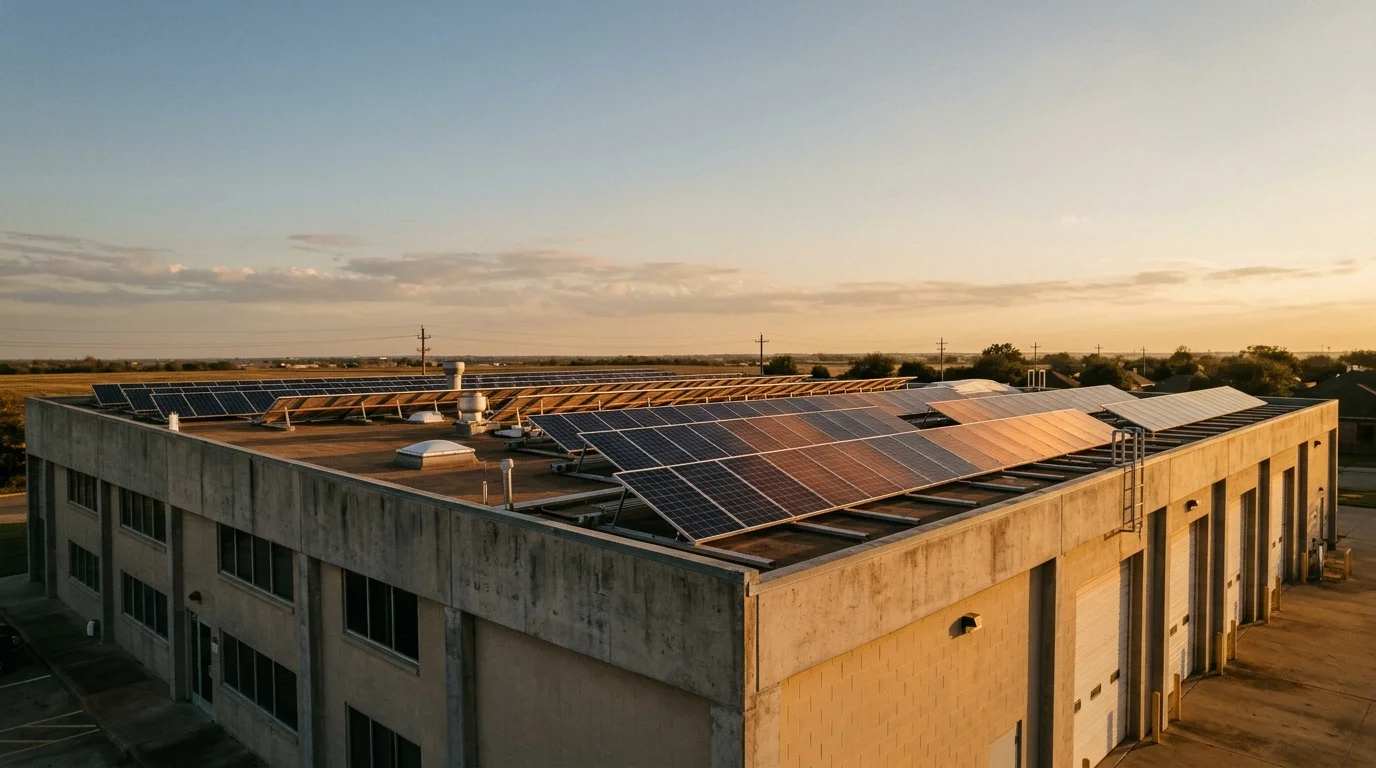
Texas solar RFPs from public agencies hit 32 in the last 30 days, 4.5 times the 12-month monthly average of about 7, and the entities issuing them span the entire state: Laredo on the Rio Grande, Seabrook on Galveston Bay, Texas Tech in Lubbock, TxDOT, Travis County, the San Antonio Housing Authority, the Texas Juvenile Justice Department, and Lamar University, among others. This is not a coordinated state program. Texas has no solar mandate, no community solar law, no statewide rebate. What it has is a deadline.
The One Big Beautiful Bill Act (P.L. 119-1), signed July 4, 2025, terminated the Section 48E Clean Electricity Investment Tax Credit for most new projects. The surviving path: a project must be fully placed in service by December 31, 2027. For tax-exempt public entities, that deadline is unusually consequential, because the IRA's Direct Pay mechanism (IRC §6417), preserved by the OBBBA, allows municipalities, counties, school districts, and housing authorities to claim the 30% credit as a direct IRS cash refund. No tax liability required. A city that installs solar panels on a public works facility and meets the placed-in-service deadline effectively gets 30 cents on every dollar back from the federal government in cash. That combination of a hard expiration date and a cash-out mechanism that didn't exist before 2022 is what's pushing procurement offices across Texas to issue RFPs right now.
The October-November 2026 surge is actually the second wave. The first came in July 2025, when RFPs spiked to 67 in a single month as agencies scrambled to meet a construction-start safe harbor deadline of July 4, 2026, the alternative path to ITC eligibility under OBBBA. That window is now closed. The IRS's Notice 2025-42 also tightened the rules by generally eliminating the 5% safe harbor test for projects over 1.5 MW, making physical construction the dominant standard for larger municipal projects. The agencies issuing RFPs today are either executing projects they placed into safe harbor earlier, or are smaller entities that can still meet the 5% threshold and are racing to do so before the placed-in-service clock runs out.
The City of Austin is the clearest case study in what an institutional response to this deadline looks like. In April 2026, Austin approved $76.5 million in municipal solar contracts across city facilities, with staff explicitly citing the OBBBA placed-in-service deadline and describing a "focused, goal-oriented, whole-of-government approach" to execute within the window. Austin Energy's target is 405 MW of local solar by 2035. Austin has the staff capacity, the legal resources, and the utility infrastructure to run that kind of coordinated program. Most Texas municipalities do not.
That gap in institutional capacity is what the fragmented RFP picture reflects. Laredo issued six separate solar solicitations in the 30-day window. Seabrook and Harris County combined for five. South Texas Water Authority, Brazoria County, and others each issued their own. These are not coordinated procurements under a shared state framework. Each agency is navigating the OBBBA deadline, the Direct Pay registration process, and project-specific permitting on its own. The Dallas Federal Reserve noted in February 2026 that Texas is now the top state for utility-scale solar generation capacity but that projects coming online after 2027 will no longer qualify for IRA tax credits, a finding that likely accelerated attention to the deadline at municipal budget offices across the state.
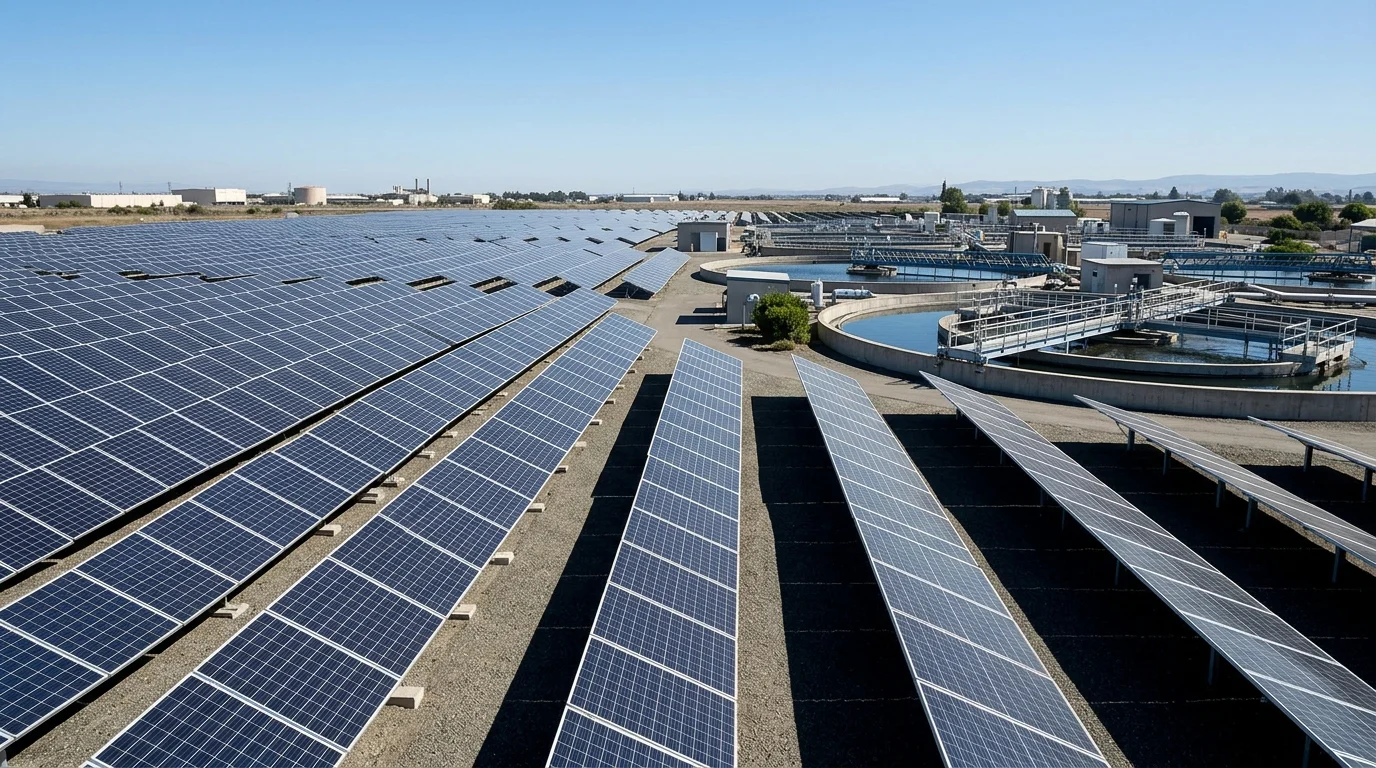
The project types being solicited underscore that this is an execution sprint, not a planning exercise. Solar panel installations on city facilities, solar-powered trail lighting, solar street lights, solar roadway luminaires, and rooftop PV arrays are what agencies are buying. These are concrete infrastructure commitments, not feasibility studies.
For a resident or taxpayer in a Texas city or county, the practical implication is straightforward: if your municipality has not already begun procurement, the runway to capture the 30% Direct Pay credit is narrowing fast. Bidding, award, contracting, and physical construction all have to happen with enough lead time to reach placed-in-service status before December 31, 2027. For larger projects, that means construction underway well before the end of 2026. The agencies issuing RFPs now are the ones that did the math and decided they still have enough runway.
The next signal to watch is whether smaller and less-resourced Texas municipalities, the ones without Austin's legal staff or San Antonio's housing authority capacity, manage to get projects into the queue before the window collapses. After December 31, 2027, the 30% credit disappears, the Direct Pay mechanism becomes irrelevant for new solar installations, and the economic logic driving this sprint evaporates. What Texas builds in the next 14 months is likely all it will build under these terms.