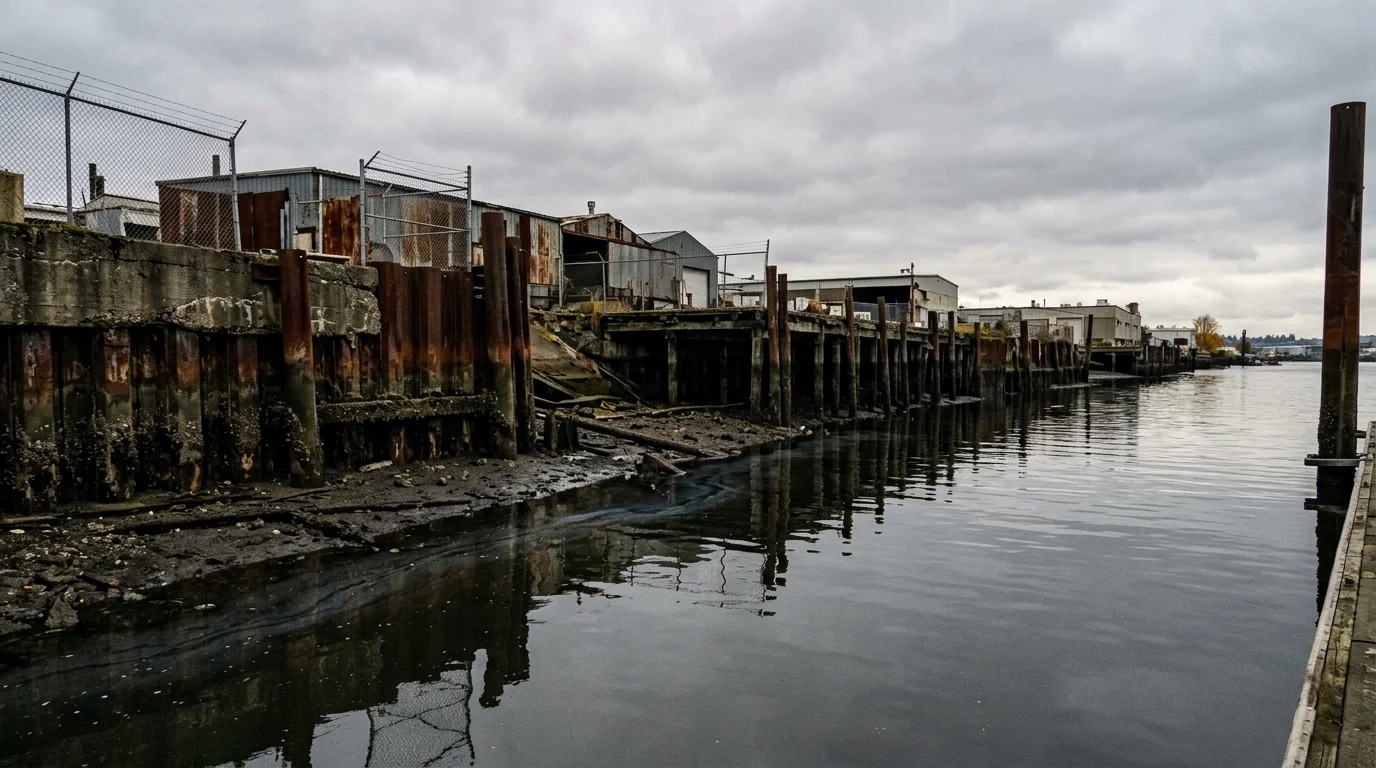
The Port of Tacoma is moving to physically clean up one of the most contaminated corners of Commencement Bay, hiring contractors to begin the first phase of remediation at the former Arkema chemical plant on the Hylebos Waterway in 2026.
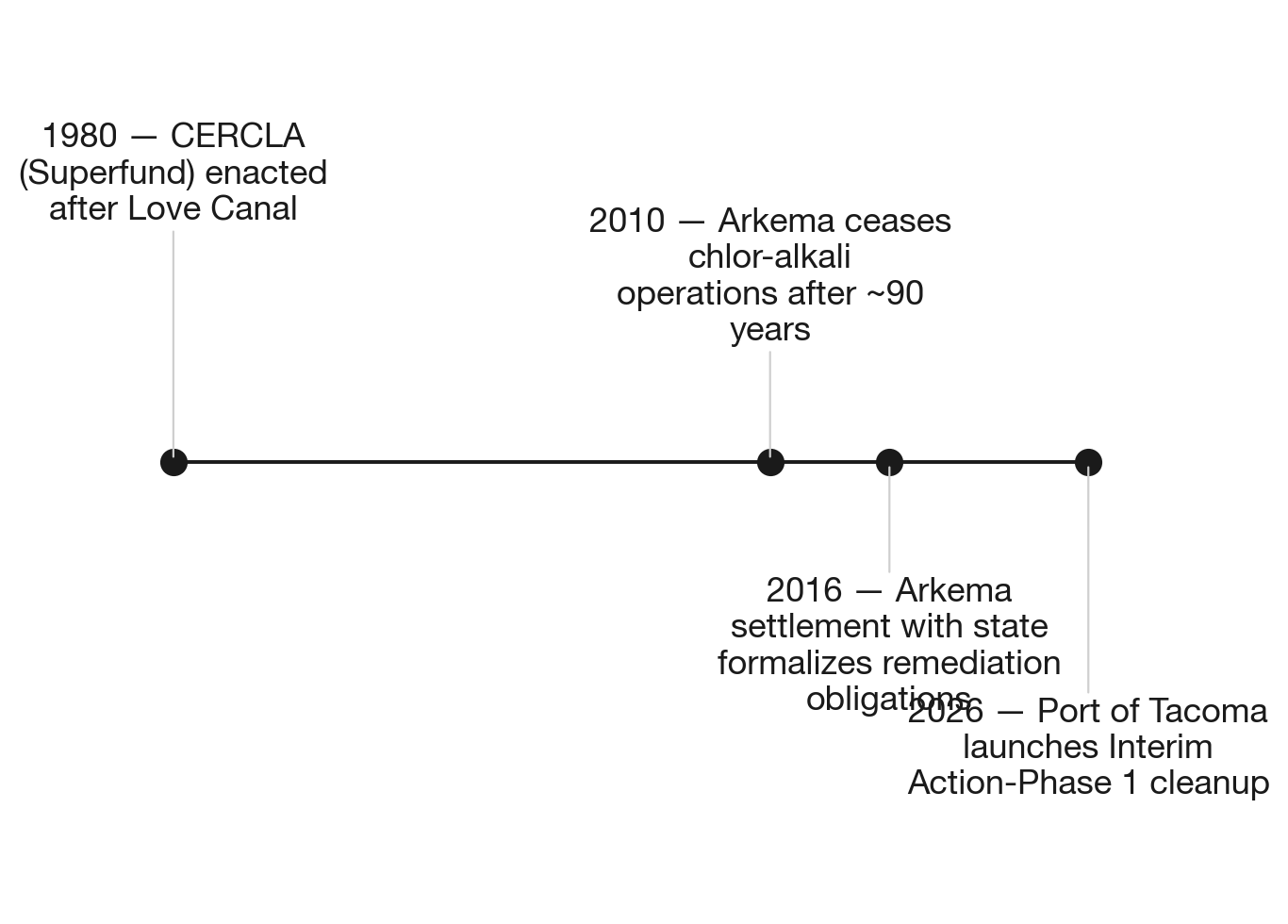
The site has been a source of toxic contamination since the 1920s, when the plant, then known as Pennwalt, began producing chlorine, caustic soda, and hydrochloric acid using mercury-cell technology. Nearly a century of operations deposited mercury, PCBs, dioxins, and chlorinated solvents into the soil, groundwater, and waterway sediments before the plant was demolished in 2010 and 2011. The surrounding industrial area, Tacoma's Tideflats, has been a federal Superfund site since 1983, among the first in the country designated after Congress passed the Superfund law in the wake of Love Canal.
The Port, which acquired portions of the former Arkema property as part of its broader Tideflats redevelopment strategy, is now the lead responsible party for this cleanup phase. Washington's Department of Ecology oversees remediation under the state's Model Toxics Control Act, with the EPA maintaining parallel jurisdiction over the waterway itself. The project is listed on the Port's procurement portal.
Source: NationGraph.
The stakes extend well beyond the property line. The Hylebos Waterway flows into Commencement Bay and ultimately Puget Sound, where contaminated sediments harm salmon habitat. Chinook salmon that pass through the Sound are critical prey for Southern Resident orcas, a critically endangered population whose survival has become a regional flashpoint. The Puyallup Tribe, whose 1990 land claims settlement gave them a significant stake in Tideflats decisions, holds treaty fishing rights in these waters and has long pushed for faster, more thorough cleanup.
This phase is described as an "interim action," a common regulatory step that addresses the highest-risk contamination while regulators work toward a final long-term remedy. It reflects both decades of incremental progress and a post-2021 surge of cleanup funding through the federal Bipartisan Infrastructure Law and Washington's Climate Commitment Act.
The Port has not publicly disclosed the dollar value or full technical scope of the work being contracted. What the work will look like on the ground, and how much contamination it will address, should become clearer once a contractor is selected and the project moves toward a 2026 construction start.