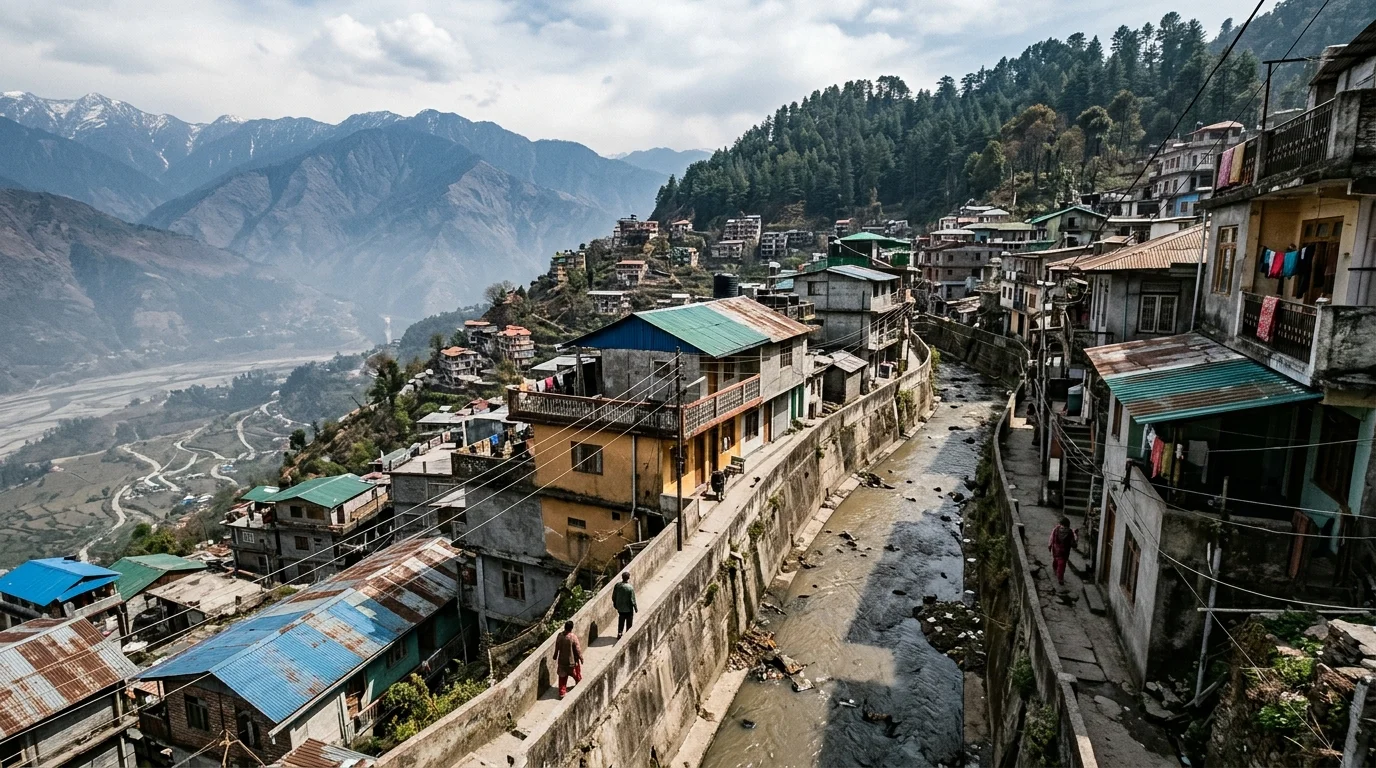
Solan, a hill town in Himachal Pradesh about 46 kilometers south of Shimla, is moving to build its first sewage treatment plant, ending a decades-long situation in which untreated waste drained through open channels into streams feeding the Giri and Sutlej river systems.
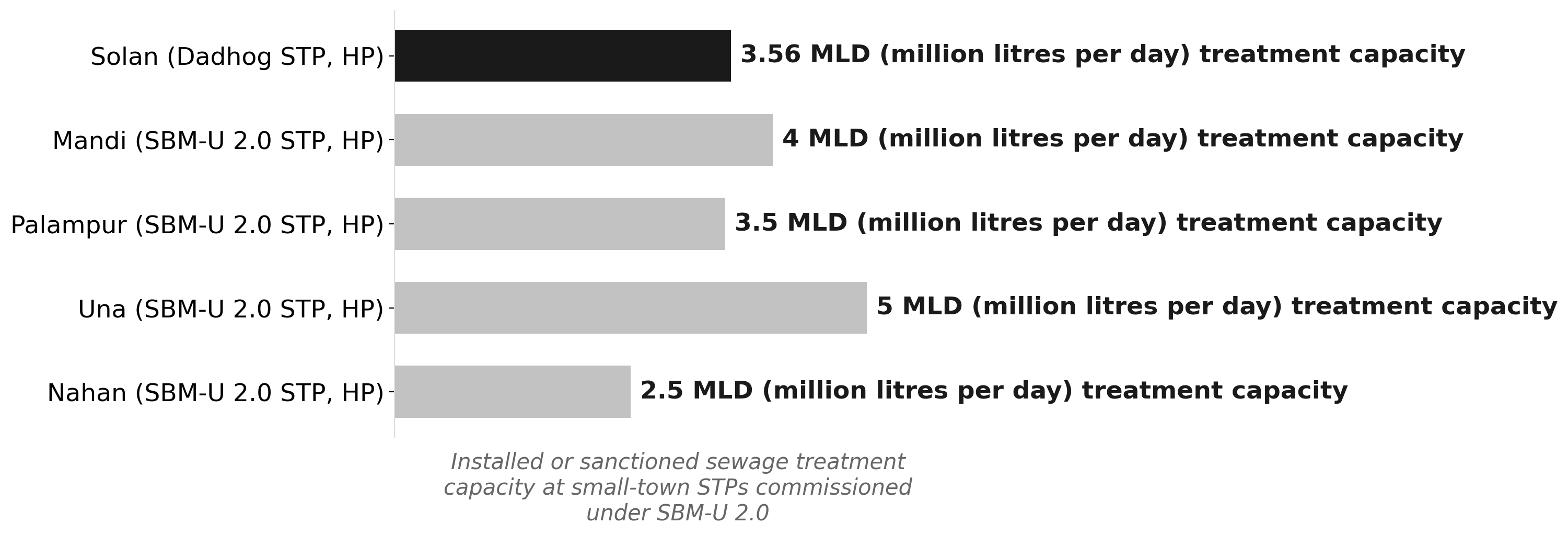
The Municipal Corporation Solan is seeking contractors to build a 3.56 MLD (million liters per day) facility at Dadhog, a lower-elevation site on the town's periphery where waste can flow downhill by gravity. The plant is sized to serve roughly 30,000 to 40,000 people. The tender is posted on Himachal Pradesh's e-procurement portal and is funded through India's Swachh Bharat Mission (Urban) 2.0, with the central government covering 45 percent of costs for towns Solan's size and the state covering the rest.
The project reflects pressure that has built up over years. The National Green Tribunal has since 2018 issued orders fining states up to ₹5 lakh per month for each town discharging untreated sewage, giving Himachal Pradesh a financial incentive to accelerate construction it had long deferred. The Central Pollution Control Board has repeatedly flagged Himachal's urban rivers as polluted stretches. A jaundice outbreak in Shimla in 2015 and 2016, traced to sewage contaminating drinking water, put the entire region's infrastructure under public and judicial scrutiny.
Source: NationGraph.
Solan's geography made it an easy place to fall behind. Steep slopes and narrow valleys make gravity-fed sewer networks technically difficult and expensive to build, which is part of why treatment infrastructure historically lagged even as the town grew. Rapid urbanization tied to the nearby Baddi-Barotiwala-Nalagarh pharmaceutical and industrial belt has strained the city's water and waste systems for more than a decade.
Swachh Bharat Mission (Urban) 2.0, launched in October 2021 as a roughly $17 billion, five-year follow-on to an earlier national toilet-building push, shifted its focus to wastewater treatment and requires cities to complete detailed sanitation plans before accessing funds. Solan's plant is one of a wave of small-capacity treatment facilities being tendered across Himachal and other states as the mission approaches its 2026 deadline.
No construction timeline or cost estimate was visible in the tender summary. Those details, along with technology specifications, are expected to be available in the full tender document.