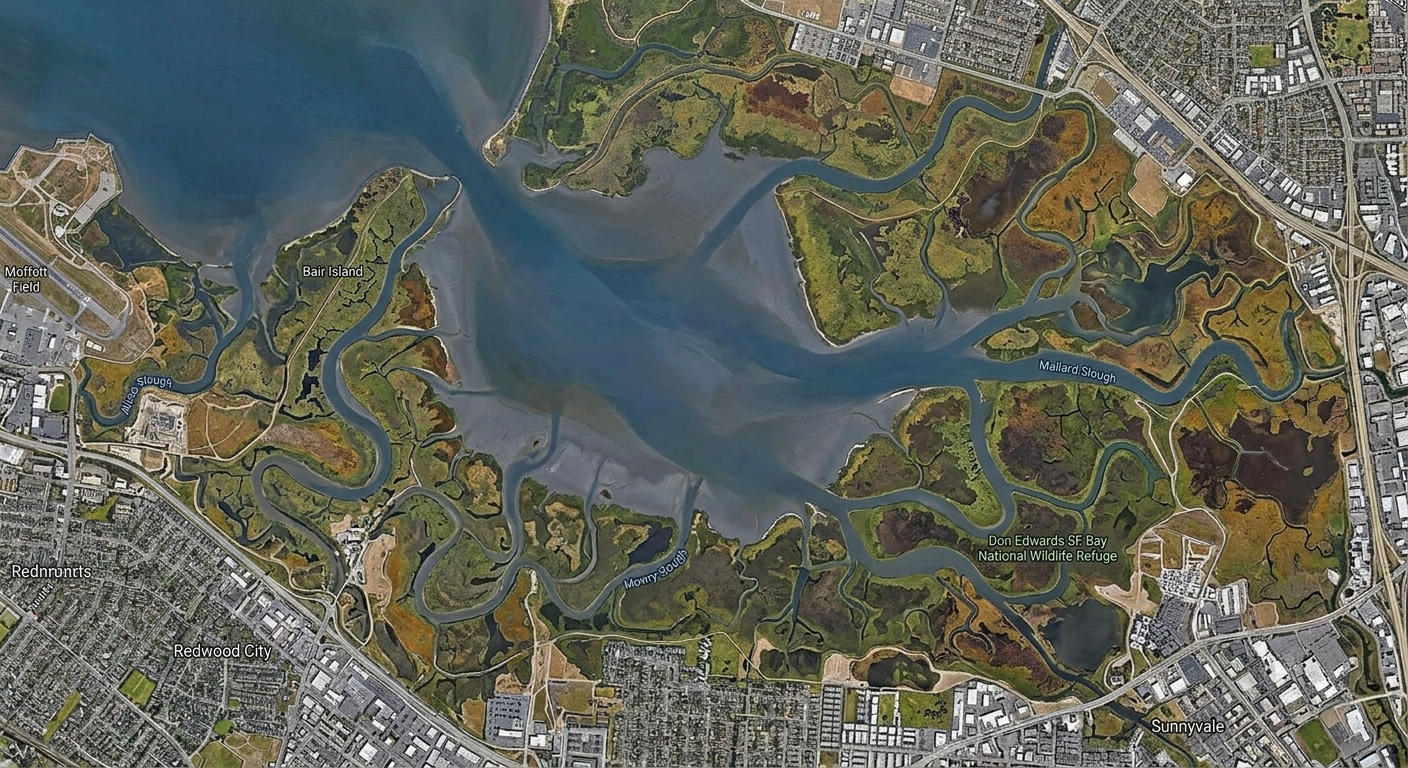
San Francisco Bay is entering what conservationists call the most critical phase of a decades-long effort to reclaim its tidal marshes, backed by a $1 million federal grant from the Department of the Interior.
The funding supports Phase III of the Bay Coastal Wetlands Revegetation Project, targeting the last stubborn pockets of invasive Spartina, an aggressive cordgrass that has smothered native tidal marsh habitat around the bay for decades. At its worst, the infestation covered 805 acres across the estuary. By 2023, sustained removal work had driven that down to under 23 acres, a 97 percent reduction. This phase aims to finish the job.
The stakes go well beyond ecology. Native tidal marshes act as natural buffers against flooding and sea-level rise, a role that becomes more urgent as California faces more intense storms and higher tides in coming decades. Invasive Spartina does the opposite: it grows at lower tidal elevations than native cordgrass, spreading into mudflats and clogging flood control channels in ways that create standing water where mosquitoes breed.
The infestation also threatens two endangered species that depend on healthy tidal marsh: the California Ridgway's rail, a secretive waterbird, and the salt marsh harvest mouse, found nowhere else on Earth. Without native vegetation, restored marshes can't develop the dense, layered habitat these animals need.
Over the project's previous two phases, crews revegetated more than 40 sites around the bay, planting roughly 620,000 native plants and completing 82 high-tide refuge islands that give wildlife a place to shelter during extreme tidal events.
Phase III will protect and monitor 3,079 acres of tidal marsh and mudflat habitat across four marsh complexes, while directly planting 32,000 native seedlings across 1,806 acres in the East and South Bay. A new 10-year biological opinion from the U.S. Fish and Wildlife Service, issued ahead of this phase, now permits crews to work in sites that were previously off-limits, including areas with the largest remaining infestations. Treating those sites is essential to prevent hybrid pollen and root fragments from recolonizing areas that have already been cleared.
Work is set to unfold over the next three growing seasons. Project coordinators will also share information with more than 200 landowners and land managers across the bay, as well as agencies involved in regional sea-level rise planning.