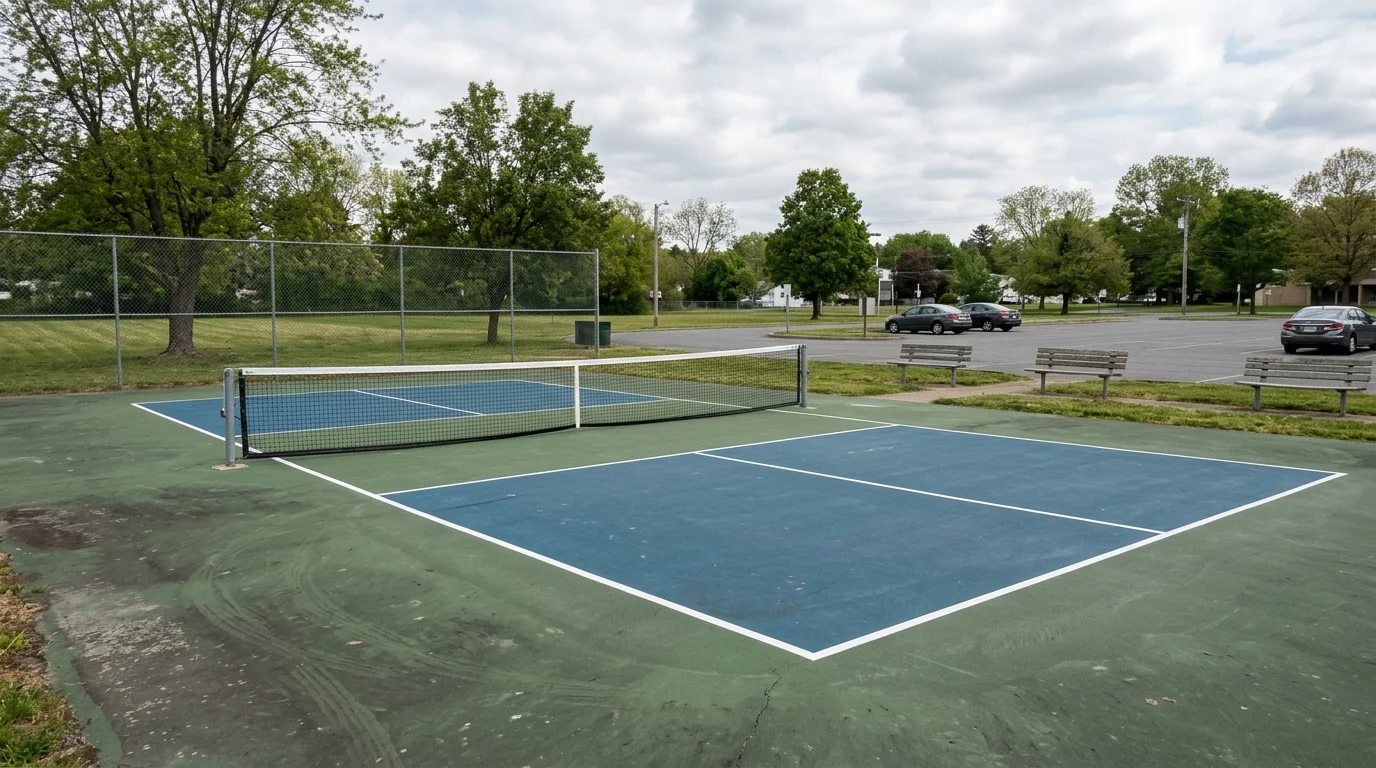
Municipalities across Pennsylvania have issued procurement solicitations for pickleball court construction at a rate roughly four times the recent baseline, and the common thread is not a sport fad but a single state grant program: DCNR's Community Conservation Partnerships Program, which has pushed approximately $163 million into local park projects across two rounds announced within 10 months.
Governor Josh Shapiro and DCNR Secretary Cindy Adams Dunn announced $81 million in new C2P2 grants on October 7, 2026, covering 306 recreation and conservation projects in 60 of Pennsylvania's 67 counties. That round followed a nearly identical $82 million announcement on January 12, 2026, which covered 295 projects across 58 counties. Together, the two C2P2 rounds represent the most sustained single-year investment in the program's history under Shapiro, who has cumulatively directed roughly $315 million through C2P2 into more than 1,100 park and recreation projects statewide. Pickleball courts appear as a named deliverable across dozens of those grants.
The geographic distribution is the most telling feature. No single Pennsylvania county holds more than two pickleball-related procurement records. The solicitations span Bedford County, Erie County, Lancaster County, Clinton County, Northampton, Dauphin, Schuylkill, Luzerne, Lebanon, and Washington County, among others, a spread that mirrors the grant program's own reach rather than any regional concentration of demand. This is what a statewide infrastructure program looks like when it filters down through Pennsylvania's unusually fragmented municipal structure: 2,562 townships and boroughs, most of them controlling their own parks budgets, each making an independent decision to apply.
That structure matters. In most states, a sport becoming popular enough to warrant public courts would first appear in larger cities, then spread outward. In Pennsylvania, the township-dominant system means the spread is genuinely bottom-up and genuinely diffuse. A borough of 646 residents, Yatesville, in Luzerne County, and a borough of 75, West Middletown, in Washington County, both appear in the procurement database. For communities at that scale, a C2P2 grant is often the only realistic path to any new recreational infrastructure at all. The program becomes the mechanism through which small municipalities modernize public space, and pickleball courts are the current expression of that modernization.
C2P2 is a blended funding vehicle, not a single appropriation. It draws from two state sources, the Keystone Recreation, Park and Conservation Fund and the Environmental Stewardship Fund, alongside two federal pass-throughs: the federal Land and Water Conservation Fund and the Pennsylvania Recreational Trails Program Fund. DCNR's Bureau of Recreation and Conservation administers all four streams as one competitive grant program, with a single application window (January through April 2026 for these cycles) and a single award process. The October round's largest tranche, $35.5 million, went to 154 local park and recreation facility projects; trails and river conservation made up the remainder.
Specific grants illustrate how the money moves. Bedford County received $640,000 toward Green Park, with pickleball courts listed as a deliverable. Summit Township in Erie County received $213,100. Lock Haven City in Clinton County received $215,000. Lancaster County's Old Trolley Line Park received $300,000. According to reporting from WVIA covering the northeast Pennsylvania share of the October round, communities in that region alone received funding for projects ranging from court construction to trail rehabilitation. The pattern across all of them is the same: a township applies during the spring window, receives an award in January or October, and then enters the procurement market to hire a contractor, which is what produces the RFP activity in the data.
The Shapiro Administration has framed C2P2 spending explicitly against Pennsylvania's $20.4 billion outdoor recreation economy, treating park investment as economic infrastructure rather than amenity spending. That framing helps explain why pickleball courts, which a decade ago would have been a line item a small borough might have funded with a local referendum, now flow through a formal state grant architecture. When the state signals that recreational infrastructure is fundable, municipalities respond with applications; when grants are awarded, RFPs follow.
The next signal to watch is the C2P2 application window for the 2027 cycle, which typically opens in January. If pickleball courts continue appearing as named deliverables at the current rate, and if the Shapiro Administration maintains the program's funding level, the procurement wave visible in the fall 2026 data is likely a preview of another round 12 months from now. The question for residents in the roughly seven counties that received no C2P2 grants in either 2026 round is whether their municipalities applied and were passed over, or whether they haven't yet engaged with the program at all.