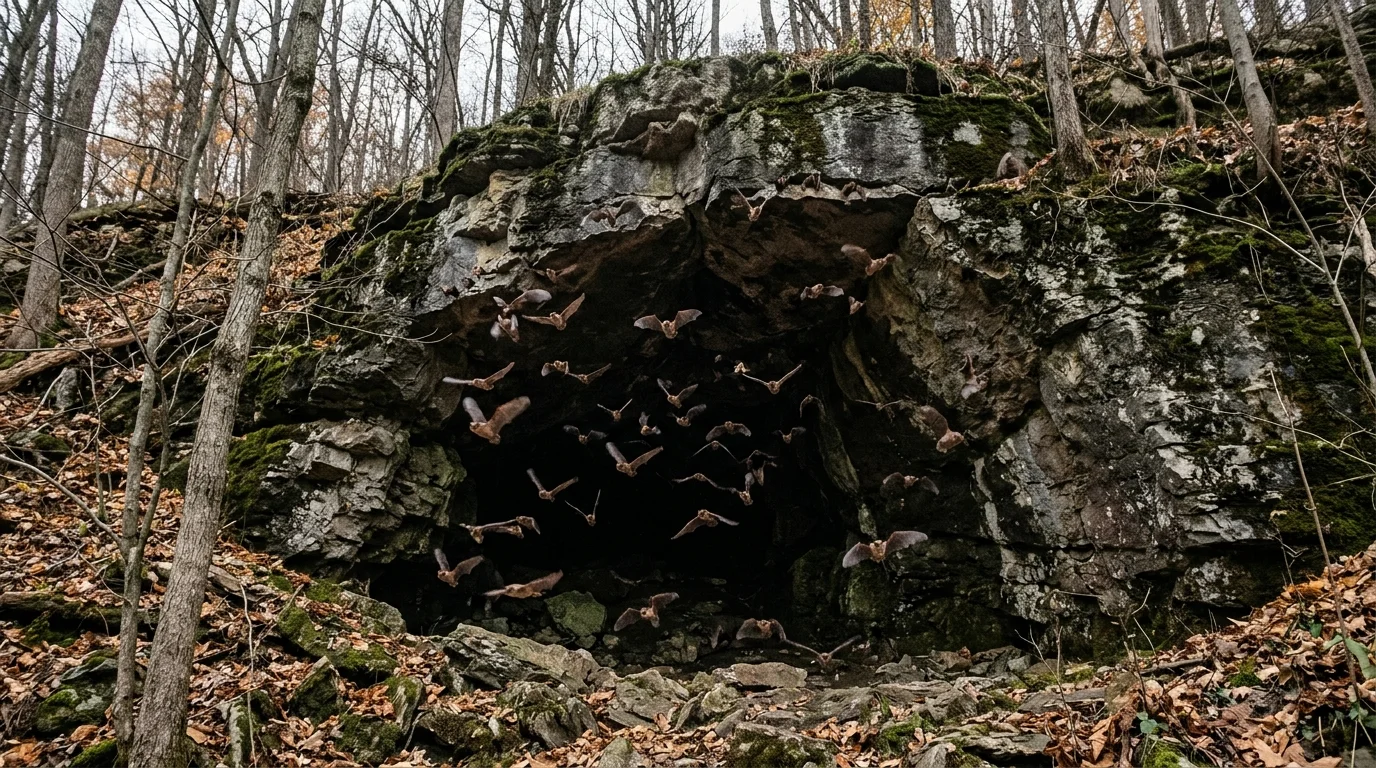
Pennsylvania's bats have been dying by the millions. Now, as the animals begin their annual gathering at cave and mine entrances across the state, biologists are racing to find out which sites still have enough survivors to be worth protecting.
The Pennsylvania Game Commission is hiring a contractor to place passive acoustic detectors at a minimum of 70 cave and mine portals statewide this fall, listening for bat activity during the narrow September-to-October window when the animals swarm at hibernation sites to mate and select where they'll spend the winter. The project is listed on Pennsylvania's emarketplace procurement portal.
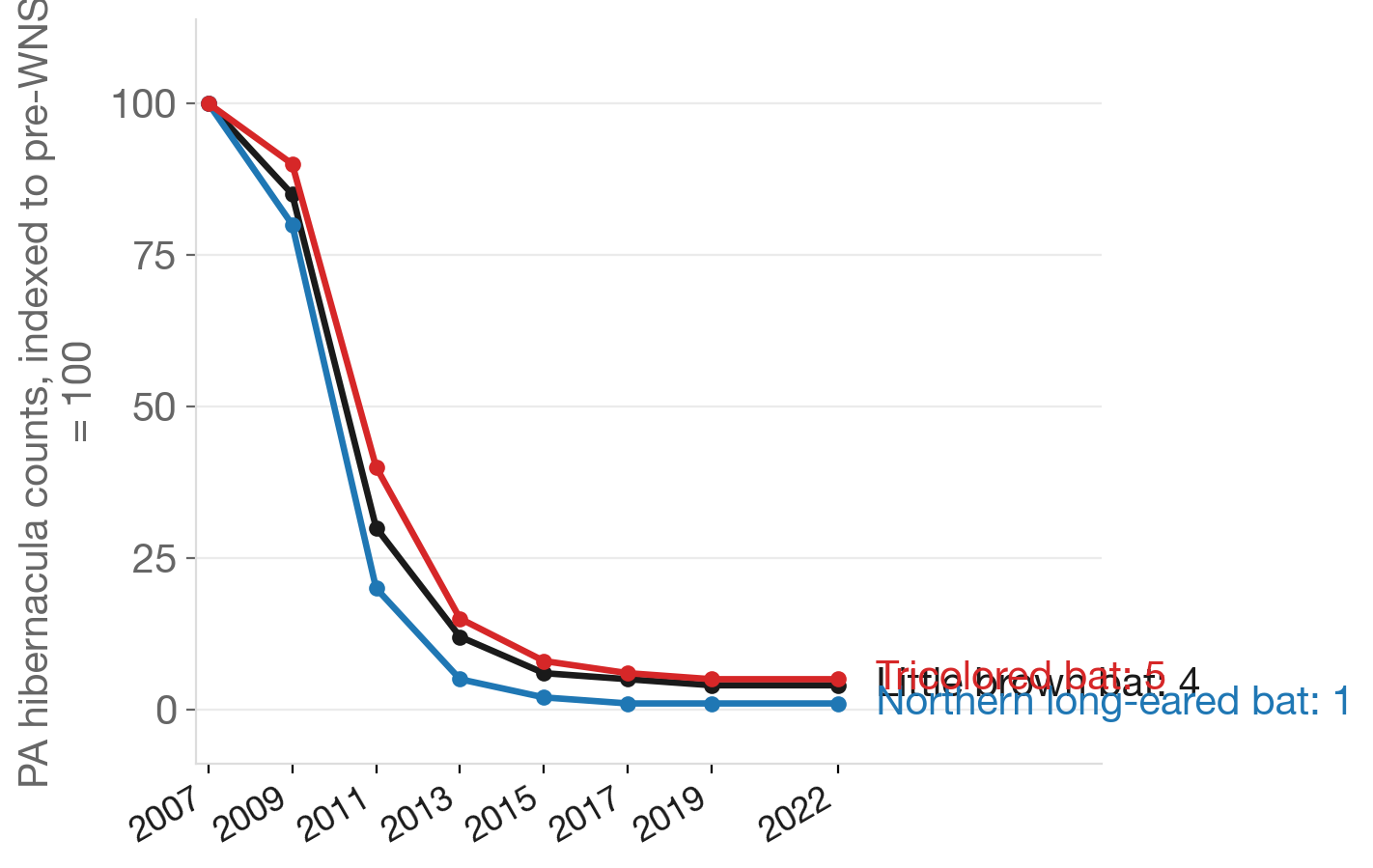
The urgency is hard to overstate. White-nose syndrome, a fungal disease first documented near Albany, New York in the winter of 2006-2007, reached Pennsylvania by 2008 and tore through the state's hibernating bat populations with devastating speed. Little brown bats, northern long-eared bats, and tricolored bats, all once abundant in Pennsylvania caves and mines, have declined by more than 90% across the Northeast. The northern long-eared bat, reclassified from threatened to endangered by federal authorities in November 2022, and the tricolored bat, proposed for the same listing in September 2022, are among the species at stake.
Source: NationGraph.
Pennsylvania's geology makes it especially important to the region's bat populations. The ridge-and-valley limestone karst in the center of the state, plus thousands of abandoned coal and iron mines, create an unusually high density of potential hibernacula. Historically, sites like Canoe Creek and Woodward Cave sheltered some of the largest concentrations of little brown bats known anywhere in the Northeast. Those numbers have collapsed.
The acoustic survey feeds directly into the state's Bat Habitat Conservation Plan, a federal Endangered Species Act mechanism that allows industries like forestry, wind energy and mining to operate in bat habitat while requiring offsetting conservation measures. Identifying which portals bats are still actively using tells biologists where to focus more intensive follow-up work, and ultimately which sites to physically protect with gates or restricted access. A single hibernaculum can shelter thousands of bats from a vast surrounding area, making hibernacula protection among the highest-impact actions available to conservationists.
Detectors are set to go in place between Sept. 15 and Oct. 30, 2026, timed to the fall swarm. The contractor will also analyze the recordings to identify bat species by their acoustic signatures. Mike Scafini, the Game Commission's endangered mammal specialist in Harrisburg, is overseeing the project.
The results will shape which sites the PGC prioritizes for physical trapping surveys and, from there, which get formal protections before next year's hibernation season begins.