Pennsylvania is betting that one of the most common underground activities inside its prisons can become one of the more practical tickets out of them. The state Department of Corrections is launching a tattoo artist apprenticeship at SCI Frackville, a medium-security men's facility in Schuylkill County, teaching incarcerated individuals professional tattooing skills they can use after release.
The program is striking because tattoo equipment has historically been classified as contraband behind bars. Improvised tattooing rigs, common in prisons nationwide, are a leading driver of hepatitis C and HIV transmission in correctional facilities. The new apprenticeship would bring in an instructor 32 to 40 hours a week to teach sanitary technique alongside design, customer service, and the basics of running a tattoo shop.
The timing reflects both an industry shift and a policy one. Tattooing has grown into a $3 billion annual industry in the United States, with more than 30% of American adults now carrying at least one tattoo, up from 21% in 2012. Pennsylvania imposes no statewide licensing exam for tattoo artists, meaning felony records are a lower barrier to entry here than in many licensed trades like cosmetology or barbering, where conviction histories can trigger automatic disqualification.
Source: NationGraph.
That matters enormously in a state where about 64% of released prisoners return within three years. PA DOC Secretary Laurel Harry, appointed by Governor Josh Shapiro in 2023, has made expanding vocational programming a central goal. The department already runs one of the largest correctional apprenticeship systems in the country, with Department of Labor-registered programs in welding, culinary arts and barbering. A tattoo apprenticeship, while rare nationally, follows the same logic: give people a trade before they walk out the door.
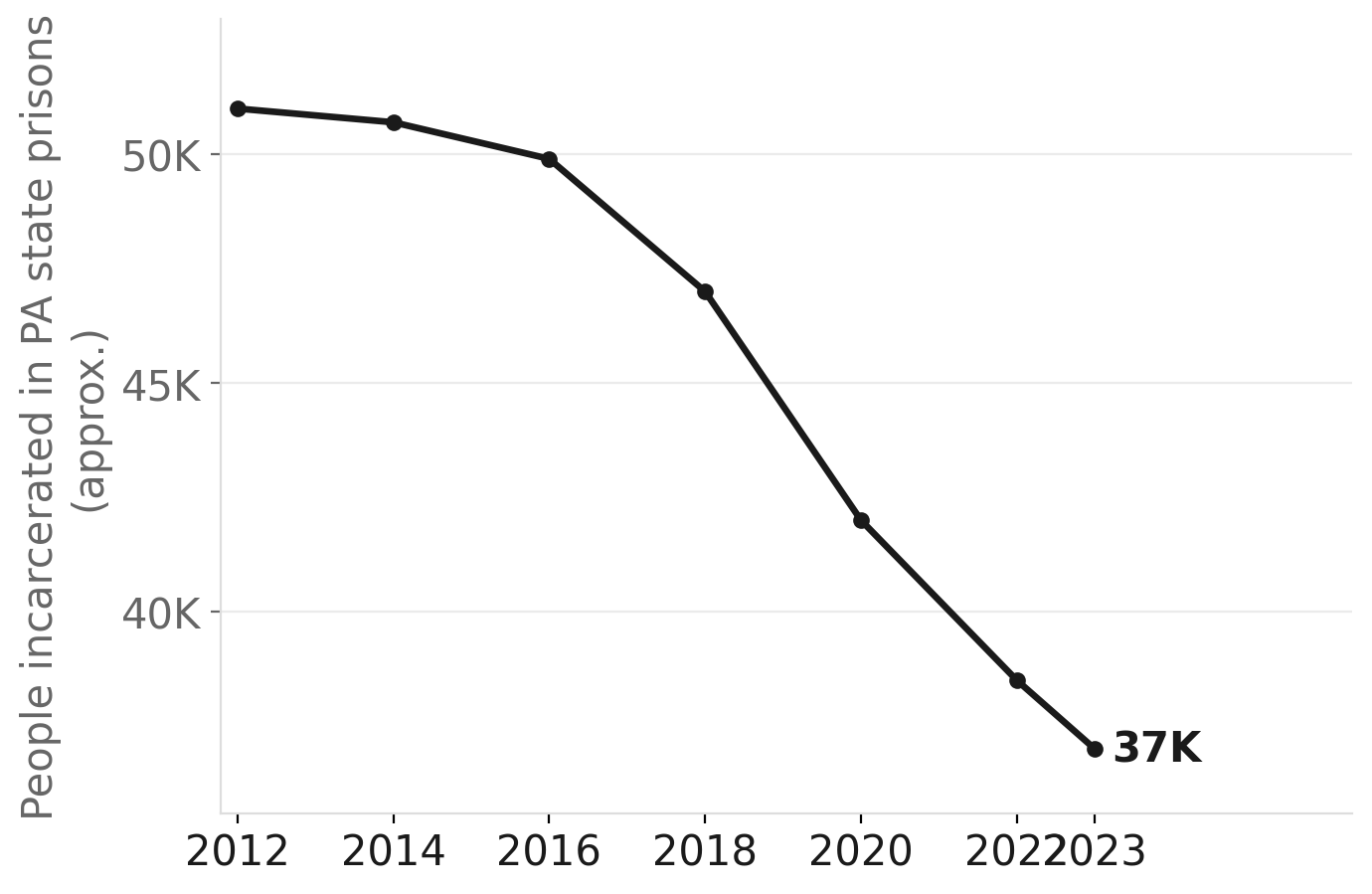
SCI Frackville houses roughly 1,100 men in Schuylkill County, a region defined by shuttered coal operations and a persistent opioid crisis. The prison is one of 23 remaining state facilities in a system that has shrunk from a peak population of about 51,000 in 2012 to under 37,000 today, giving the department room to invest in programming that would have been harder to prioritize during overcrowding.
The department has posted the instructor contract on Pennsylvania's eMarketplace. No start date has been announced; the program awaits contractor selection.