Federal grants for water infrastructure in Minnesota have reached $5.55 million in the trailing 90 days, against $167,000 in the same window a year ago, a 3,224 percent increase that looks explosive on a chart but tells a quieter, more structural story about how congressional water money actually moves.
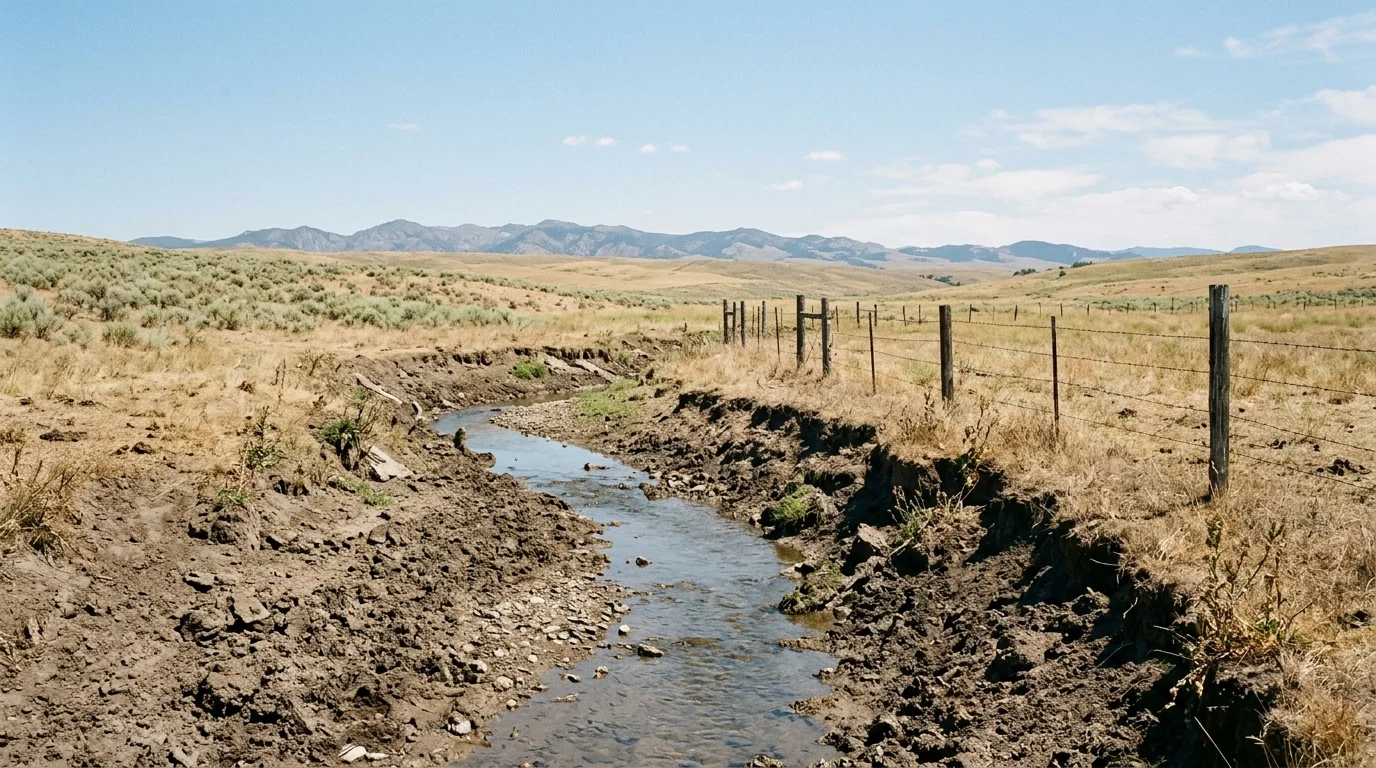
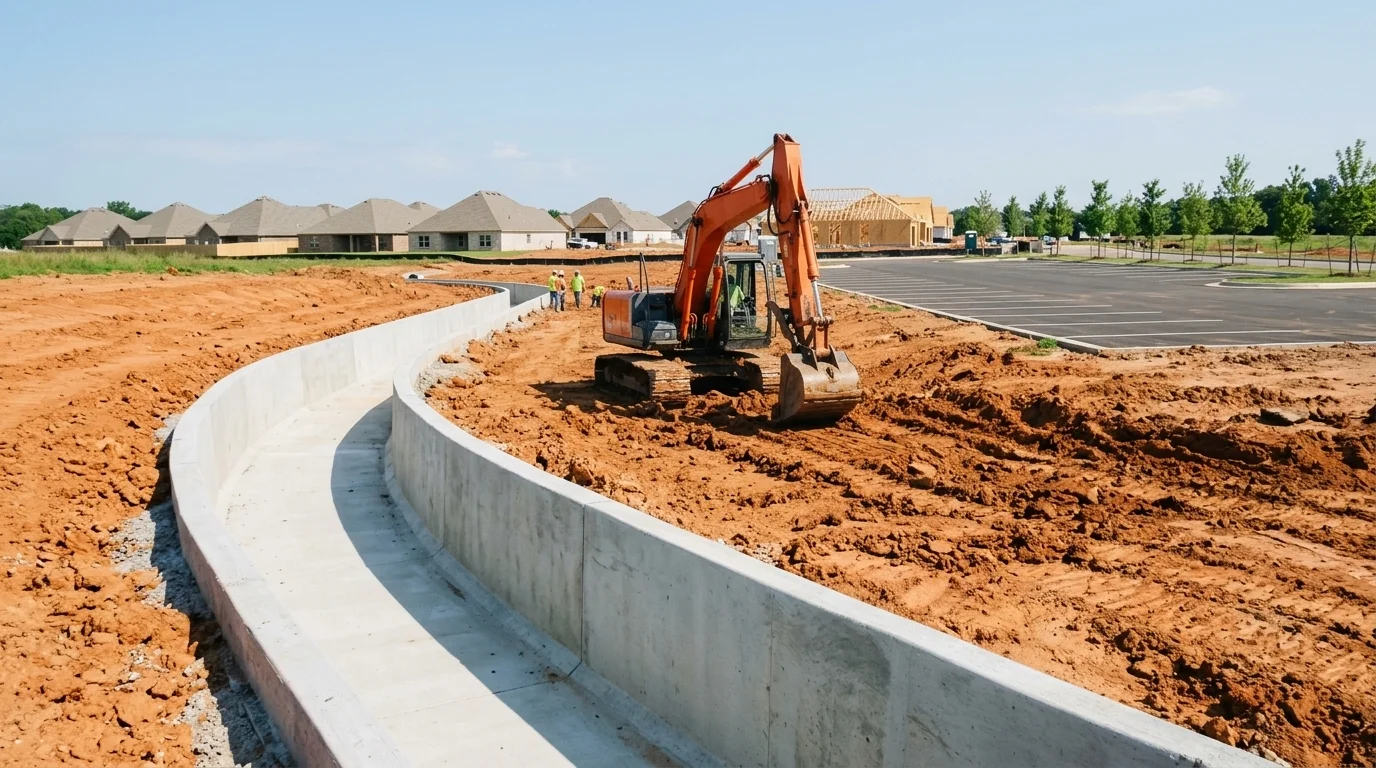
The biggest piece of that surge is a $3.5 million EPA Congressionally Mandated Projects award to the City of Shakopee for Minnesota River streambank stabilization and restoration, a grant that only started in August 2026. The authorization behind it dates to the FY2022 Consolidated Appropriations Act, passed four years ago. The money was real from the moment Congress wrote Shakopee's name into law. The execution took until now.
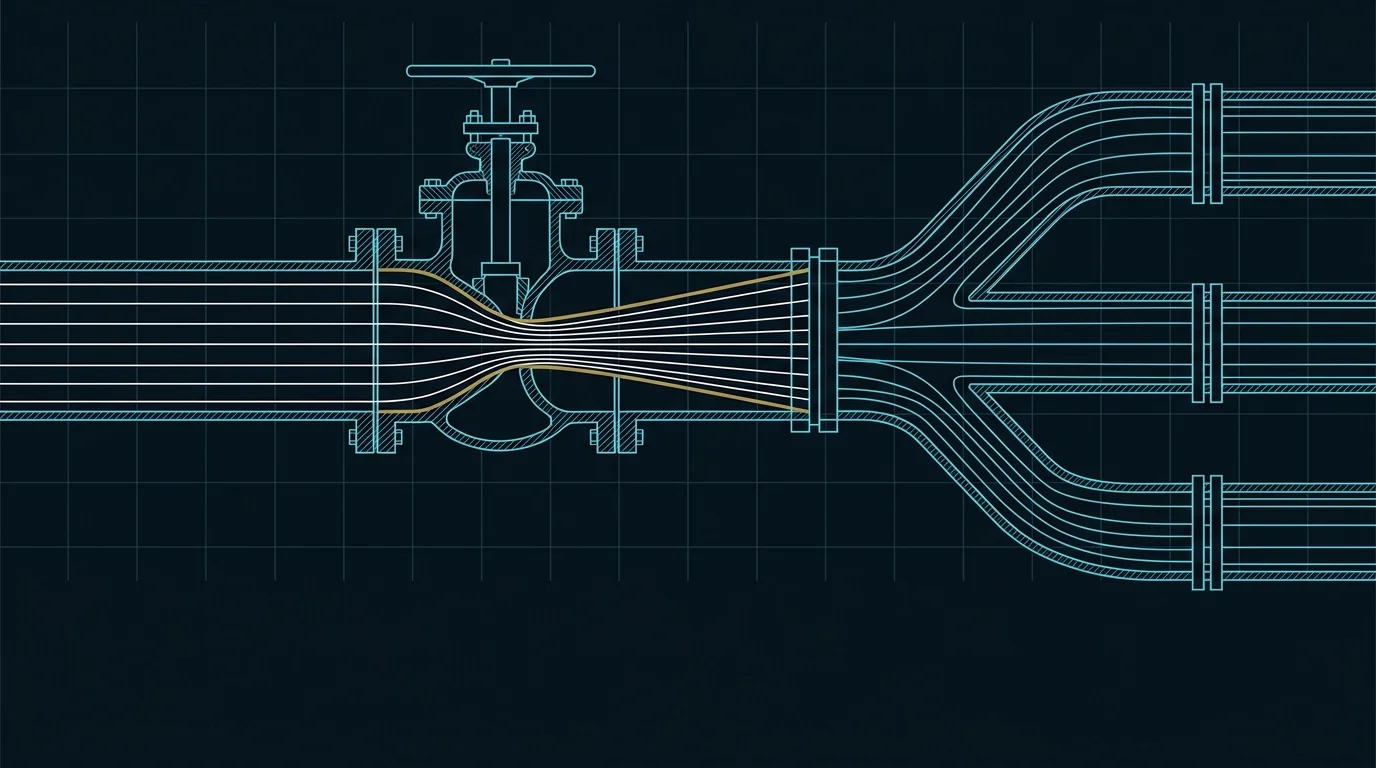
That gap between authorization and obligation is not unusual for Community Project Funding and Congressionally Directed Spending (CPF/CDS) earmarks, the line-item mechanism Congress revived in FY2022 after a decade-long ban. Unlike the State Revolving Fund system, where capitalization grants flow to states like Minnesota and are then re-lent to municipalities through agencies like the Minnesota Public Facilities Authority (MPFA), CPF/CDS earmarks are direct congressional appropriations to named recipients. They bypass the SRF pipeline entirely. But they still require EPA grant agreements, environmental reviews, and local project-readiness before a dollar moves, and that administrative clock runs long.
Source: NationGraph.
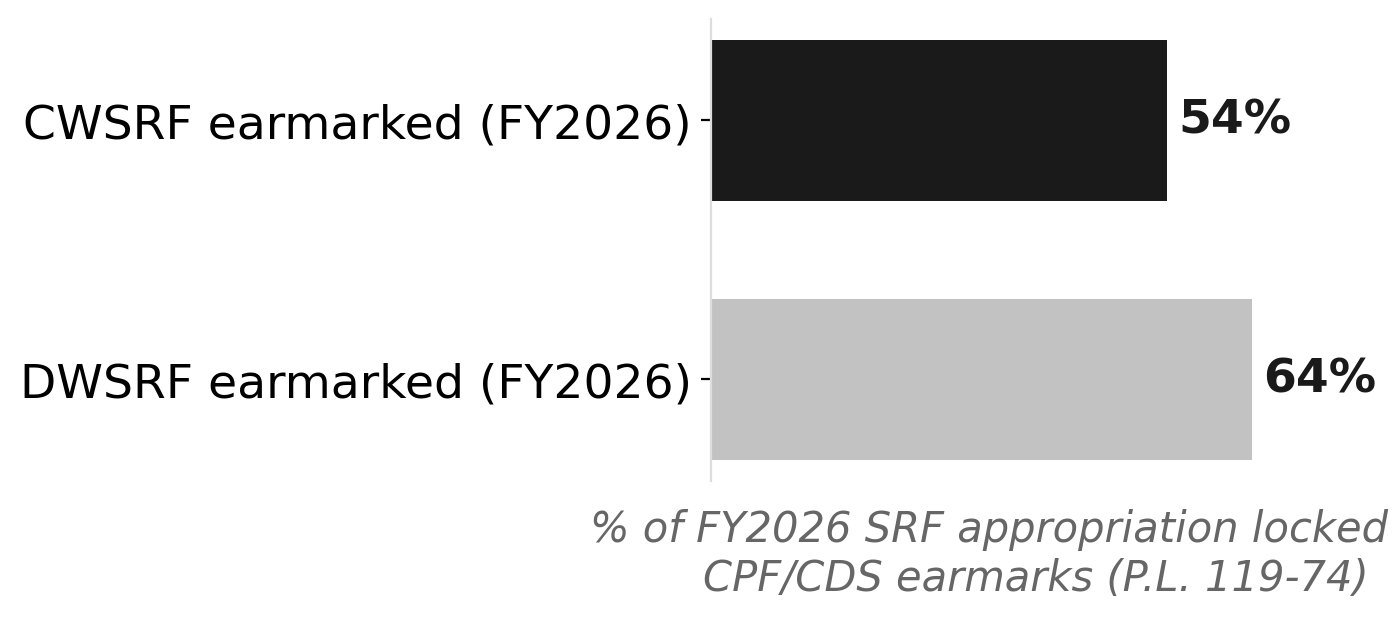
FY2026 is the year that clock is running the hardest. P.L. 119-74, the FY2026 Consolidated Appropriations Act, dedicates 54 percent of Clean Water SRF appropriations and 64 percent of Drinking Water SRF appropriations to CPF/CDS earmarks, the highest shares ever recorded since the practice resumed. That means more than half of what Congress approved for water infrastructure this year is already spoken for, with specific project names and specific cities attached. For communities that secured a line item, FY2026 is a moment of arrival. For communities that did not, it is a year when the competitive pool is unusually small.
The urgency compounds because FY2026 is also the final year of the Infrastructure Investment and Jobs Act's five-year emergency supplemental SRF capitalization, $11.7 billion nationally for CWSRF, distributed FY2022 through FY2026. Minnesota's MPFA finalized its FY2026 Intended Use Plans for both the Clean Water SRF and Drinking Water SRF on January 9, 2026, the administrative trigger that starts the federal grant execution cycle now showing up in the data. The state's active DWSRF portfolio already exceeds $200 million in obligated grants across six active awards, with $38 million already outlayed. The active CWSRF portfolio adds another $71 million. These are not new commitments; they are the accumulated weight of multi-year grants running through 2027 to 2030.
The remaining $2.05 million in the 90-day spike comes from two National Science Foundation Geosciences grants to the University of Minnesota for subsurface and coastal water research. They are legitimate water-sector federal dollars but serve a different purpose than municipal infrastructure, basic research rather than pipes and treatment capacity.
Minnesota's state-level response to all of this reflects an understanding that federal money, even at record volumes, does not cover everything. The 2025 legislature raised the cap on Water Infrastructure Fund grants from $5 million to $10 million and Point Source Implementation Grant awards from $7 million to $12 million, both state bond bill programs that layer matching grants on top of federal SRF loans for communities meeting affordability thresholds. The Governor's 2026 preliminary capital budget requests $60 million for WIF and $120 million for PSIG. These are distinct state programs, not federal money, and they exist precisely because IIJA's supplemental surge is ending and inflation has driven project costs beyond what pre-2025 grant caps could reach.
For a Minnesota community that secured a CPF/CDS earmark in FY2022 or FY2023 and is only now seeing the grant agreement arrive, the practical meaning is straightforward: the project can begin. For communities that did not, the window for the largest federal water investment in a generation is closing. After FY2026, CWSRF and DWSRF appropriations revert to pre-IIJA baselines, and the earmark share, however large, will be applied to a smaller national total.
The next signal to watch is how MPFA allocates remaining IIJA supplemental capitalization before the federal fiscal year closes, and whether Minnesota's legislature passes the capital budget requests that would keep state matching capacity in place once the federal surge ends.