About 14 to 15 distinct mental health solicitations have hit Oregon's procurement market in the last 30 days, roughly seven to eight times the historical monthly baseline of two, as counties race to staff and equip the deflection infrastructure that HB 4002 legally required two years ago but could not build overnight.
The law moved faster than the institutions. When Oregon's legislature passed HB 4002 in 2024, recriminalizing possession of small amounts of controlled substances effective September 1 of that year, it simultaneously created the Oregon Behavioral Health Deflection Grant Program: a state-funded pathway allowing law enforcement to route people with substance use disorders into treatment instead of jail. Companion bill HB 5204 appropriated $221.2 million in state funds, administered by the Oregon Criminal Justice Commission, to help counties build that pathway. Twenty-three counties covering 85 percent of Oregon's population opted in. But opting in and operating are different things. Counties needed board policies, facility plans, and contracts with actual clinical providers before any deflection could happen at scale. Those prerequisites are only now falling into place, and the procurement surge is the evidence.
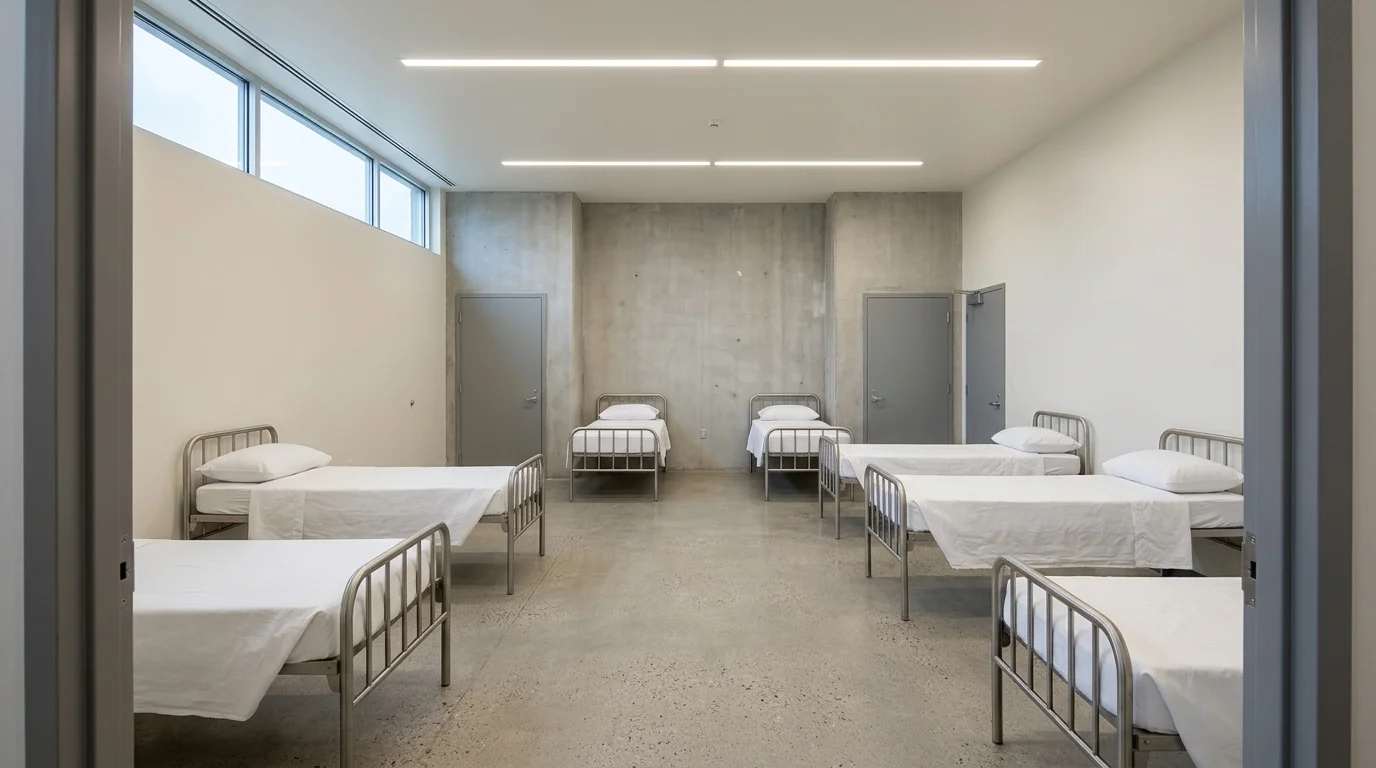
Multnomah County is the clearest illustration of how the timeline works. The county's Board of County Commissioners adopted its HB 4002 program policies by Resolution 2026-012 on February 26, 2026. Less than three weeks later, on March 12, the Board approved construction of a 24/7 Sobering and Crisis Stabilization Center: a 47-bed, 26,000-square-foot facility in Portland's Central Eastside Industrial District, targeted to open in 2027. Policy approval unlocked facility approval; facility approval triggered the contracts. Multnomah County's current RFPQ-21-2027, which seeks a qualified provider pool for medically managed alcohol and drug withdrawal services for indigent and uninsured adults, is a direct downstream consequence of that March vote.
Beyond Multnomah, the procurement wave reflects the same sequencing playing out across the state. Clackamas County has three active solicitations: transitional housing for drug treatment court clients, construction of a 24-bed residential treatment facility, and community peer-delivered services. Washington County is procuring Assertive Community Treatment teams and co-occurring disorder support groups. Columbia County Sheriff's Office is sourcing mental health services for its corrections population. Medford School District is seeking school-based behavioral health providers. The geography matters: this is not a Portland phenomenon. Counties across western Oregon, with different service gaps and different population pressures, are running parallel procurement timelines because they all entered the deflection program under the same law and are all reaching operational readiness at roughly the same moment.
A December 2025 Oregon Secretary of State audit adds urgency to the contracting window. The audit found that OHA's Measure 110 Behavioral Health Resource Network programs, funded by more than $800 million in cannabis tax revenue, had produced unclear results and lacked coordination. It set a November 2026 deadline for all grantees to submit data through new electronic health record-integrated systems. Providers who want to participate in OHA-linked programs after that deadline need compliant systems, which means counties procuring new service contracts this fall are effectively setting the terms for who is in the network heading into 2027.
The federal layer is real but separate. Active HHS behavioral health grants to Oregon institutions total $514 million in obligated funding, with $110 million already outlaid. A $3.6 million SAMHSA grant to the Oregon Health Authority for 988 crisis-line capacity started September 30, 2026. A $2 million congressional directive funds Wasco County's Columbia Gorge Crisis Resolution Center. The City of Portland received $1.5 million for overdose response field services. These federal dollars are building adjacent capacity: crisis lines, residential construction, street-level response. But they flow through different channels, health authorities and nonprofits rather than the Criminal Justice Commission, and serve different functions than the deflection grants. The state appropriation is what is driving the county procurement surge; the federal grants are supplementing specific clinical gaps.
For Oregonians who live in the 23 participating counties, the practical change is that the alternative-to-arrest pathway HB 4002 described on paper is becoming a physical and contractual reality. A person picked up for drug possession in Portland in 2027 could, in theory, be routed to a staffed, 47-bed sobering center with withdrawal management on-site rather than to a jail cell. Whether that pathway functions as designed depends entirely on whether counties can recruit and retain the providers they are now procuring.
The next signals to watch are the November 4 proposal deadline for Multnomah County's withdrawal management RFPQ, the OHA grantee data compliance deadline later in November, and the Oregon legislature's upcoming session, where HB 5025 reportedly allots $1.1 billion for behavioral health and SB 782 would increase minimum county grant amounts. If those appropriations clear, the procurement wave that started this fall is likely a preview of a much larger contracting cycle in 2027.