Oklahoma school districts posted 22 broadband-tagged procurement requests in the last 30 days, against a monthly average of roughly 2.7, an 8.2-fold spike that puts the state ahead of Texas, Arkansas, Missouri, and Kansas combined over the same window. The surge looks like a broadband boom. It is actually a bureaucratic sprint.
Twenty-one of the 22 filings are E-Rate Category 1 or Category 2 procurement notices, the competitive bids that districts must post before they can apply for federal subsidies covering school internet connections and internal network equipment. The districts driving the volume span urban and rural Oklahoma: Tulsa, Stillwater, Shawnee, Duncan, Broken Bow, and Enid appear alongside small districts in Latimer, McCurtain, and Choctaw counties. The Cheyenne-Arapaho Tribes filed the remaining RFP, covering professional broadband services.
The reason all of this is happening in October 2026, specifically, comes down to two overlapping deadlines and a five-year clock.
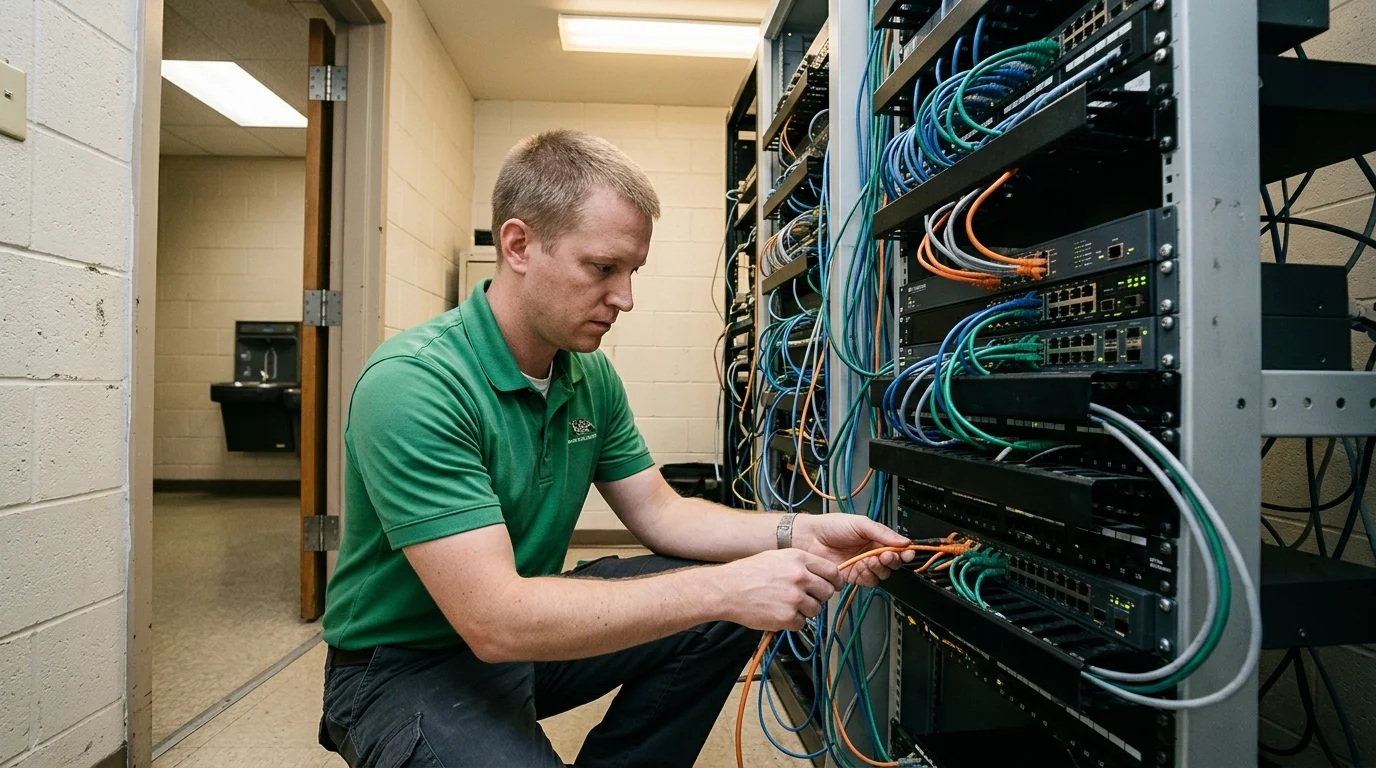
In June 2025, the FCC announced a reset of the E-Rate Category 2 budget cycle covering fiscal years 2026 through 2030. The per-student funding multiplier for network infrastructure, switches, wireless access points, cabling, firewalls, rose from $167 to $201.57, a 20.7% increase. The minimum funding floor per school site went from $25,000 to $30,175. Those figures matter most to small rural districts that would otherwise get almost nothing from a pure per-pupil formula. At $30,175 guaranteed per building, a one-school district in McCurtain County can wire an entire campus.
But here is the structural pressure: the five-year Category 2 budget for each district locks in based on the enrollment count certified in Year 1 of the cycle, which is FY2026. Miss that count, or fail to engage early in the cycle, and the district carries a lower budget ceiling through 2030. As USAC's guidance makes explicit, early filing also improves the odds of landing in the first commitment wave, which releases funds faster.
The FY2027 Form 470, the document that opens the mandatory 28-day competitive bidding window, became available July 1, 2026. The EPC Administrative Window, the period when districts update their entity profiles and check eligibility ahead of the funding application, opened October 21, 2026. That date aligns almost exactly with when Oklahoma's RFP count began climbing. Districts posting Form 470 notices now are buying themselves several months to evaluate vendor bids before the FY2027 Form 471 application window opens in early 2027. After the Form 471 window closes, entity profiles lock.
This is not the first time Oklahoma has shown this calendar-driven pattern. The state logged 11 broadband RFPs in December 2025 and another 11 in March 2026, both spikes aligning with FY2026 E-Rate filing deadlines. The October 2026 surge is larger because the five-year cycle reset amplifies urgency: districts know the new, higher per-student multiplier is on the table and that the enrollment count window is closing.
Nationally, the scale of FY2026 E-Rate demand offers context for why states are moving aggressively. According to E-Rate data compiled by Sourcepass, total FY2026 demand reached a record $3.51 billion, with Category 2 requests hitting $1.81 billion, the highest Category 2 figure ever recorded, and 12,210 schools submitting Category 2 applications, itself a program record. Oklahoma's October filing surge fits into that national picture: district IT directors who understand the cycle are treating this window the way a tax attorney treats April 14.
Running parallel to the school E-Rate activity, though distinct from it in every meaningful way, Oklahoma's tribal nations hold more than $176 million in active Department of Commerce Tribal Broadband Connectivity Program grants. The Chickasaw Nation ($50 million), Choctaw Nation ($46.3 million), Muscogee Creek Nation ($41.2 million), and Cherokee Nation ($29.7 million) are each building out broadband infrastructure on tribal lands under a separate federal program administered by NTIA rather than the FCC. The Cheyenne-Arapaho Tribes, which appear in this month's RFP list, have a footprint in both tracks. The two programs do not share funding mechanisms, eligible recipients, or administrative oversight; they represent convergent but independent federal investments in a state with one of the country's largest rural and tribal connectivity gaps.
For a school district IT director watching this month's calendar, the next signal to track is the Form 471 application window, expected to open in early 2027. Districts that filed Form 470 notices in October will finish their competitive bidding windows in November and December, evaluate bids, and need to have service provider agreements in place before submitting Form 471. Those that miss the window lose another year of cycle time, and in a five-year budget period, that is a cost that compounds.