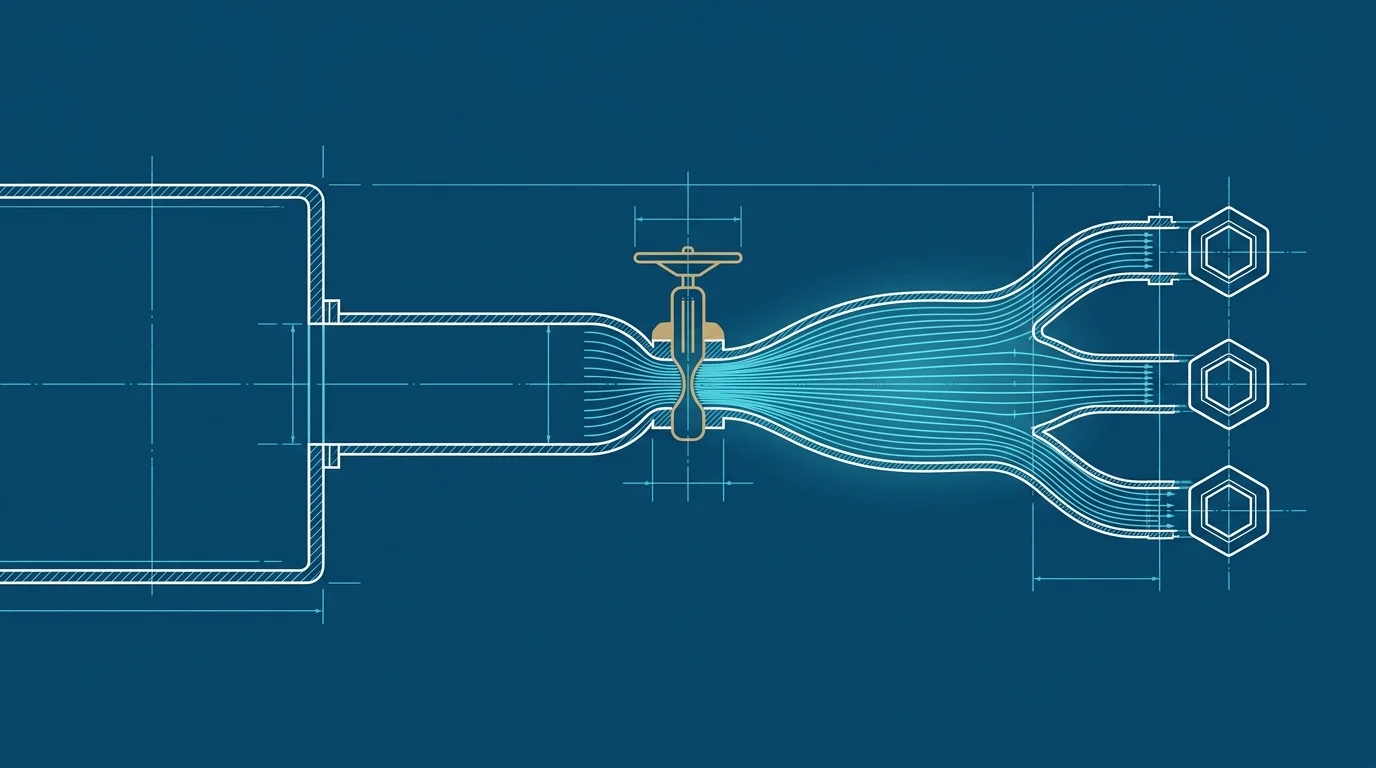
Ohio municipalities filed 45 water infrastructure RFPs in the last 30 days, against a monthly baseline of roughly five to six. That 8.2x surge is not a sign that new money has arrived. It is a sign that communities are scrambling to spend money they already secured before the terms expire.
The federal Infrastructure Investment and Jobs Act's five-year supplemental capitalization window formally closed September 30, 2026. As water finance reporters noted when the lapse hit, that closure ended the pipeline of supplemental grants that had nearly doubled annual federal State Revolving Fund allotments to states since FY2022. Ohio's final-year allotment alone totaled $389 million: $138 million for clean water, $56 million for drinking water, $166 million for lead service line replacement, and $29 million for emerging contaminants. Those funds flowed into Ohio EPA's revolving accounts and can still be awarded locally over a multi-year deployment window. But no new federal capitalization money is coming in behind them.
For Ohio communities, that creates an unusual deadline pressure. Principal forgiveness awards, the grant-equivalent portion of SRF loans that communities do not have to repay, are conditioned on projects advancing to construction. Ohio EPA's Drinking Water Assistance Fund Program Management Plan set a hard August 31, 2025 deadline for principal forgiveness applications in the PY2026 cycle. Projects now hitting the RFP stage are exactly the ones that cleared that threshold: they won the money; they just have not yet built anything. If procurement stalls, the forgiveness award can be reallocated. The contracts are the deliverable.
The breadth of October's activity reflects how widely Ohio communities had queued up for IIJA funding in the first place. At least 15 distinct municipalities and counties issued water RFPs last month, according to NationGraph's procurement data. Hamilton led with six, covering lead service disconnections under its Build Back the Block Phase III program. Dublin posted three booster station upgrade solicitations. Dayton, Fairfield, and Montgomery County each added two. Smaller villages, Antwerp, Silver Lake, South Amherst, Windham, that rarely carry standalone capital budgets for water system replacement appeared on the list as well, a direct function of SRF principal forgiveness making projects financially viable that would otherwise sit indefinitely.
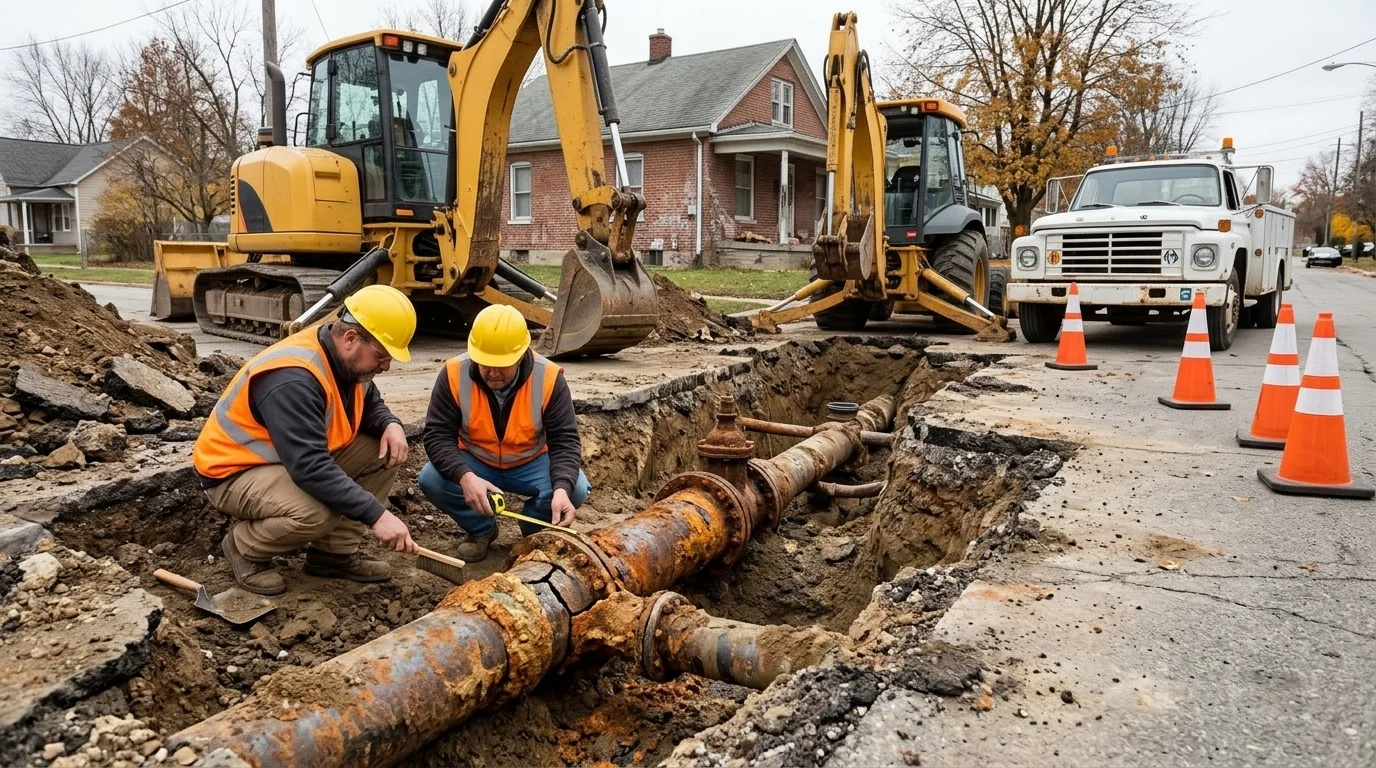
Port Clinton's RFP for 6.8 miles of water main replacement captures the dynamic plainly: a project that has been queued for years, a funding commitment now in hand, and a procurement clock running. That geography is not incidental. Ohio sits at the intersection of Great Lakes water stress and aging industrial-era infrastructure concentrated in mid-sized Rust Belt cities where the gap between what systems need and what local budgets can fund has persisted for decades.
A parallel legislative signal accelerated procurement calendars in some jurisdictions. The Water Resources Development Act of 2026 (H.R. 9497), which passed the House Transportation and Infrastructure Committee unanimously in September and cleared the Senate Environment and Public Works Committee unanimously in July, includes more than $32 million in direct Ohio earmarks: $13 million for Waverly, $8 million for Jackson County, $6.4 million for Lynchburg, $3 million for Clermont County, and $2 million for New Holland. Rep. Emilia Sykes secured raised infrastructure caps for Summit County (from $25 million to $50 million) and Stark County (from $24 million to $49 million) in the same bill. Those are distinct congressionally mandated project funds, administered separately from the SRF revolving accounts, but for a local procurement officer, a confirmed WRDA earmark and a confirmed SRF principal forgiveness award produce the same immediate output: an RFP.
According to Ohio EPA's financial assistance program page, the state's active EPA water grant portfolio now stands at $1.09 billion obligated across 65 grants, with individual grants in the Clean Water and Drinking Water SRF streams ranging from $45 million to $139 million. That is a substantial pipeline of already-committed dollars looking for contractors.
The state-specificity of the surge is notable. Ohio's October RFP count is 2.4 times the volume logged by Michigan and Pennsylvania, the next-highest neighboring states, over the same window. The Alliance for the Great Lakes observed in August that Ohio's IIJA deployment schedules allow communities additional years to award money already received, but underscored that the capitalization pipeline itself is now closed. Ohio's higher volume likely reflects both the size of its SRF allotment relative to its neighbors and the density of small communities with lead-line and treatment-plant commitments now maturing simultaneously.
What comes next depends partly on what Congress does with WRDA 2026 on the Senate floor, and partly on whether the administration's proposed SRF reductions in its FY2026 budget materialize in future appropriations cycles. Neither question changes the immediate calculus: Ohio communities that cleared the principal forgiveness application deadline last August are under pressure to get construction contracts signed. The RFP wave is the visible edge of that pressure. The contracts that follow will be the test of whether the state's $1.09 billion water portfolio translates into pipes in the ground.