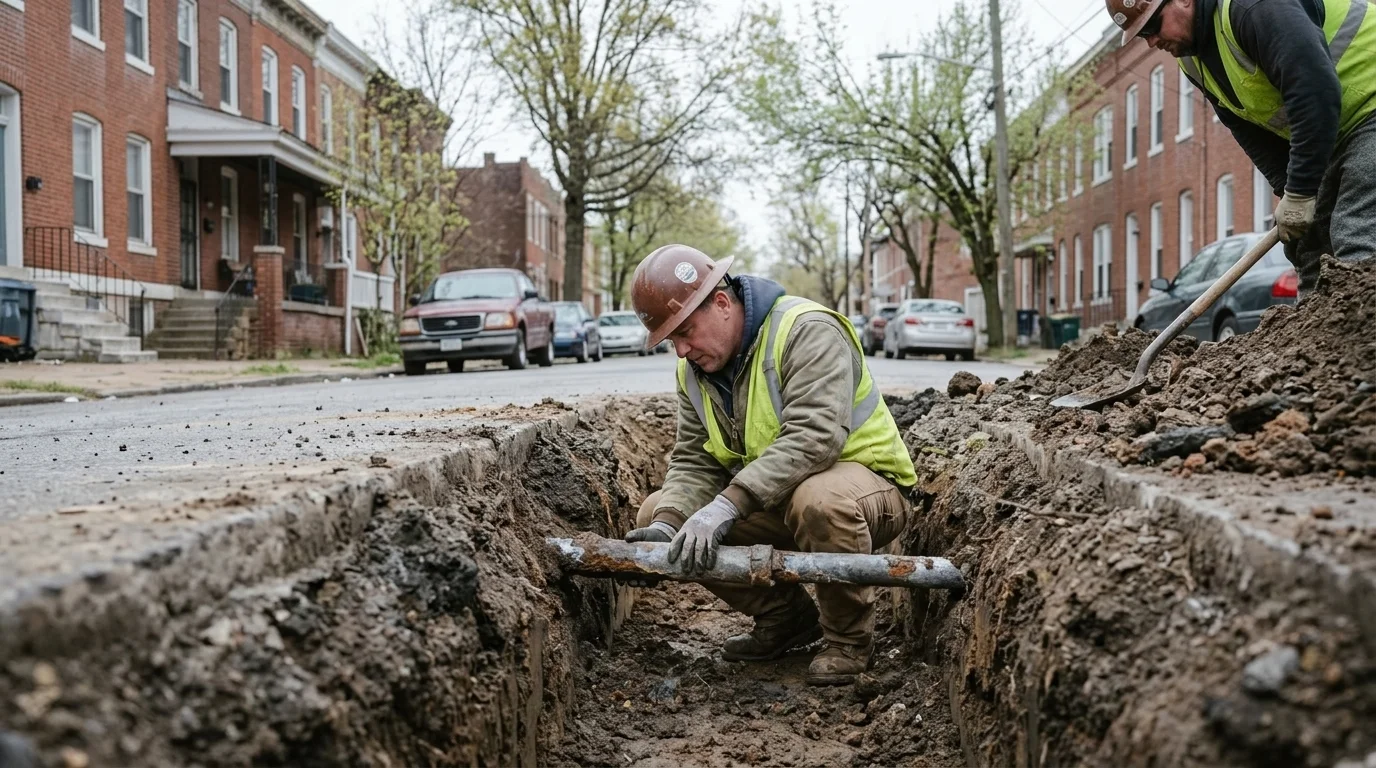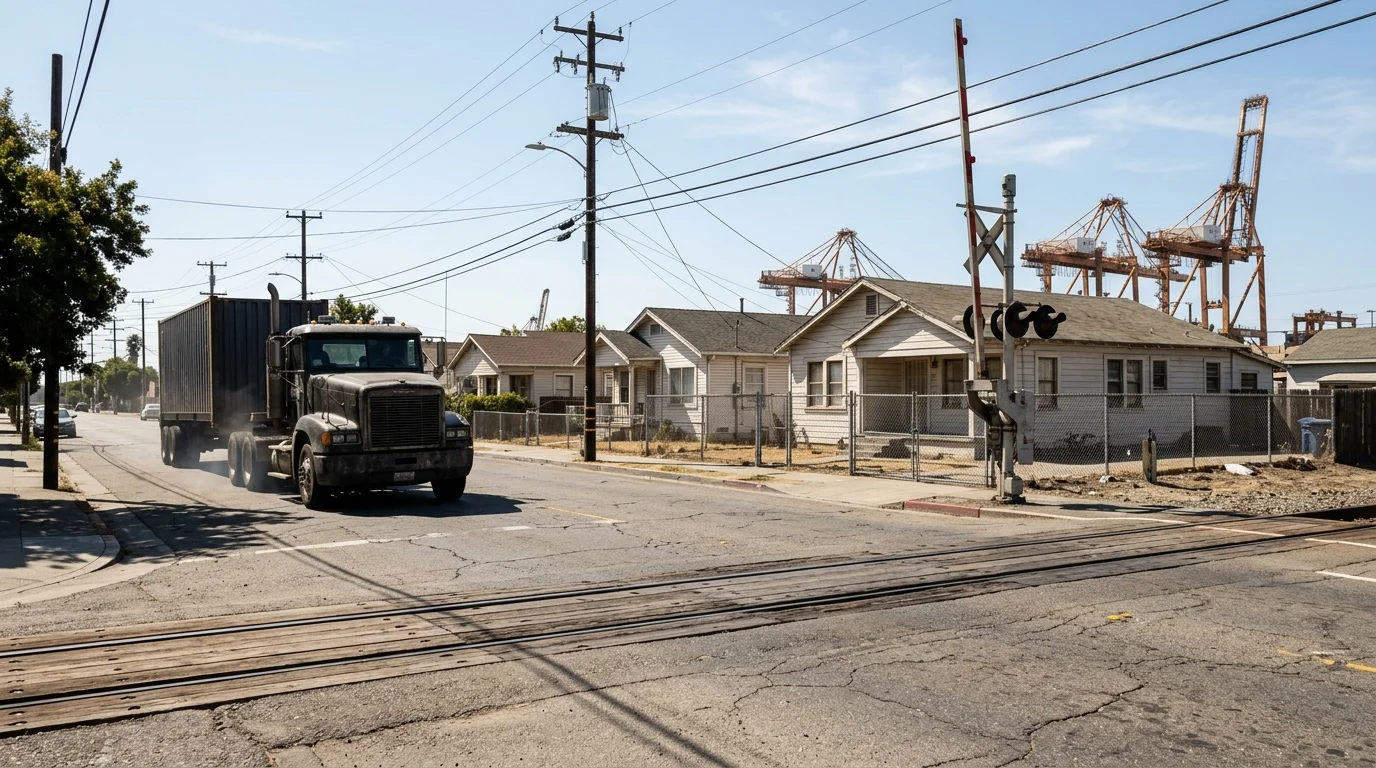
Oakland is moving to reroute heavy freight trucks out of West Oakland's residential streets and fix two dangerous railroad crossings in the Jack London District, addressing demands that environmental justice advocates have pressed for more than two decades.
The project targets Embarcadero West at Oak Street and Market Street, two at-grade crossings shared by Union Pacific freight trains, Amtrak's Capitol Corridor, and the San Joaquins. The corridor runs directly through Jack London Square, a neighborhood that has added thousands of housing units over the past decade, pushing far more pedestrians and cyclists into the path of passing freight trains. Multiple pedestrian fatalities at these crossings over the years have made safety upgrades an urgent priority.
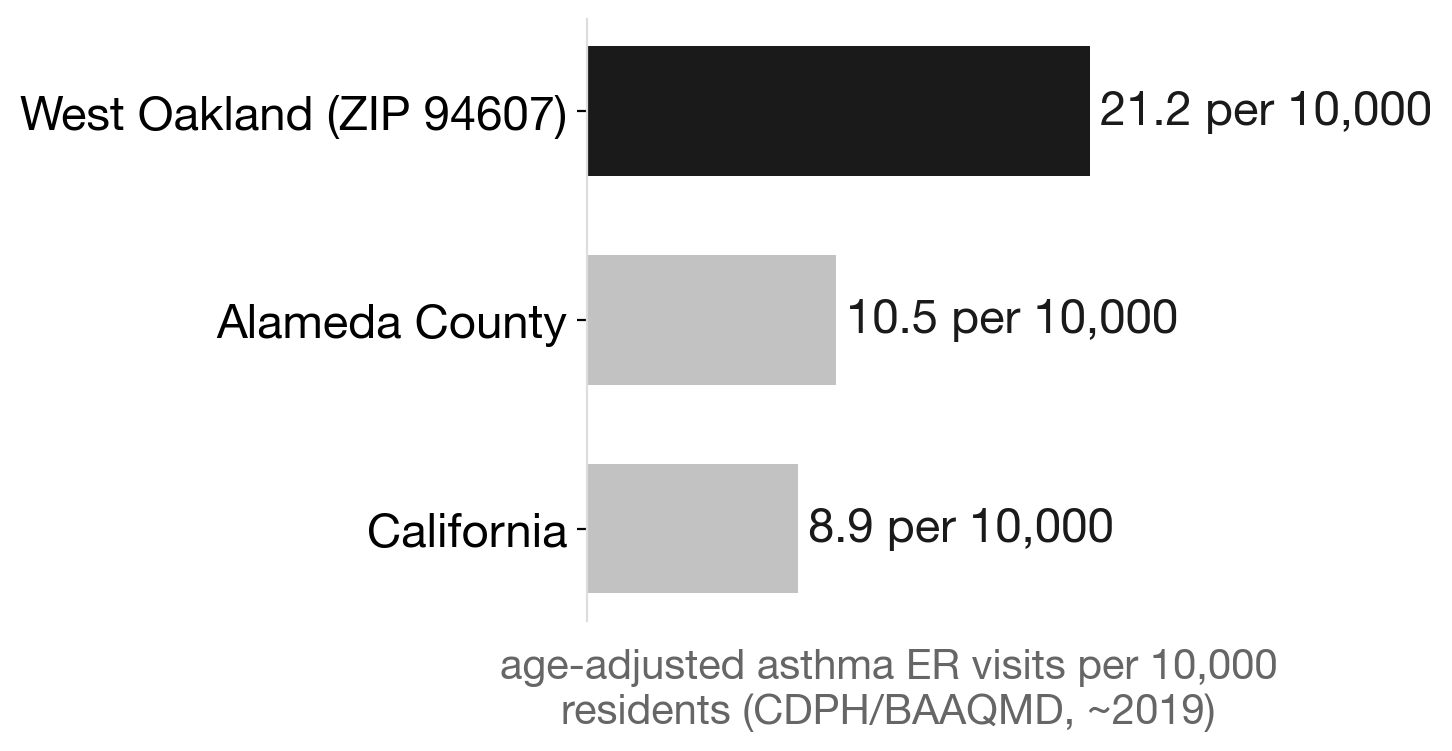
Alongside those fixes, the city will build a new overweight vehicle route through the Port of Oakland's industrial area, connecting Market Street to Adeline/Middle Harbor Road. That route would pull the heaviest trucks off the streets they currently use through West Oakland, a historically Black neighborhood documented as one of the worst diesel pollution hotspots in California. West Oakland residents suffer asthma hospitalization rates roughly double the county average, and studies have found life expectancy there runs up to 10 years shorter than in wealthier parts of Oakland, driven largely by diesel particulate matter from port traffic.
Source: NationGraph.
The truck reroute is a direct outgrowth of the West Oakland Community Action Plan adopted in 2019 under California's AB 617 air protection program, which specifically called for moving overweight trucks onto industrial roads inside the port footprint and off residential corridors like 3rd Street. West Oakland was among the first communities designated under AB 617, a recognition of conditions that local organizers had been documenting since the 1990s.
The pedestrian and bike improvements will cover Oak and Market streets between Embarcadero West and 3rd Street, with a new separated two-way bicycle track on Oak Street and along a stretch of Embarcadero West between Oak and Alice streets. Oakland's broader Bike Plan, adopted in 2019, identified the Jack London waterfront network as a priority gap. The city has also been pursuing Vision Zero since 2017, though pedestrian and cyclist deaths have continued. The East 12th Street corridor is seeing similar protected bike lane treatment as the city works to close gaps in its network.
This is Phase 1, with additional phases expected along the Embarcadero West corridor. Oakland is under significant fiscal pressure, making outside funding critical; projects like this typically draw from Port capital budgets, Alameda County's Measure BB sales tax, state Active Transportation Program grants, and federal rail safety and street funding from the 2021 infrastructure law.
The city has posted the project to its procurement portal as it seeks an engineering team to design and deliver the work.