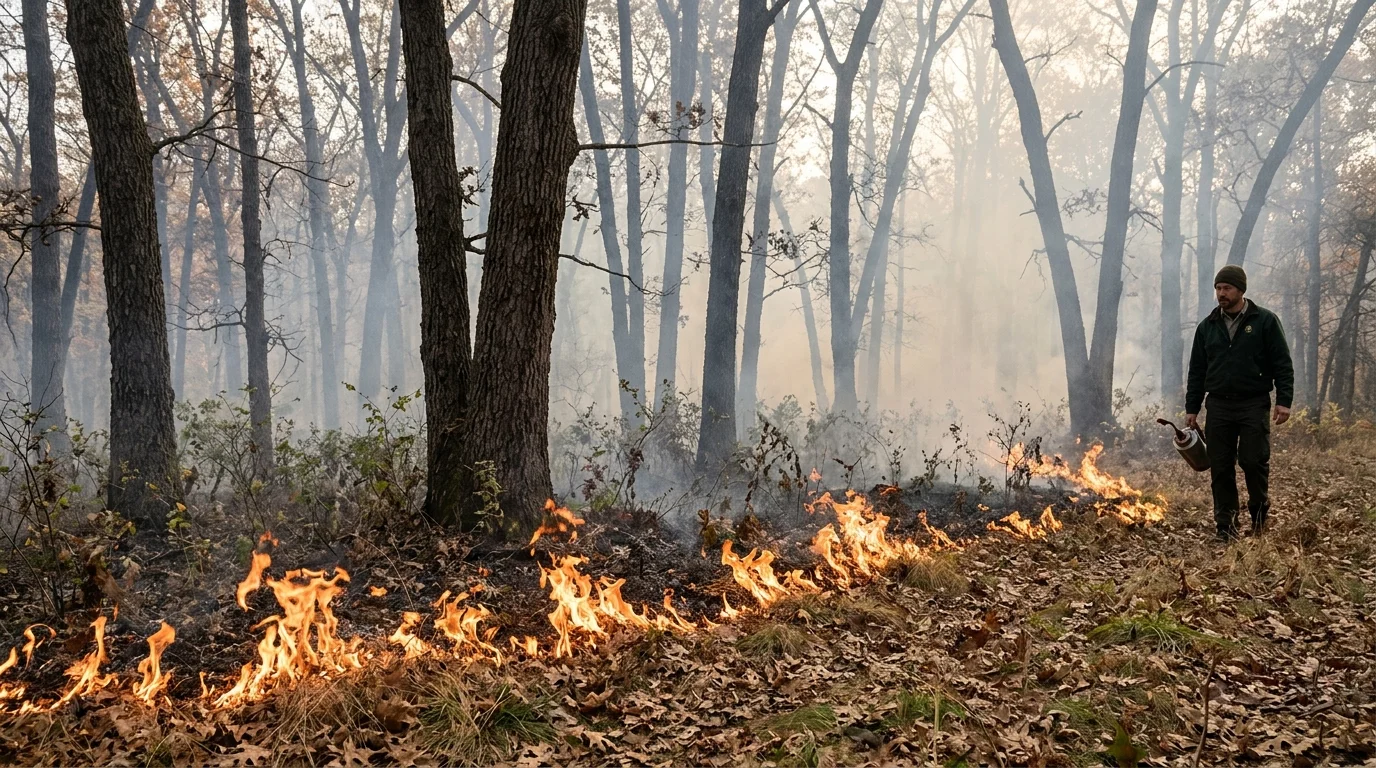
Oakland County, Michigan, is hiring contractors to set controlled fires across its park system, a practice that land managers say is now essential to keeping the oak forests and native prairies in suburban Detroit's backyard alive.
The county's Parks and Recreation department has posted a solicitation for prescribed burn services through Michigan's intergovernmental procurement network. Dollar amounts and total acreage are not specified in the posting, but the burns would take place across the county's 14-park, roughly 7,000-acre system, which includes significant oak forest, prairie, fen, and wetland habitats.
The science behind burning is straightforward, if counterintuitive. The oak savannas and tallgrass prairie remnants scattered through parks like Addison Oaks, Independence Oaks, and Highland Oaks evolved over thousands of years with frequent low-intensity fire, set by Indigenous peoples and lightning. When fire is absent for decades, invasive shrubs like buckthorn and autumn olive move in, shading out native plants and preventing young oaks from taking hold. The result, ecologists say, is a slow-motion collapse of the ecosystems these parks were set aside to protect.
Source: NationGraph.
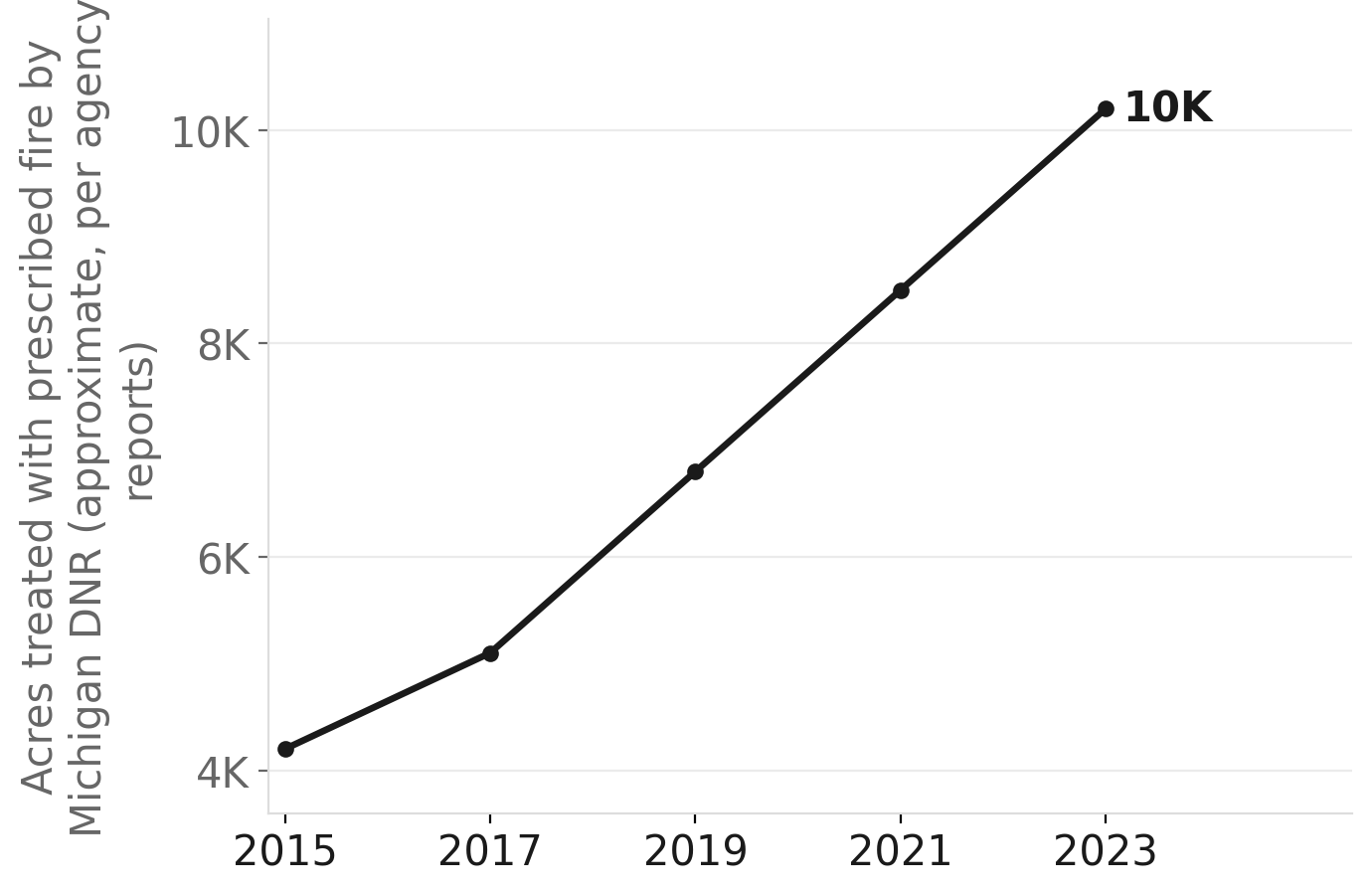
A century of fire suppression, traced in part to a U.S. Forest Service policy dating to 1935 that aimed to extinguish every fire by 10 a.m., created this problem at a national scale. The Upper Midwest is now dotted with fire-dependent landscapes that have gone unburned for generations. Prescribed burning has become the primary remedy, and Michigan's DNR has steadily expanded its program. County park systems have followed.
For Oakland County, the challenge is distinctly suburban. Burns must be conducted near residential neighborhoods, schools, and heavily traveled roads including I-75 and M-59. Smoke management and advance public notification are central concerns, and the county has a history of alerting residents before burns ignite. The work also requires contractors with specialized certifications and equipment that few local governments maintain in-house.
The wildfire-risk framing, while more familiar in the western United States, has grown more relevant in Michigan amid climate change bringing drier summers and longer fire seasons. The 2023 Canadian wildfire smoke that blanketed the Midwest was a visible reminder that fire's reach is expanding.
Nationally, prescribed burning has faced heightened scrutiny since 2022, when a federal controlled burn in New Mexico escaped and became the largest wildfire in state history. Michigan has had no comparable incidents, and the county's solicitation reflects the careful contractor qualification standards that have become standard practice in the field.
The county has a dedicated parks millage that provides a stable funding base for this kind of ecological maintenance work. A contractor selection and timeline have not been announced.