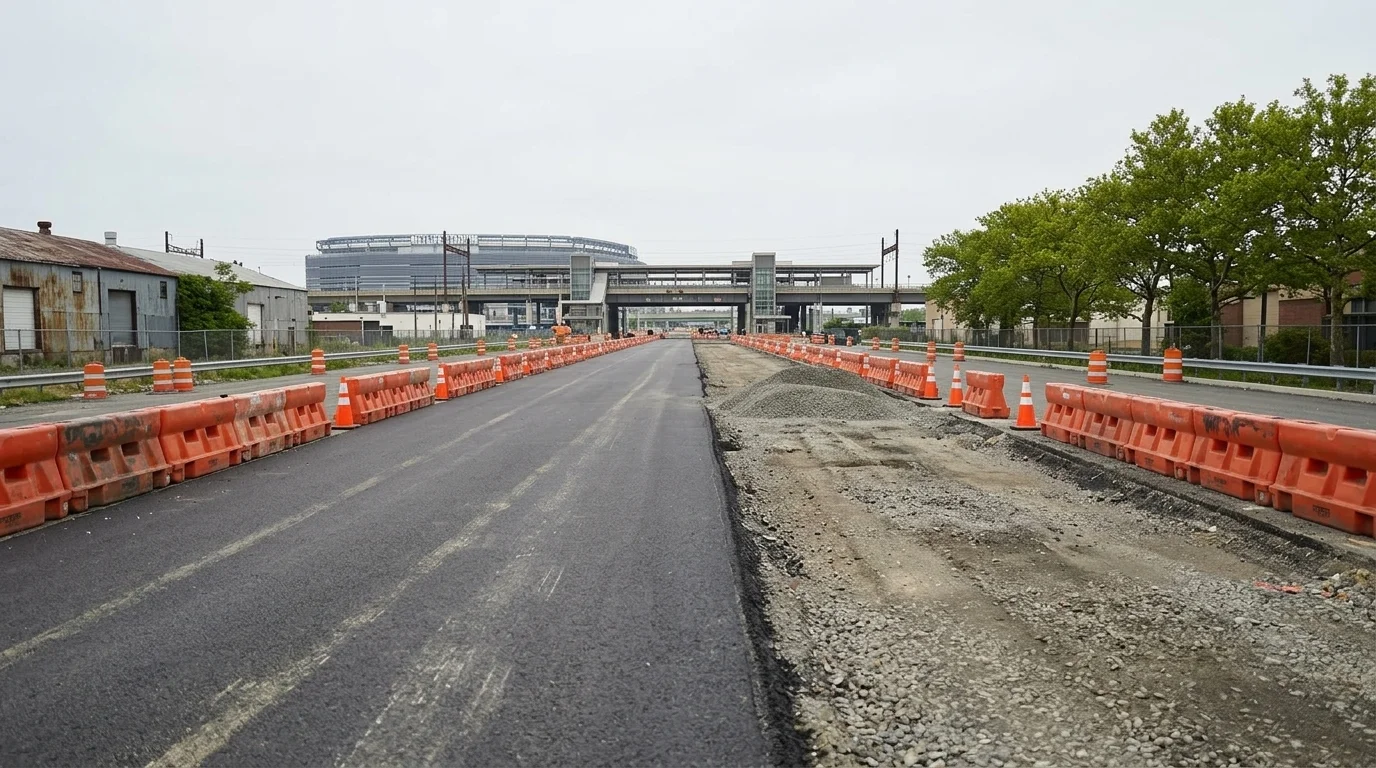
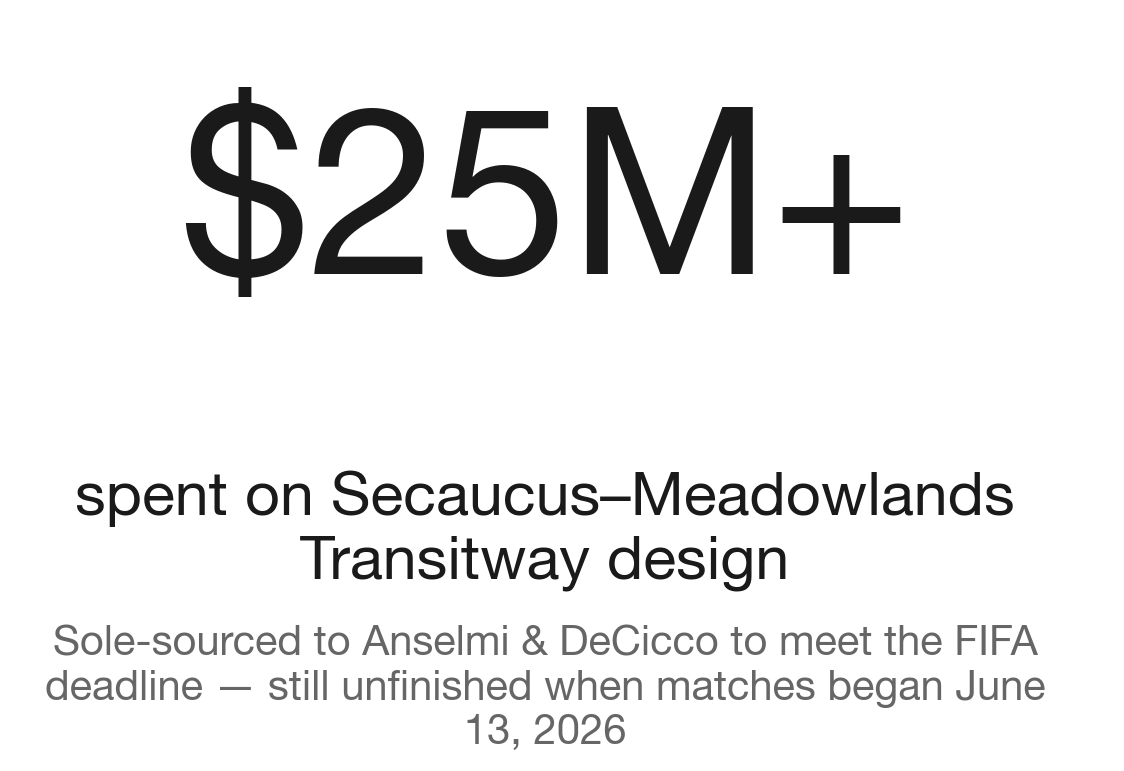
NJ Transit entered the FIFA World Cup with a $1.684 billion capital budget, $11.3 billion in federal Gateway Program commitments, and a flagship bus transitway specifically designed to move 12,000 fans per hour between Secaucus Junction and MetLife Stadium. The transitway was unfinished when the first match kicked off June 13, 2026, despite more than $25 million already spent on design and engineering.
That gap between resources and execution is the clearest window yet into how the nation's second-largest public transit system actually operates: not by plan, but by deadline.
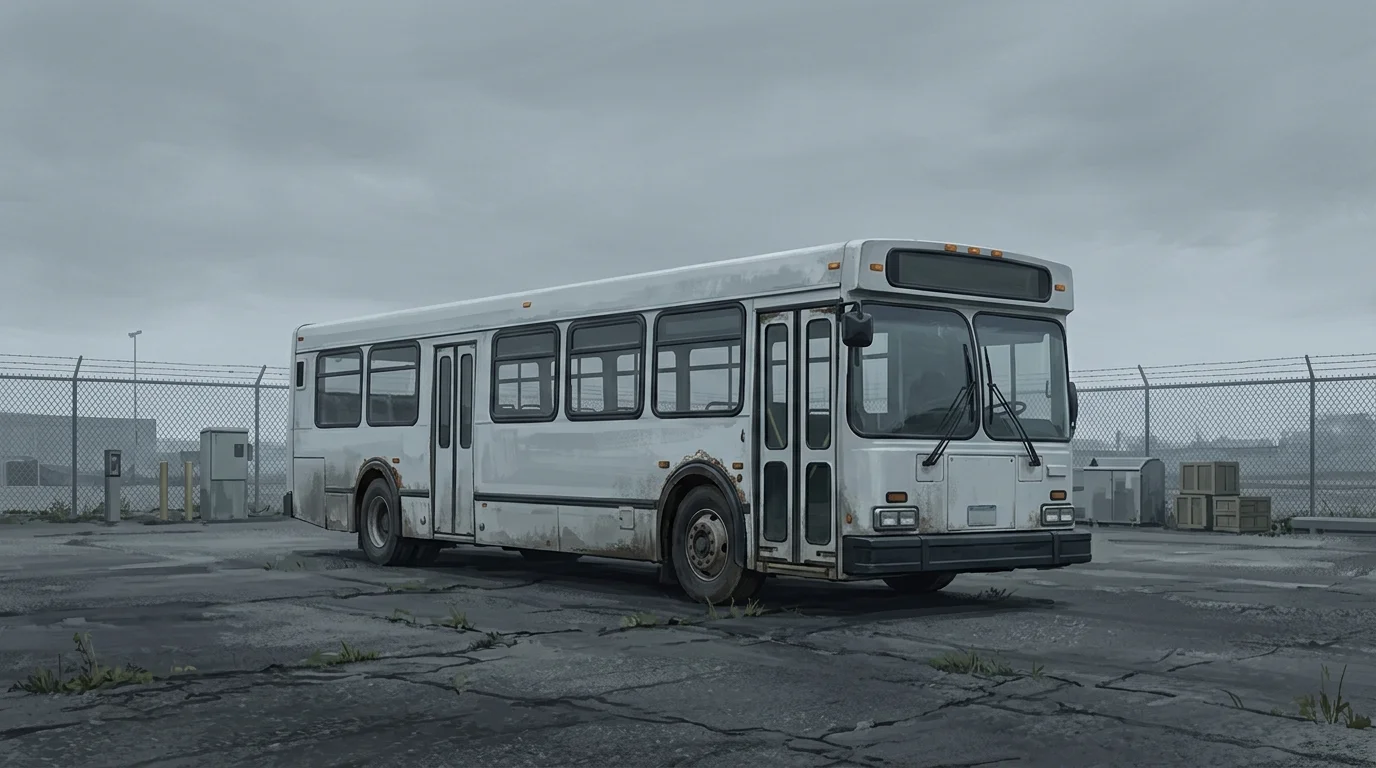
The World Cup exposed the mechanism directly. With no car access permitted to MetLife Stadium on match days, NJ Transit became the mandatory logistics provider for tens of thousands of international fans. CEO Kris Kolluri responded by invoking "procurement by exception," the agency's formal process for bypassing competitive bidding under compressed timelines. The Secaucus-Meadowlands Transitway construction contract went sole-source to Anselmi & DeCicco of Maplewood. A separate $3.4 million busing contract, covering 100 standby buses per match day and 125 for the final, was sole-sourced to A Yankee Line, Inc. Kolluri's explanation was blunt: according to reporting on the contracts, if the agency had waited for a full RFP, it would have missed the window entirely.
Source: NationGraph.
The transitway never opened in time regardless. As Shore News Network reported, NJ Transit spent and effectively wasted $26 million on a project the World Cup crowds never used.
What makes this more than a single procurement failure is the scale of the capital machine running alongside it. NJ Transit's FY2026 capital appropriation sits at $1.684 billion, with $844 million coming from the Federal Transit Administration. The agency received more than $247 million in new federal transit grants in June 2025, another $220 million in August 2025, and a $294 million State of Good Repair grant running through September 2026. The Portal North Bridge alone carries a $766.5 million FTA Capital Investment Grant. These are not the numbers of an underfunded agency scrambling for resources.
They are, instead, the numbers of an agency with substantial capital capacity that nonetheless arrives at major operational moments without the procurement infrastructure to deploy that capacity in time. The World Cup was not a surprise. MetLife Stadium was announced as a host venue years in advance. The car-free access requirement was a known constraint. The Secaucus hub dependency was baked into every fan transit plan the agency published. Yet the construction contract for the central piece of that plan was still being awarded via exception process months before opening day.
The pattern shows up in smaller procurements too. The real live RFP activity in New Jersey transit right now, once archival records are set aside, is modest and county-level: Passaic County's MOVE Micro-Transit Expansion, paratransit bus procurements in Essex and Somerset counties, pedestrian improvements under Princeton's Safe Streets to Transit program. These are the kinds of routine, incremental contracts a healthy procurement pipeline produces continuously. NJ Transit's own pipeline, by contrast, tends to surface in volume when a deadline forces it.
The Bergen County light rail program offers a longer view of the same dynamic. NJ Transit recently restarted planning for Bergen County light rail after the project sat dormant for years, a restart driven more by renewed political pressure than by any new technical or funding development. The agency has the federal relationships and the capital authorization to move; the question is whether planning begins early enough to avoid the next round of exception contracts.
For riders and residents, what changes in the near term is mostly at the edges. The buses ran for the World Cup, the transitway funds are spent, and Secaucus Junction handled the load as the mandatory transfer hub even without the dedicated roadway. The $1.684 billion capital program continues, and the Gateway Program's Hudson Tunnel commitments remain the dominant infrastructure story in the region for the next decade. The FY2026 capital program is funded and moving.
The signal worth watching is whether NJ Transit's procurement office shifts posture in the post-World Cup window, when there is no imminent deadline forcing the next exception. A competitive RFP for Bergen County light rail engineering, or an early solicitation cycle for the next major capital project, would indicate the agency can run its procurement machine in planning mode. A continued reliance on sole-source awards and exception filings when the next hard deadline arrives would confirm that the World Cup experience changed nothing about how the agency prepares.
The board's next capital program review is the clearest near-term checkpoint.