New York entities issued 40 flood-control procurement notices in the last 30 days, against a trailing monthly average of roughly 9 over the prior year. That nearly fivefold jump is not a fluke in a single watershed or a response to a single storm. It is the procurement signature of four separate funding programs whose application and disbursement deadlines landed in the same narrow window this fall.
For the first time in a generation, a town engineer in New York can simultaneously apply for state Bond Act construction grants, respond to a live FEMA mitigation funding notice, file pre-application documents tied to a just-authorized Army Corps project, and compete for a second, parallel FEMA stream with its own eligibility rules. None of those programs shares a deadline with the others. All of them are open right now.
The state piece came first. New York voters approved the Clean Water, Clean Air and Green Jobs Environmental Bond Act in November 2022, dedicating $4.2 billion to environmental capital projects, with not less than $1.1 billion reserved for Restoration and Flood Risk Reduction. DEC's Resilient Watersheds Grant Round 2 ($60 million in Bond Act funds) and the Green Resiliency Grants ($45 million, with a January 29, 2027 application deadline) are both actively open. These are state bond dollars, disbursed through competitive DEC and DOS grant programs to municipalities that have already done enough planning to file a credible engineering scope. That planning requirement is part of why the RFP wall is arriving now: communities that spent 2024 and early 2025 doing feasibility work are ready to procure.
The federal signals arrived on top of that state foundation. The U.S. House passed the Water Resources Development Act of 2026 on September 16 by a 415-9 vote, authorizing $7 billion in Army Corps civil works projects nationally. For New York, the bill includes $351 million in Army Corps flood projects for Queens and the Bronx alone, $90 million for Bronx County stormwater, $20 million for Brookhaven, and $65.5 million for Long Island. WRDA is an authorization, not an appropriation: it does not transfer cash to localities. What it does is signal that federal cost-share is coming, which is enough to trigger the planning and engineering procurements that must be in place before a project can enter the Army Corps construction queue. The bill still awaits Senate passage and a presidential signature, but its lopsided House margin has municipalities treating it as a green light.
Simultaneously, FEMA's FY2026 Flood Mitigation Assistance program issued its New York Notice of Funding Opportunity, with NY DHSES hosting a national webinar on November 4. That is a separate federal stream from the FEMA pre-disaster mitigation awards announced in June 2026, which directed nearly $10 million to specific NY projects including Hempstead bulkhead repairs ($1.7 million), Freeport flooding mitigation ($1.1 million), and New Rochelle drainage ($1.1 million). Those two FEMA programs have different eligibility rules, different application tracks, and different administering offices at DHSES. A municipality chasing both must run two parallel procurement processes.
The issuers in the current RFP surge span every level of New York government. Town of Brookhaven is out with drainage engineering and outfall mitigation scopes. Ulster County is studying Esopus Creek. The CUNY Research Foundation is procuring campus-wide flood mitigation for Staten Island. Cornell University is in the market for flood remediation reconstruction. The Saint Regis Mohawk Tribe has posted multiple flood repair batches. Peekskill, Mamaroneck, the Port Authority, NYS DHSES, NYSDOT, and the Office of Parks are all active. This breadth reflects New York's decentralized procurement structure: every county, municipality, tribe, and state agency runs its own competitive process, so a capital surge at the program level becomes dozens of simultaneous market entries.
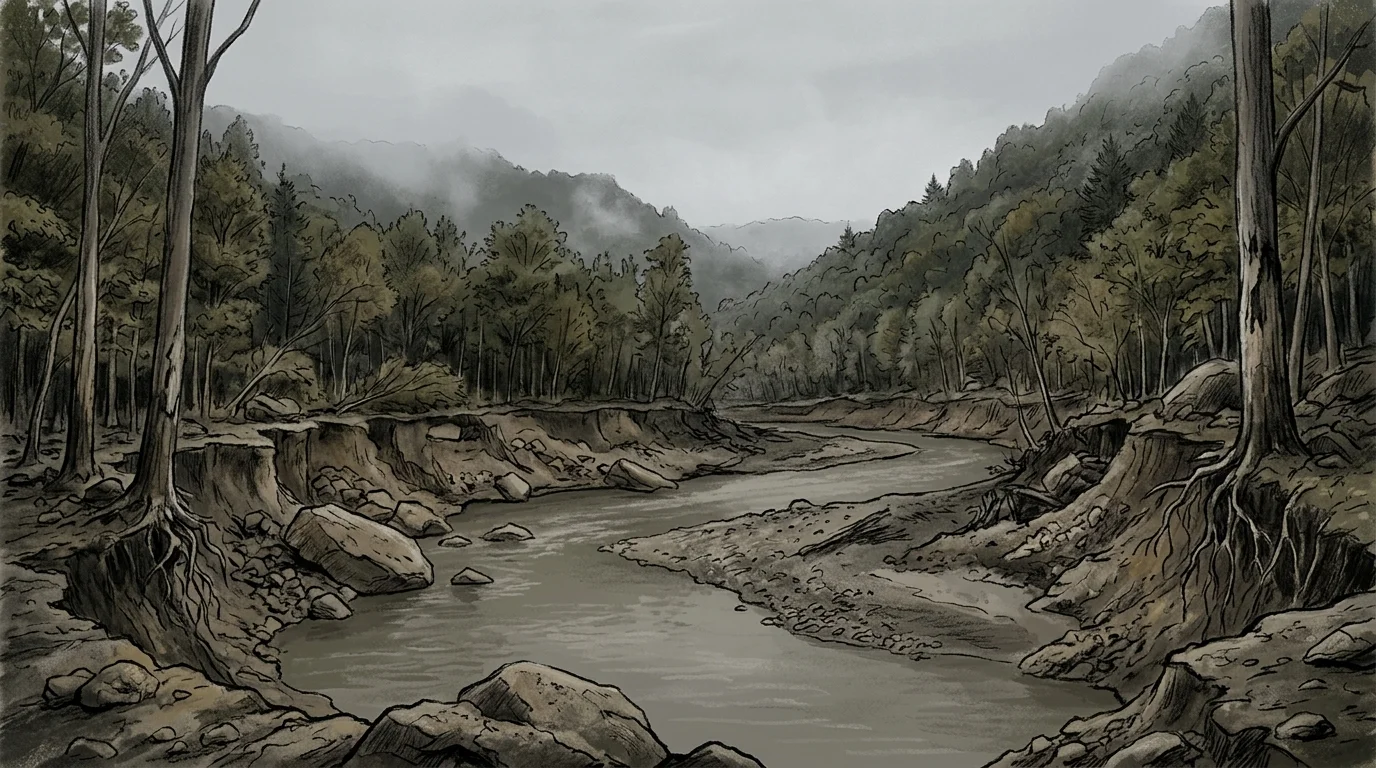
The geographic range matters too. New York's flood vulnerability runs across three distinct problem types: the NYC metro coastline carrying Hurricane Sandy's legacy and ongoing tidal flooding; the Hudson Valley, prone to repetitive inland flooding; and the Southern Tier, where 1940s-era Army Corps structures on the Susquehanna and Chemung Rivers are overdue for replacement. Governor Hochul's July 2025 announcement of $21 million in Bond Act funding for Binghamton, Elmira, Olean, and Whitney Point seeded the Southern Tier pipeline that is now hitting procurement. The Bond Act also requires that at least 35 percent of funds benefit disadvantaged communities, concentrating procurement activity in urban and rural-distressed areas.
New York is not alone. New Jersey recorded 45 flood-control RFPs in the same 30-day window against a comparable baseline, suggesting the WRDA authorization signal and the FEMA NOFO are driving a regional Northeast procurement surge, not a dynamic unique to any single state.
The next signals to watch: Senate action on WRDA 2026, which would convert the House authorization into enacted law and unlock Army Corps project agreements; the January 29, 2027 deadline for the Green Resiliency Grants, which will tell engineers how much of the Bond Act pipeline converts to awarded contracts; and whether FEMA's FY2026 FMA awards land before or after localities have already committed their engineering budgets to the Bond Act track. For town engineers managing all three clocks at once, the sequencing is the job.