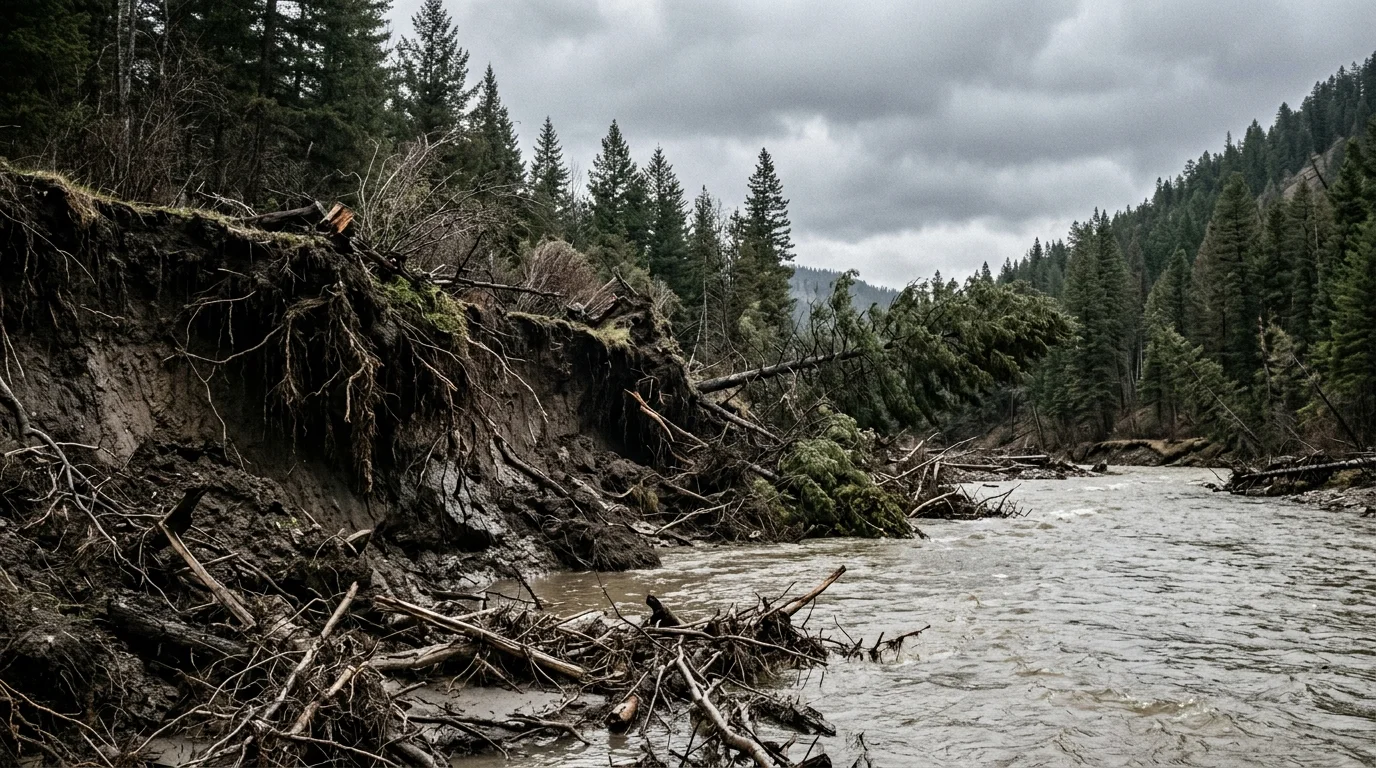
Six months after a winter flood shredded the banks of Libby Creek in northwestern Montana, the state is moving urgently to stabilize the damage before spring runoff makes things worse.
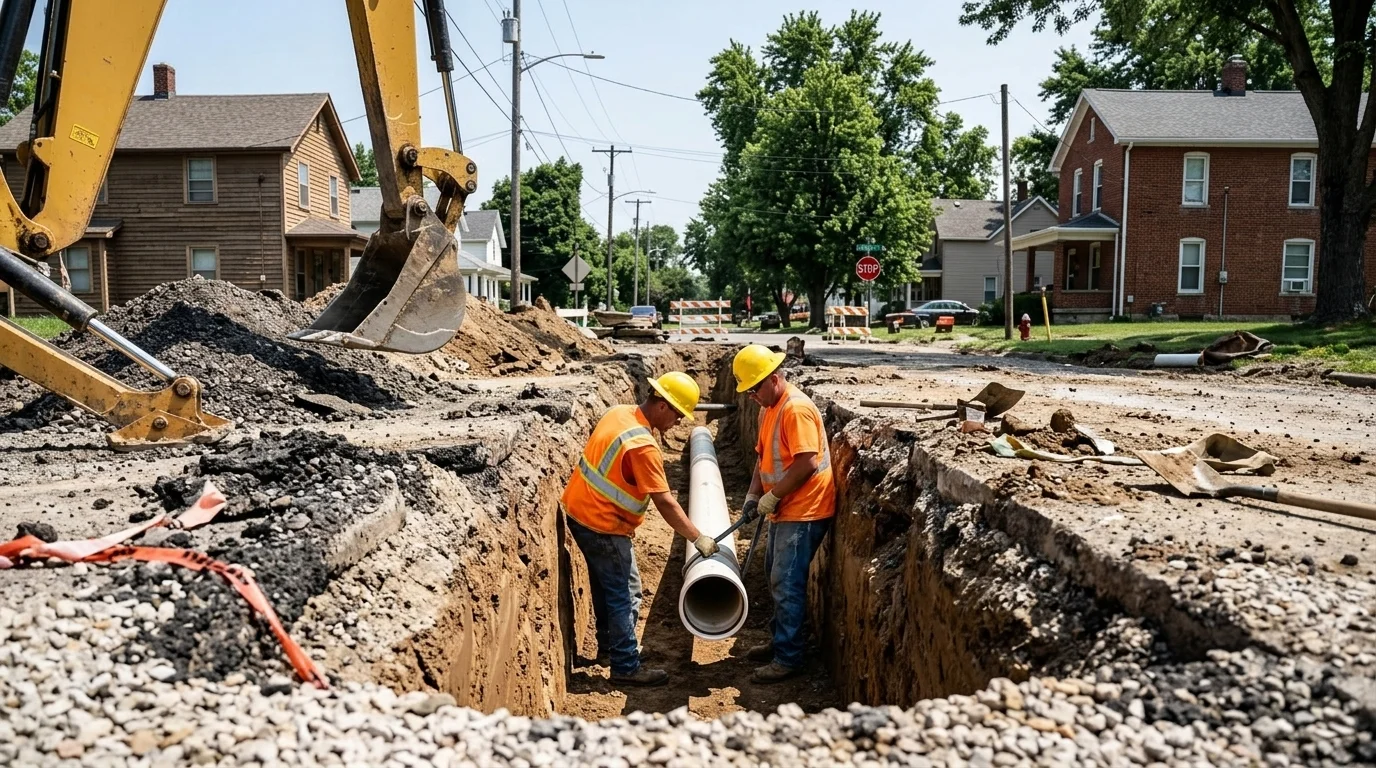
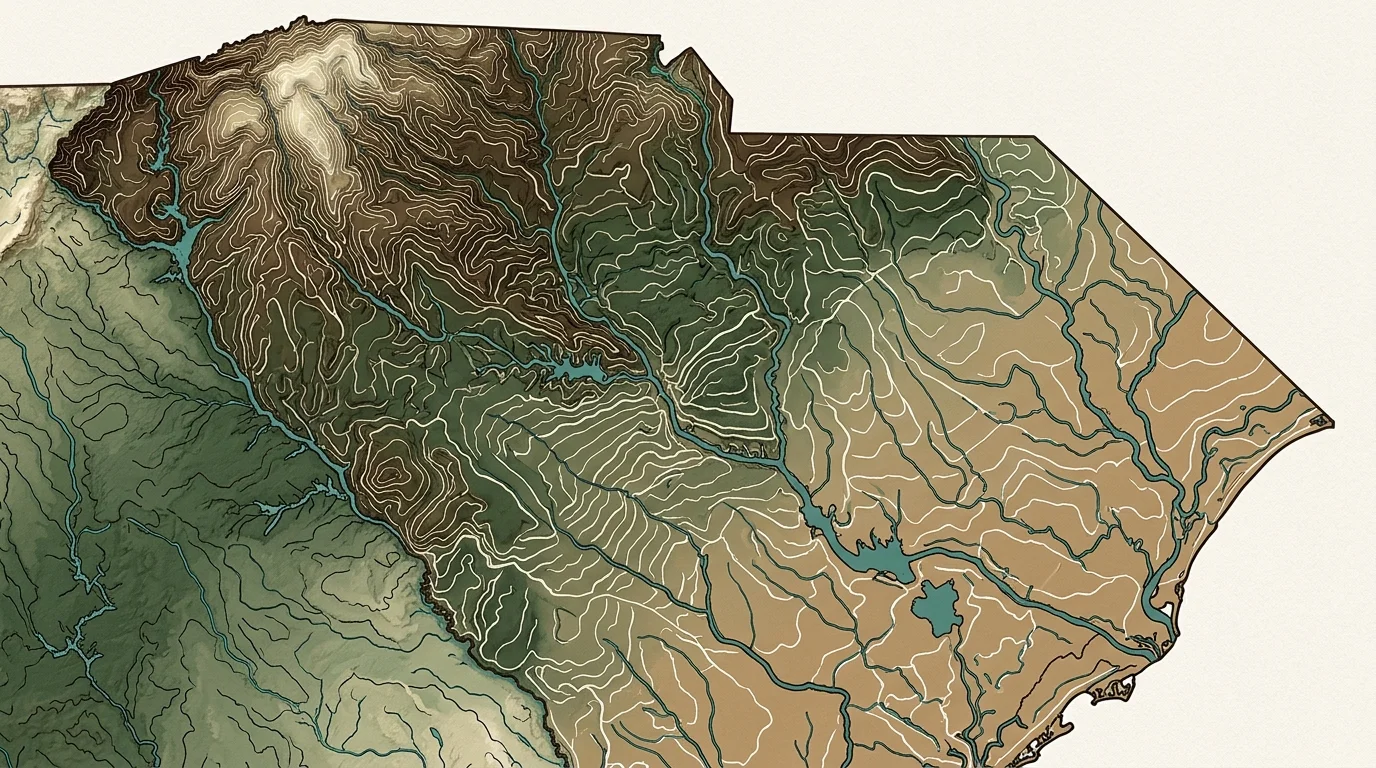
The Montana Department of Environmental Quality has posted an emergency procurement seeking a contractor to armor and restore eroding creek banks caused by December 2025 flooding. The creek runs through Libby, a town of about 2,800 people in Lincoln County, before draining into the Kootenai River.
The December flood fit a pattern that's become increasingly familiar across the Northern Rockies: a warm winter storm dropping rain at elevations that used to see only snow, melting whatever snowpack had already accumulated and sending a sudden surge of water down drainages that weren't prepared for it. Montana agencies have been tracking these rain-on-snow events with growing concern amid a similar dynamic that contributed to the catastrophic June 2022 Yellowstone River floods, and smaller versions have hit western Montana repeatedly in the winters since. The state is now essentially treating mid-winter flash flooding as a recurring emergency, not an outlier.
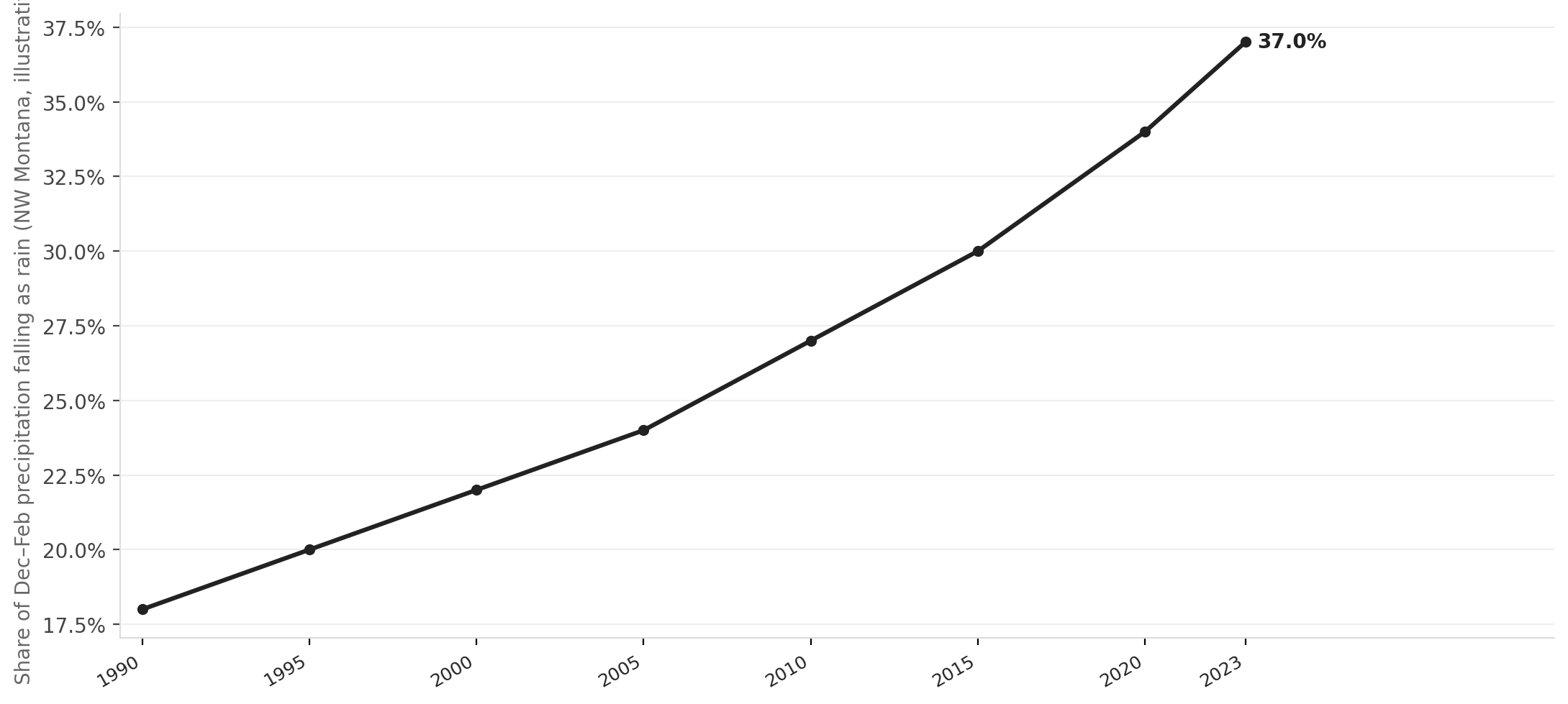
Source: NationGraph.
Libby Creek's banks are especially vulnerable. The watershed carries decades of disturbance from placer and hard-rock mining dating to the 1860s, and the creek sits within the broader Libby Superfund zone, made infamous by the W.R. Grace vermiculite mine that contaminated the town with asbestos and killed hundreds of residents over decades. Legacy mining left banks weakened and prone to failure long before climate-driven floods accelerated the problem.
The creek is also habitat for westslope cutthroat and bull trout, both protected species, which means any stabilization work has to clear federal Endangered Species Act review alongside the usual permits.
Lincoln County has a median household income well below the state average and limited local revenue to absorb disaster costs, so state and federal emergency dollars are essential for a project like this. DEQ is likely drawing on a mix of state emergency funds, FEMA Public Assistance and its own environmental restoration programs to cover the work.
The urgency is straightforward: spring snowmelt on the Cabinet Mountains typically peaks in late May and June. If the damaged banks aren't reinforced before then, the next high-water season could carve the creek channel further, threatening property and pushing sediment and contaminants downstream. As northwest Montana has seen with road and stream damage, deferred repairs tend to compound quickly. DEQ's window to act is narrow.