Minneapolis is opening up climate funding to young residents, inviting youth-led projects aimed at tackling the environmental problems their generation will live with longest.
The city's Health Department is accepting proposals for youth-led climate action initiatives, posted Sept. 16. The specific award amounts haven't been disclosed, but the funding draws from one of the more unusual climate revenue streams in the country: a franchise fee on Xcel Energy and CenterPoint gas bills that the City Council approved in 2023 as part of its Climate Equity Plan, committing more than $10 million annually through 2033. That dedicated, ratepayer-backed source gives Minneapolis room to fund experimental programs that most peer cities simply can't afford.
The Health Department's lead role reflects how Minneapolis has come to think about climate: not primarily as an infrastructure or emissions problem, but as a public health crisis. North Minneapolis residents face higher rates of asthma, greater heat vulnerability, and heavier industrial pollution exposure than other parts of the city. Wildfire smoke drifting down from Canada in 2023 made air quality a visible, immediate concern for the whole metro. Framing climate grants through the Health Department signals that the city sees environmental action and health equity as the same work.
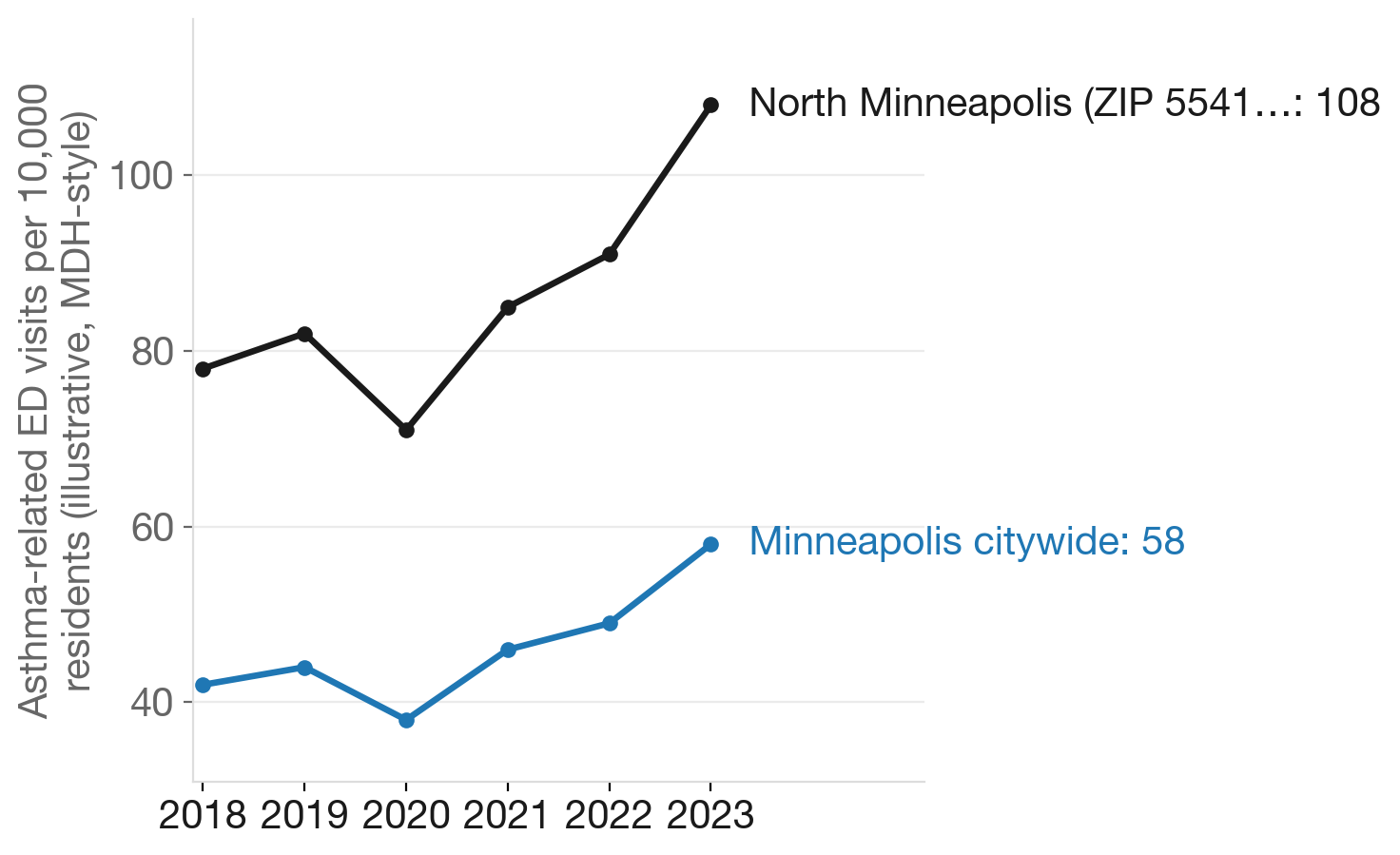
Source: NationGraph.
Minneapolis has been building toward this for years. It adopted a Climate Action Plan in 2013, declared a climate emergency in 2019, and has watched a generation of young organizers, including members of MN Can't Wait and Minnesota Youth for Climate Justice, push the city to move faster. Youth climate activism nationally accelerated after the 2018 IPCC report and the school strikes of 2019, and gained legal weight in 2023 when youth plaintiffs won a landmark constitutional climate case in Montana.
The city has also designated Green Zones in North and South Minneapolis, areas of concentrated environmental burden, as priority targets for climate investment. Youth projects rooted in those neighborhoods would align with the equity focus running through the Climate Equity Plan.
What the funded projects will look like in practice remains to be seen. The solicitation leaves room for a wide range of youth-driven ideas, and the city hasn't specified how many awards it plans to make.