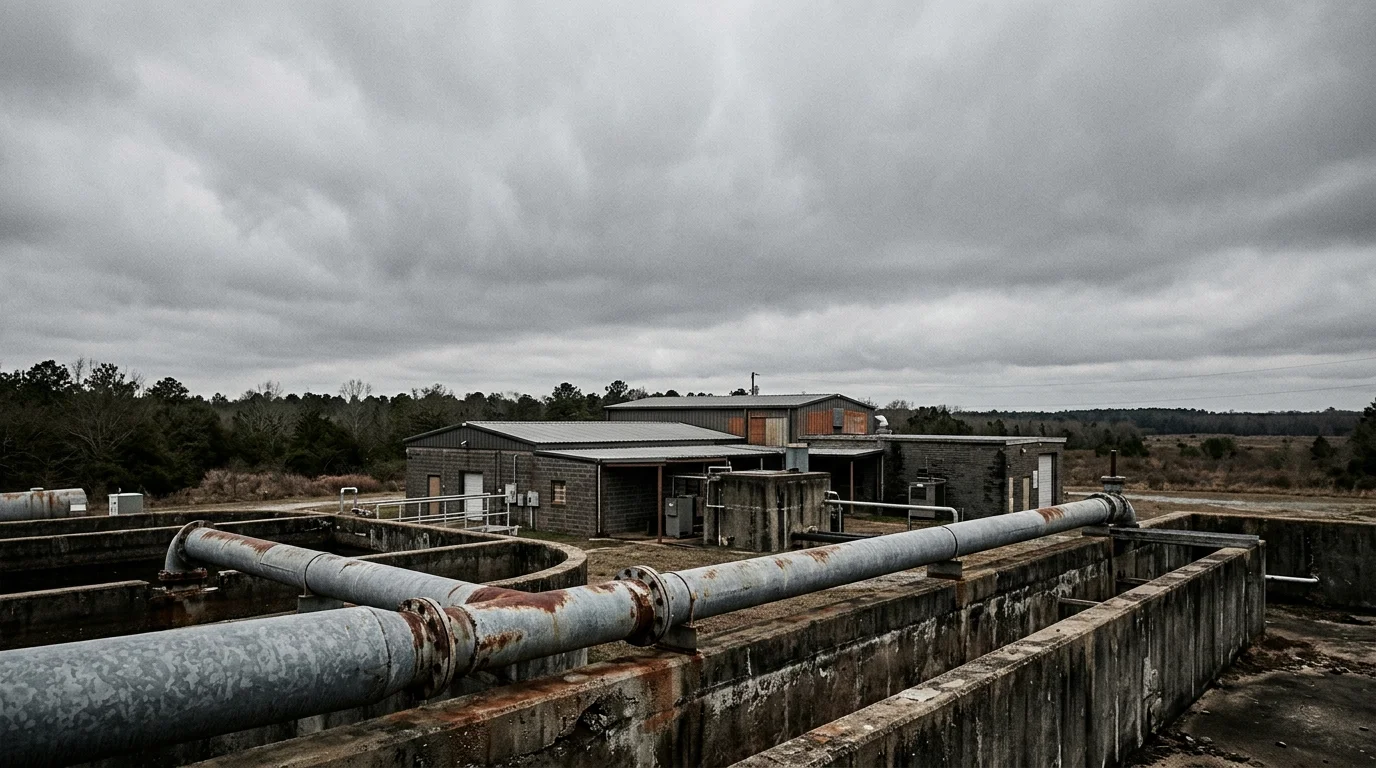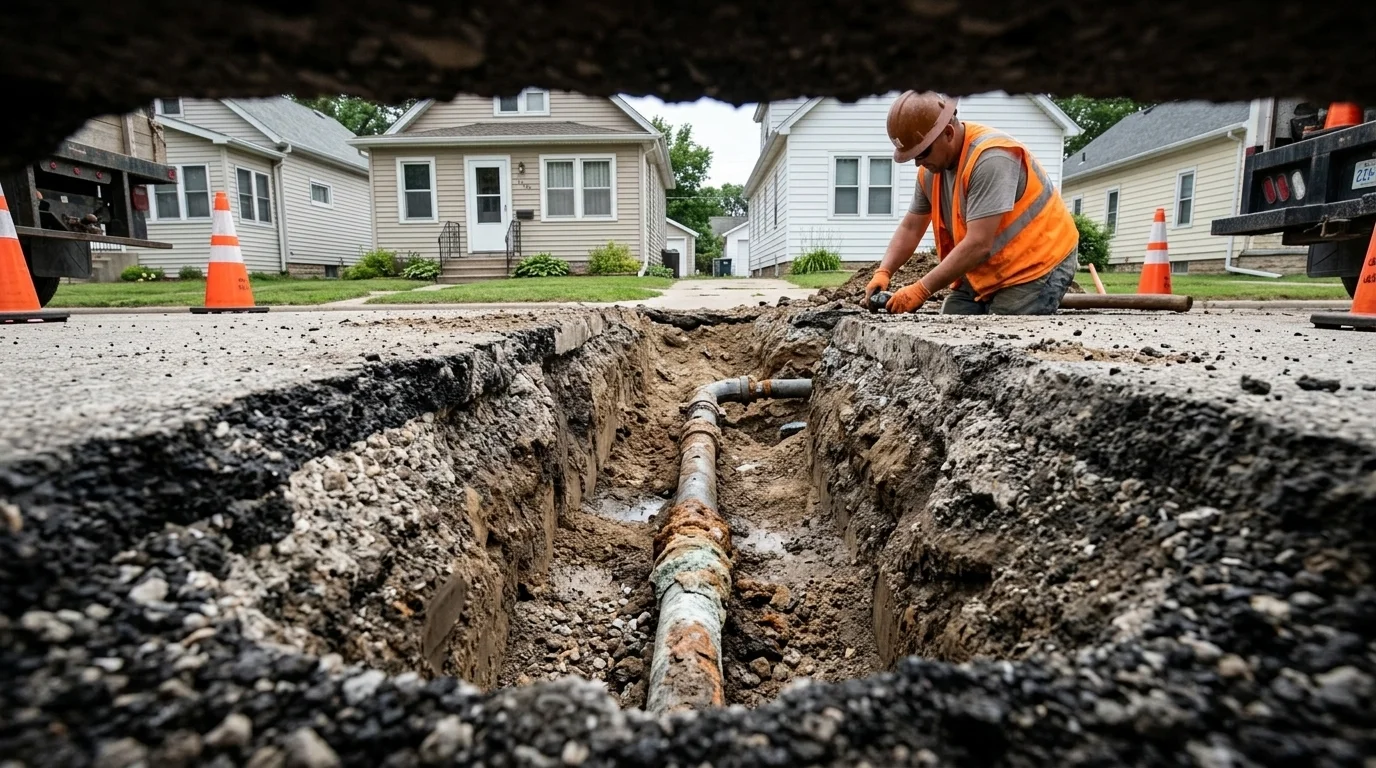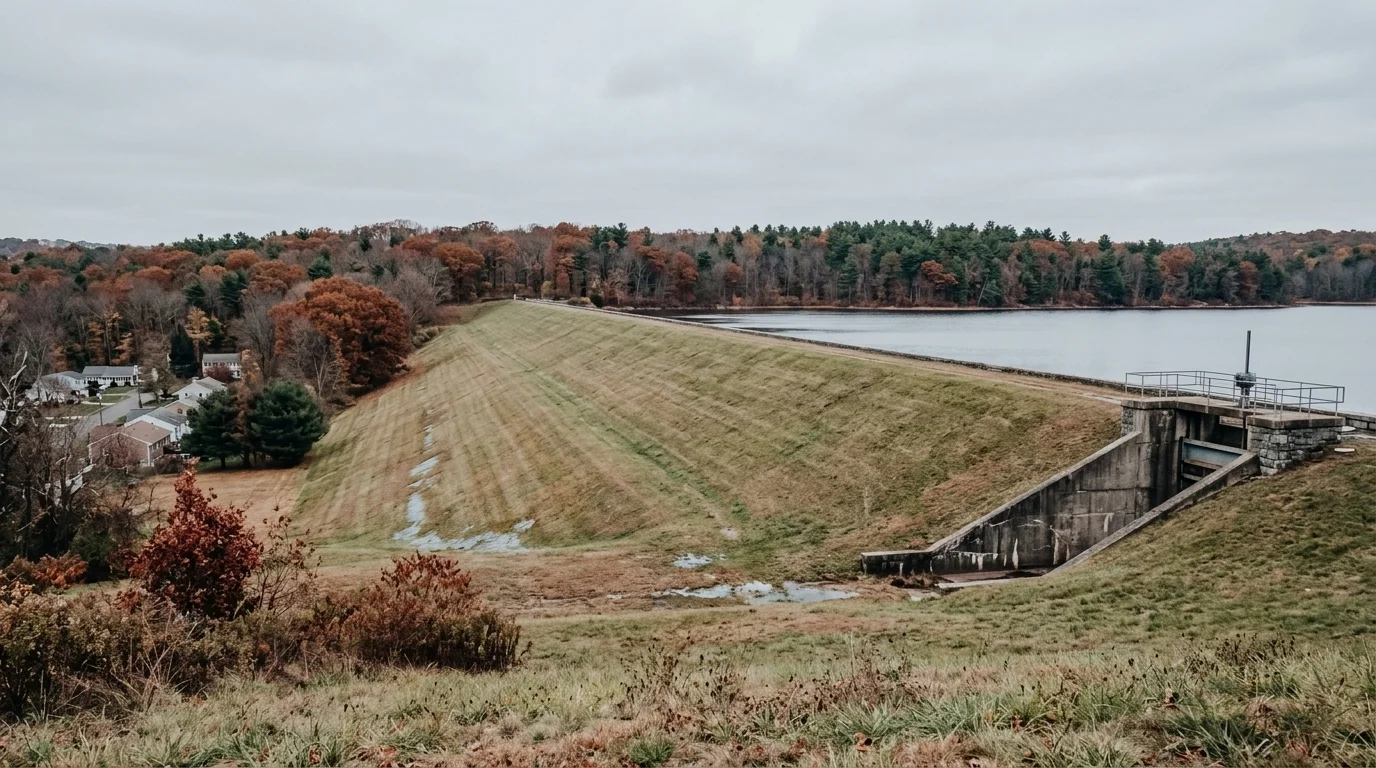
Meriden, Conn. is moving to fix a slow-moving threat at the earthen dike that holds back the Merimere Reservoir, one of the city's primary drinking water sources, before seepage through the structure can turn into something far worse.
Seepage through the face or foundation of an earthen dam is one of the most serious warning signs engineers look for. Left unchecked, it can trigger internal erosion, a process that has historically been the leading cause of embankment dam failures in the United States. The Merimere Dike sits above Hubbard Park, a Frederick Law Olmsted-designed civic landmark, and residential neighborhoods in central Meriden. A failure there would threaten the water supply for a city of roughly 60,000 people while sending a wall of water toward some of its oldest neighborhoods.
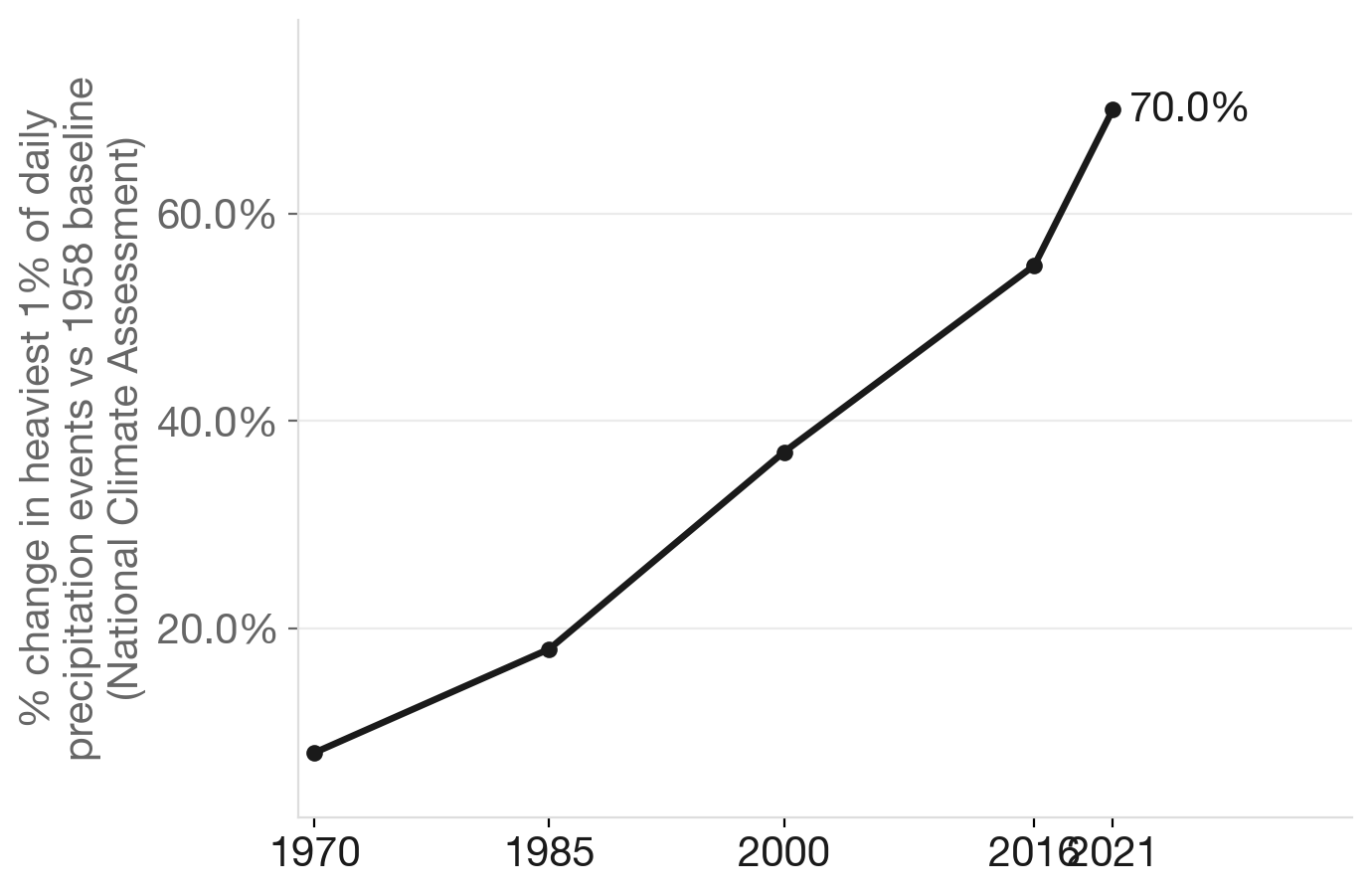
The dike, like most of Connecticut's municipal water infrastructure, dates to the late 19th or early 20th century, built at a time when heavy storms were less frequent and dam safety standards were far less rigorous. The Northeast has seen roughly a 70% increase in heavy precipitation events since the mid-20th century, according to the National Climate Assessment, stressing impoundments that were never engineered for today's storm loads. Meriden knows that risk firsthand: Tropical Storm Irene in 2011 and a deadly August 2024 storm that inundated central Connecticut have made the city a recurring example of what aging infrastructure faces in a wetter climate.
Source: NationGraph.
Meriden has spent years earning national recognition for its Harbor Brook flood control project, which transformed a downtown flooding crisis into an award-winning climate resilience model. That work addressed the low-lying bowl at the city's center. The Merimere project turns attention upstream, to the ridgeline infrastructure that shapes what flows down.
Because Meriden operates its own water utility rather than contracting with a regional authority, the costs of dam maintenance fall on city ratepayers and the general fund, a significant burden for a municipality with a constrained budget. Connecticut's 2013 dam safety law overhauled inspection schedules and tightened requirements for high- and significant-hazard structures, and federal infrastructure funding through FEMA's High Hazard Potential Dam grant program has helped municipalities like Meriden take on projects they might otherwise defer.
The city has posted the project on its procurement portal as it seeks an engineering contractor to design and carry out the seepage control work. Engineering interventions for this type of problem typically involve cutoff walls, drainage systems or grouting, depending on where and how water is moving through the structure.
No timeline for construction has been announced. The contractor selection process is the first step toward determining both the scope of the fix and when work can begin.