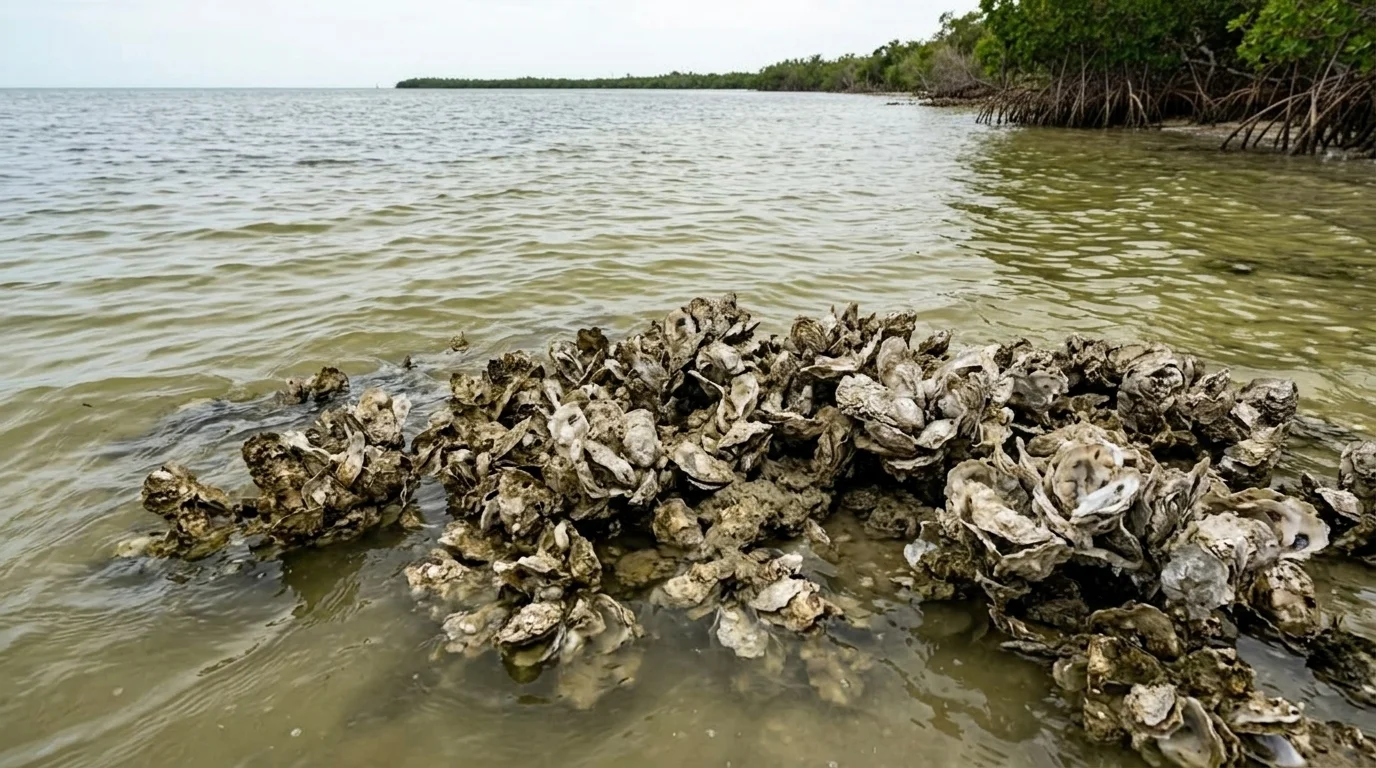
Manatee County, Florida is moving to restore oyster reefs along its battered coastline, betting on one of nature's most efficient water filters to help reverse years of damage from pollution, harmful algal blooms, and back-to-back hurricanes.
The county has posted a solicitation for contractors to carry out the restoration work, which typically involves deploying shell or reef material and seeding it with young oysters to rebuild functioning reefs. The specific reef locations and project budget were not detailed in the public posting; the full scope is available through the county's procurement portal.
The timing reflects years of compounding coastal stress. In 2021, a breach at the Piney Point phosphate plant sent 215 million gallons of contaminated wastewater into Tampa Bay, triggering algal blooms and widespread fish kills. Red tide events have repeatedly closed beaches and devastated marine life across the region. Then Hurricanes Helene and Milton tore through in 2024, battering the county's barrier islands and accelerating erosion along the shoreline.
Source: NationGraph.
Oysters are central to the recovery plan because they do double duty. A single adult oyster filters up to 50 gallons of water per day, stripping out the excess nutrients that feed algal blooms. The reefs themselves buffer shorelines from wave energy, providing natural storm protection that gained political appeal in Manatee County after the 2024 hurricane season.
Florida's oyster populations have collapsed by an estimated 85 to 90 percent from historical levels, a loss driven by coastal development, agricultural runoff, water management changes, and warming Gulf temperatures. The 2012 collapse of Apalachicola Bay's oyster fishery, which once produced 90 percent of Florida's oysters, helped galvanize a wave of restoration funding that has since flowed through NOAA grants, the RESTORE Act, and Florida's Resilient Florida Program.
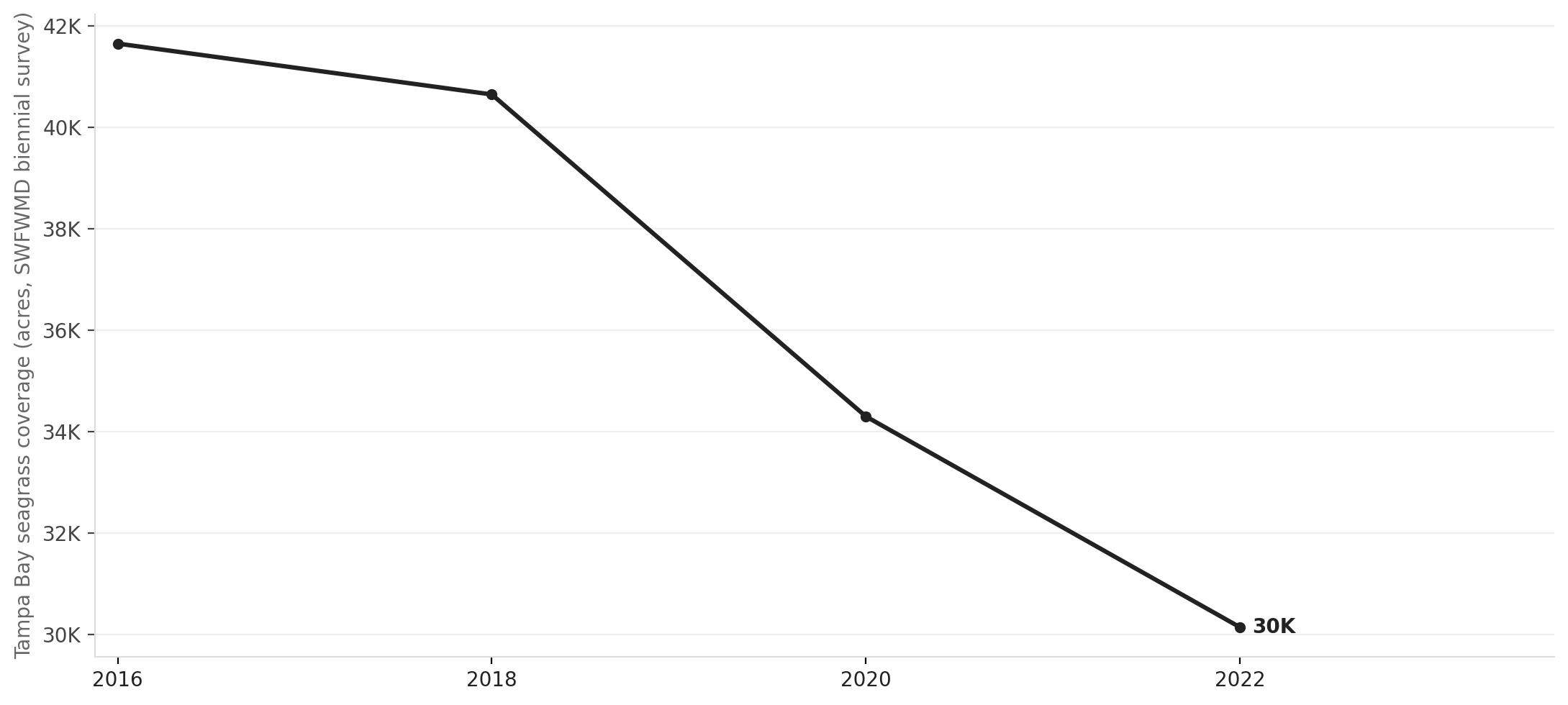
Manatee County (population roughly 440,000) is one of Florida's fastest-growing counties, and its economy depends heavily on coastal tourism, fishing, and waterfront real estate, all of which suffer when the water turns green or red. Tampa Bay's seagrass acreage hit a 25-year low in 2022, another sign of an ecosystem under sustained pressure.
The county's Parks and Natural Resources Department is expected to oversee the project. No timeline for contractor selection or construction has been publicly announced.