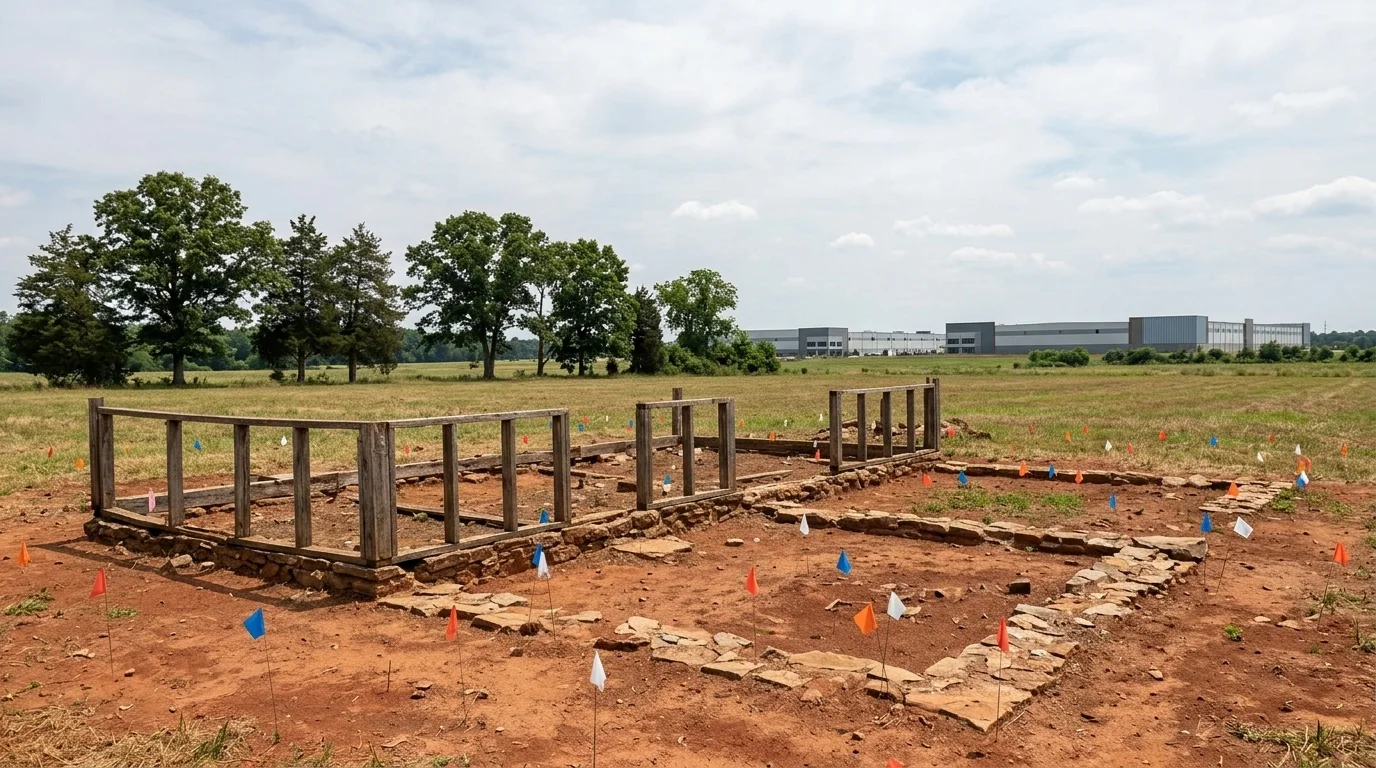
Loudoun County, Virginia is moving to physically reconstruct the quarters where enslaved people lived at the historic Arcola site, a project that puts public dollars behind a years-long effort to make the county's antebellum past visible in a landscape rapidly being reshaped by data centers and subdivisions.
The county has posted a solicitation for construction of the Arcola Quarters for the Enslaved, seeking a contractor to build the interpretive structures. The project name itself signals a shift in how historic preservationists talk about these spaces: "Quarters for the Enslaved" rather than the older term "slave cabins," language that centers the humanity of the people who lived there.
Arcola was tied to the Lewis family and represents one of numerous antebellum plantations across Northern Virginia where enslaved labor built the region's agricultural wealth. The site sits in the Dulles-adjacent development corridor, making it a rare surviving piece of that landscape amid warehouses and server farms. The county's median household income now exceeds $170,000, and its population has more than doubled since 2000, burying much of that history under new construction.
The construction phase follows years of archaeological work, descendant community engagement, and design planning. Loudoun is following a model established at places like Monticello, Montpelier and Whitney Plantation in Louisiana, which have moved in recent years to physically reconstruct and interpret enslaved quarters rather than treating them as secondary to the main house narrative. Those projects have set a new standard in public history, though Montpelier's effort drew controversy in 2022 when descendants clashed with the foundation board over governance, a cautionary note for how such work is managed.
The project comes against a politically charged backdrop. Loudoun County removed a Confederate statue from outside its historic courthouse in 2020 and established a committee to address its slavery history the same year. But the county has also been a national flashpoint over how race and history are taught in public schools, with debates that drew intense national attention in 2021 and 2022. Building a physical monument to the lives of the enslaved, in one of America's most contested suburbs, is a tangible test of how far that reckoning extends.
The county has not disclosed the project budget or a completion timeline in the public-facing solicitation materials. Those details are expected to become clearer as contractor selection moves forward.