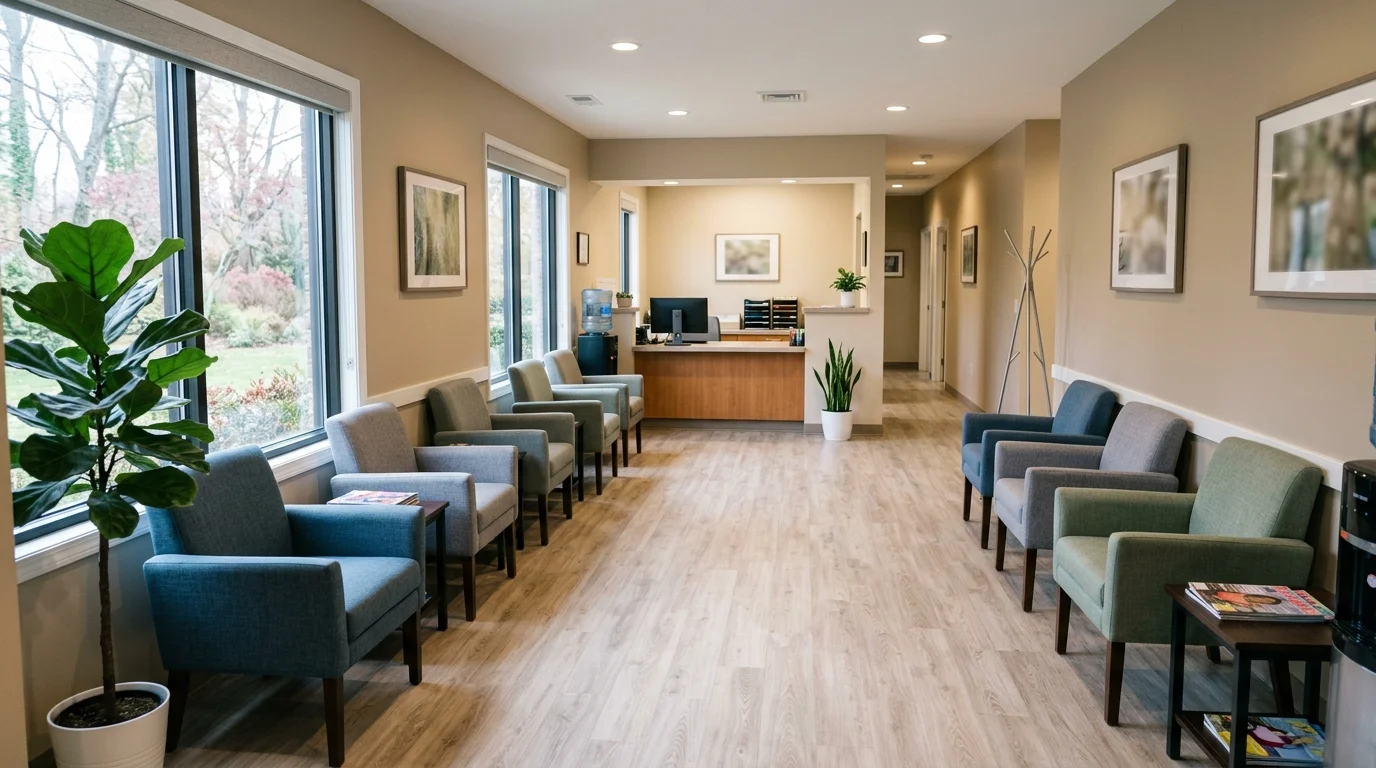
Jackson County, Oregon is moving to build a 23-hour crisis stabilization center, a walk-in and drop-off psychiatric facility designed to give people in mental health emergencies somewhere to go besides a hospital emergency room or a jail cell.
The Rogue Valley has long relied on both by default. Asante Rogue Regional Medical Center in Medford, the region's main ER, has publicly flagged the burden of behavioral health patients who have nowhere else to go. Sheriff Nate Sickler has made similar complaints about the county jail. The problem is not unique to Jackson County, but the region has been hit unusually hard: the 2020 Almeda Fire destroyed roughly 2,500 homes in Talent and Phoenix and deepened housing instability throughout the valley, a fentanyl wave drove up overdoses and visible homelessness in Medford and Ashland, and the county carries one of Oregon's higher suicide rates.
At the state level, the pressure has only grown. Oregon has ranked at or near the bottom of national mental health access rankings for years, even as it spends heavily per capita. Oregon State Hospital, the primary destination for the most acute psychiatric patients, has been operating under a federal court order requiring faster admissions of criminal defendants, which has crowded out space for civil commitments and pushed more people back onto local resources. The 2020 passage of Measure 110, which decriminalized drug possession and directed cannabis tax revenue toward treatment, raised hopes that the infrastructure might catch up, but implementation stumbled and the legislature partially reversed course in 2024, recriminalizing possession while preserving the treatment funding structure.
The 23-hour stabilization model Jackson County is now pursuing is the national standard for filling the gap. Patients arrive by foot, by police car or by ambulance, receive medication, peer support and short-term therapy, and are either discharged to outpatient care or referred for inpatient treatment, all without triggering a formal involuntary hold or an ER admission. The model follows the Crisis Now framework developed in Maricopa County, Ariz., and aligns with the federal 988 Suicide and Crisis Lifeline rollout, which calls on every community to build out this kind of facility as the physical anchor of a local crisis response system.
Rather than run the center itself, the county is seeking an outside behavioral health organization to operate it, a structure that typically draws bids from established community providers. Options for Southern Oregon and Trillium Family Services are among the regional organizations that could pursue the contract. Specific details including capacity, site location and funding amounts are not listed in the public notice but would be available in the full bid documents, which the county has posted on its procurement portal.
How well the center performs will carry real political weight. Local officials and state lawmakers have staked significant credibility on the argument that community-based treatment infrastructure, amid ongoing debates over criminalization, can actually reduce the volume of mentally ill people cycling through jails and emergency departments. Jackson County's new facility will be an early and closely watched test of that proposition.