Grand Isle, Louisiana's only inhabited barrier island, is moving to rebuild more than a mile of rock breakwaters that Hurricane Ida ripped apart nearly five years ago, a milestone in a recovery that has tested the patience of a community still piecing itself back together.
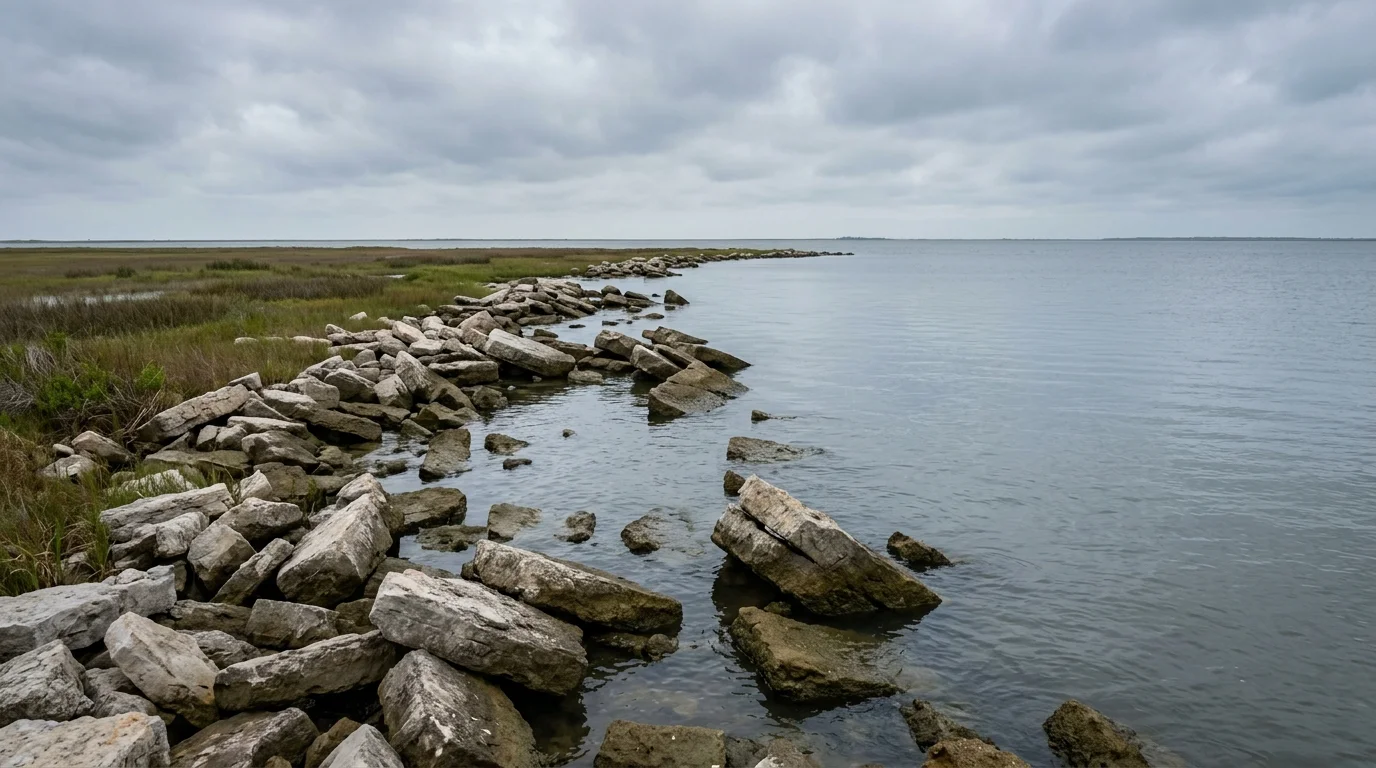
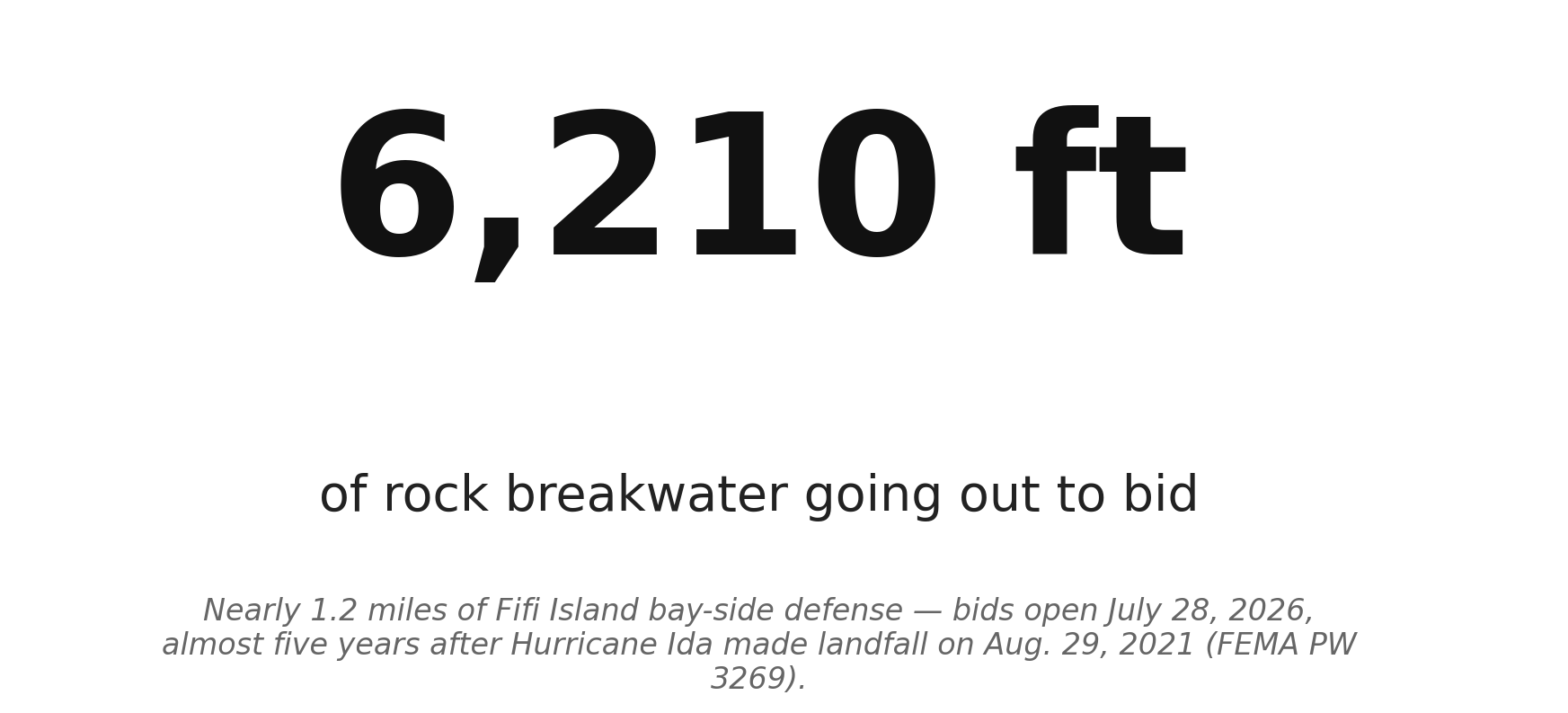
The Grand Isle Independent Levee District is seeking contractors to rehabilitate three damaged rock breakwater segments at Fifi Island on the bay side of Grand Isle, totaling roughly 6,210 linear feet. The work, funded through FEMA's Public Assistance program (Project Worksheet PW 3269), would restore the structures to an elevation of +6.0 ft NAVD 88. The project notice is posted through Louisiana Public Notice.
The breakwaters are not decorative. They absorb wave energy coming off Barataria Bay, protecting the wetlands and marsh that buffer Grand Isle's homes and Highway 1, the single road connecting the island to the mainland. When Ida made landfall as a Category 4 storm on Aug. 29, 2021, with 150 mph winds, it scattered and subsided these structures while destroying or damaging every building on the island. Mayor David Camardelle, who also serves as president of the levee district and signed the bid notice, declared Grand Isle uninhabitable in the storm's immediate aftermath. Roughly 700 of the island's 2,400 homes were destroyed outright.
Source: NationGraph.
That the bid is going out nearly five years after landfall is not unusual for post-disaster Louisiana. FEMA's Public Assistance program, which reimburses local governments for repairing damaged public infrastructure, has generated more than $3 billion in obligations from Ida statewide, but environmental permitting, engineering reviews and contractor availability have routinely pushed actual construction three to five years behind the disaster.
The delay matters because Grand Isle's defenses don't hold still while paperwork moves. Louisiana loses roughly a football field of coastline every 100 minutes, and the Gulf Coast is experiencing some of the fastest rates of relative sea-level rise in the world, driven by both land subsidence and climate change. Coastal scientists have identified Grand Isle as one of the most vulnerable communities in North America. The broader state strategy for defending it sits inside Louisiana's $50 billion Coastal Master Plan, though that framework took a hit in 2024 when Gov. Jeff Landry paused the Mid-Barataria Sediment Diversion, a major sediment-restoration project in the same region.
The island's permanent population, once around 1,400, has dropped to somewhere between 700 and 1,000 since Ida. In summer, tens of thousands of visitors arrive for fishing, including the annual Grand Isle Tarpon Rodeo, making the community's economic survival intertwined with whether its shorelines hold.
Restoring the Fifi Island breakwaters is a defensive measure, not a permanent fix. But for a town that has been waiting years for even that, it marks progress.