
Georgia is moving to bring one of its state-run veterans nursing homes into compliance with federal accessibility standards, beginning renovations at the Vinson-Wheeler War Veterans Home that advocates say are long overdue for a facility serving elderly and disabled veterans.
The Vinson-Wheeler home is part of Georgia's small network of state-operated long-term care facilities for honorably discharged veterans. Like many such facilities across the country, it was built or last substantially renovated before the Americans with Disabilities Act took effect in 1990, leaving accessibility gaps that have compounded over decades. The renovation work is being coordinated through Georgia's state purchasing system.
The timing reflects real urgency. Vietnam-era veterans are now in their mid-to-late 70s on average, and many residents of state veterans' homes have service-connected disabilities or age-related mobility limitations that make inaccessible facilities a daily obstacle. The 2022 PACT Act, which expanded VA healthcare eligibility for veterans exposed to burn pits and other toxins, is also pushing more veterans toward long-term care, increasing pressure on states to modernize aging facilities.
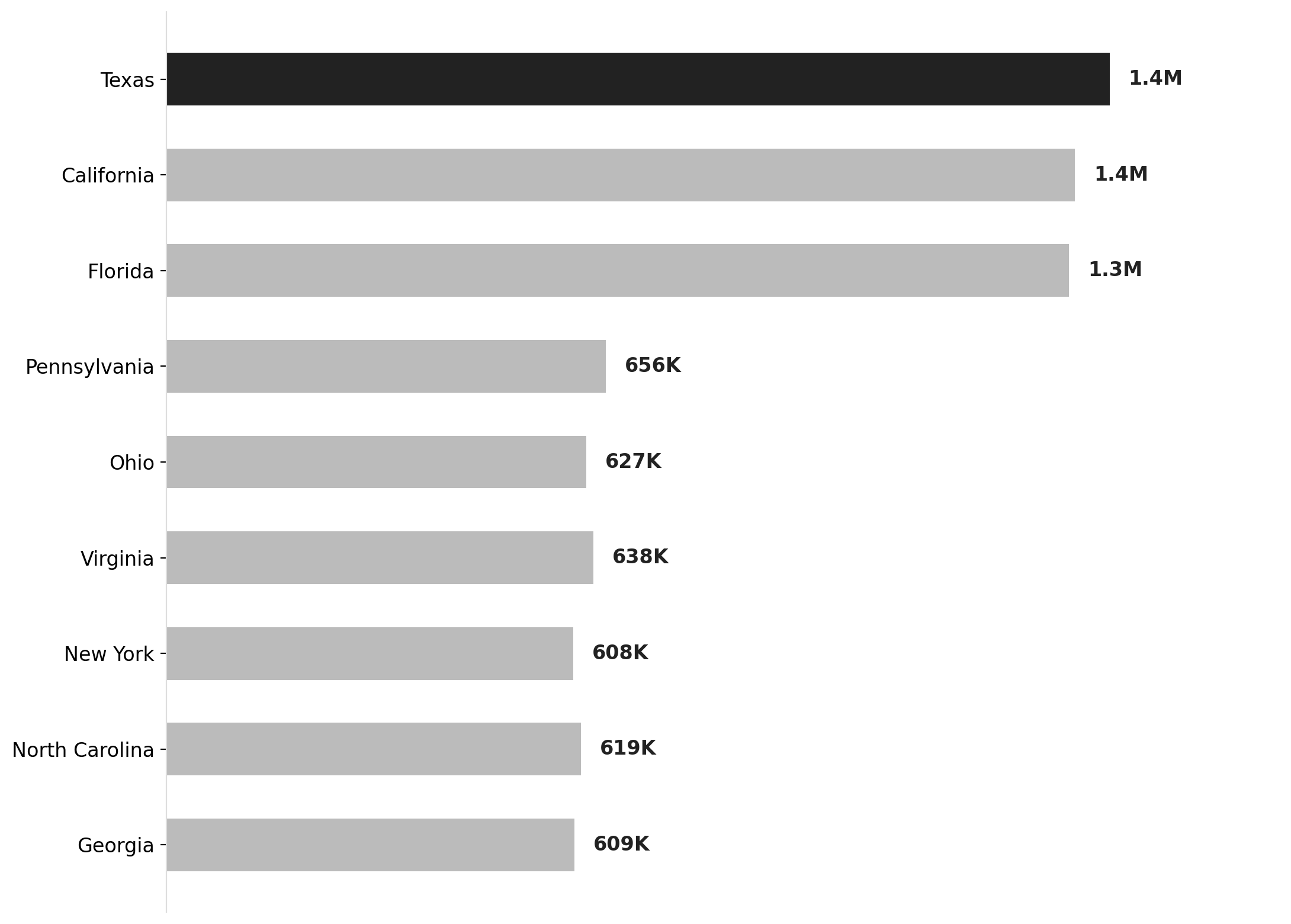
Source: U.S. Census Bureau, American Community Survey.
Federal dollars may help cover much of the cost. The VA's State Home Construction Grant Program can reimburse states up to 65% of renovation expenses, and ADA compliance projects tend to score well on the VA's priority list.
But the renovation also draws renewed attention to something that has long struck veterans advocates and state legislators as odd: in Georgia, it is the Department of Corrections, not a veterans' affairs or public health agency, that oversees these nursing homes. Georgia is one of a small number of states that has placed veterans' home administration under a corrections-focused agency, an arrangement that critics argue creates a mismatch between institutional culture and the healthcare mission. The Georgia chapter of the American Legion and other advocacy groups have raised the question repeatedly, and state legislators have introduced bills over the years to shift oversight to the Georgia Department of Veterans Service, without success.
The arrangement drew sharper scrutiny during the COVID-19 pandemic, when Georgia's War Veterans Home in Milledgeville experienced significant outbreaks amid reports of staffing shortages, mirroring problems seen at veterans' facilities nationwide.
Georgia is home to roughly 680,000 veterans, the ninth-largest veteran population in the country. Whether the state uses this renovation project as a moment to revisit who should be running care for those veterans remains an open question in the legislature.