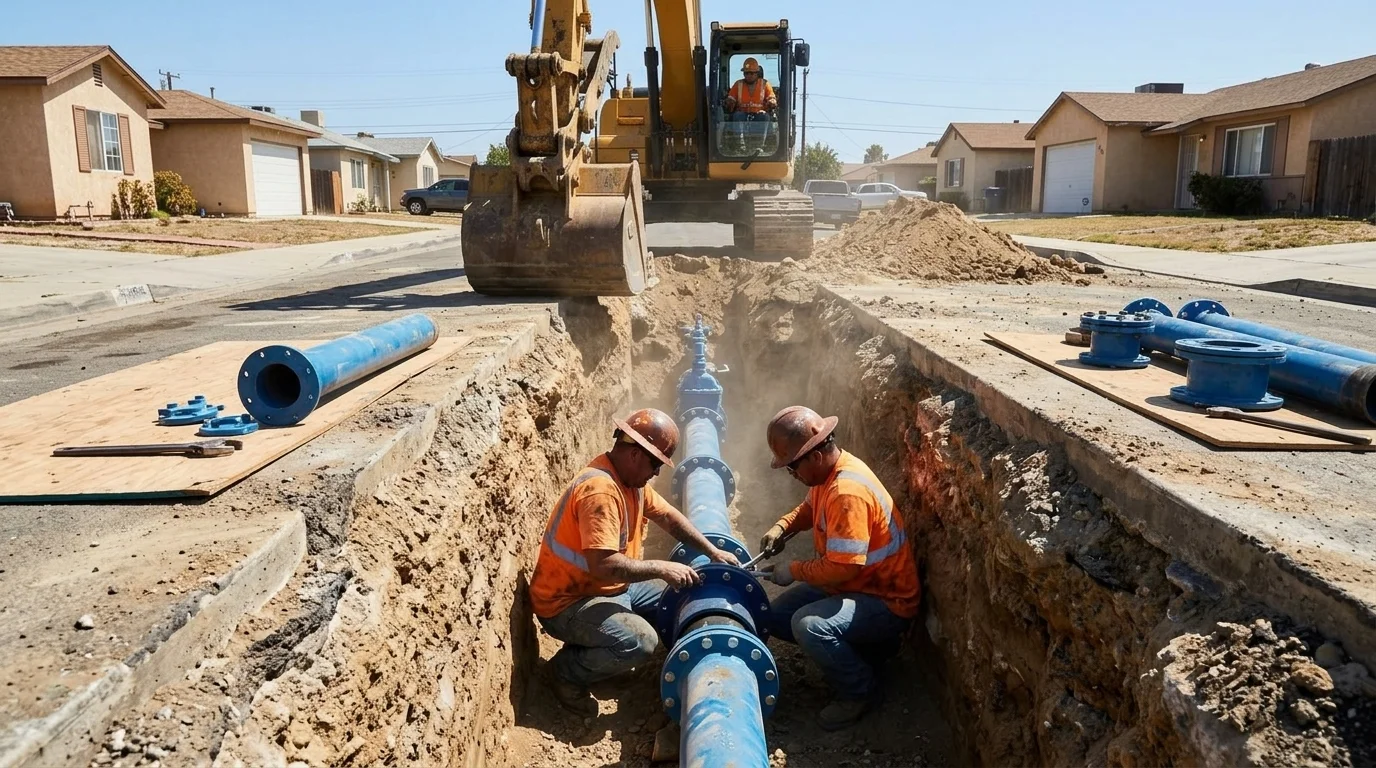
Nine California water agencies issued their first infrastructure procurement documents in more than a year during the past 30 days alone, a figure that stood at zero in the same window a year ago. The institutions span city utilities, a school district, a regional water district, and state-level agencies, and they share one forcing function: September 30, 2026 is the last day of the Bipartisan Infrastructure Law's supplemental State Revolving Fund appropriations, and any project not on California's fundable list before that date will miss a funding era that analysts say will not return.
The scale of what expires is significant. The IIJA roughly quadrupled annual federal water infrastructure investment, from approximately $2.7 billion to $11.4 billion nationally. Bluefield Research projects that after the supplemental appropriations lapse, federal water funding will fall about 63 percent, from $23.4 billion in FY2026 to $8.6 billion in FY2027. California, the largest SRF borrower in the country by program volume, stands to feel that contraction acutely. The California Water Resources Control Board's draft FY2026-27 CWSRF Intended Use Plan names the $177.9 million FFY2026 Clean Water SRF allotment explicitly as "the final year of IIJA funding." The parallel Drinking Water SRF cycle carries a $131.6 million principal forgiveness pool reserved for disadvantaged communities, but only for projects already on the state's approved fundable list.
That principal forgiveness component is what's actually driving the sprint. Under the IIJA supplemental rules, 49 percent of each Clean Water SRF tranche must be issued as principal forgiveness, meaning a substantial share of what flows through Sacramento is effectively a grant, not a loan. Once the supplemental authority expires, that forgiveness requirement disappears with it, and agencies revert to the traditional loan-only SRF structure. The agencies issuing RFPs right now are not simply planning projects; they are racing to clear the procurement threshold that qualifies them for inclusion on the state's Intended Use Plan fundable list before the window closes.
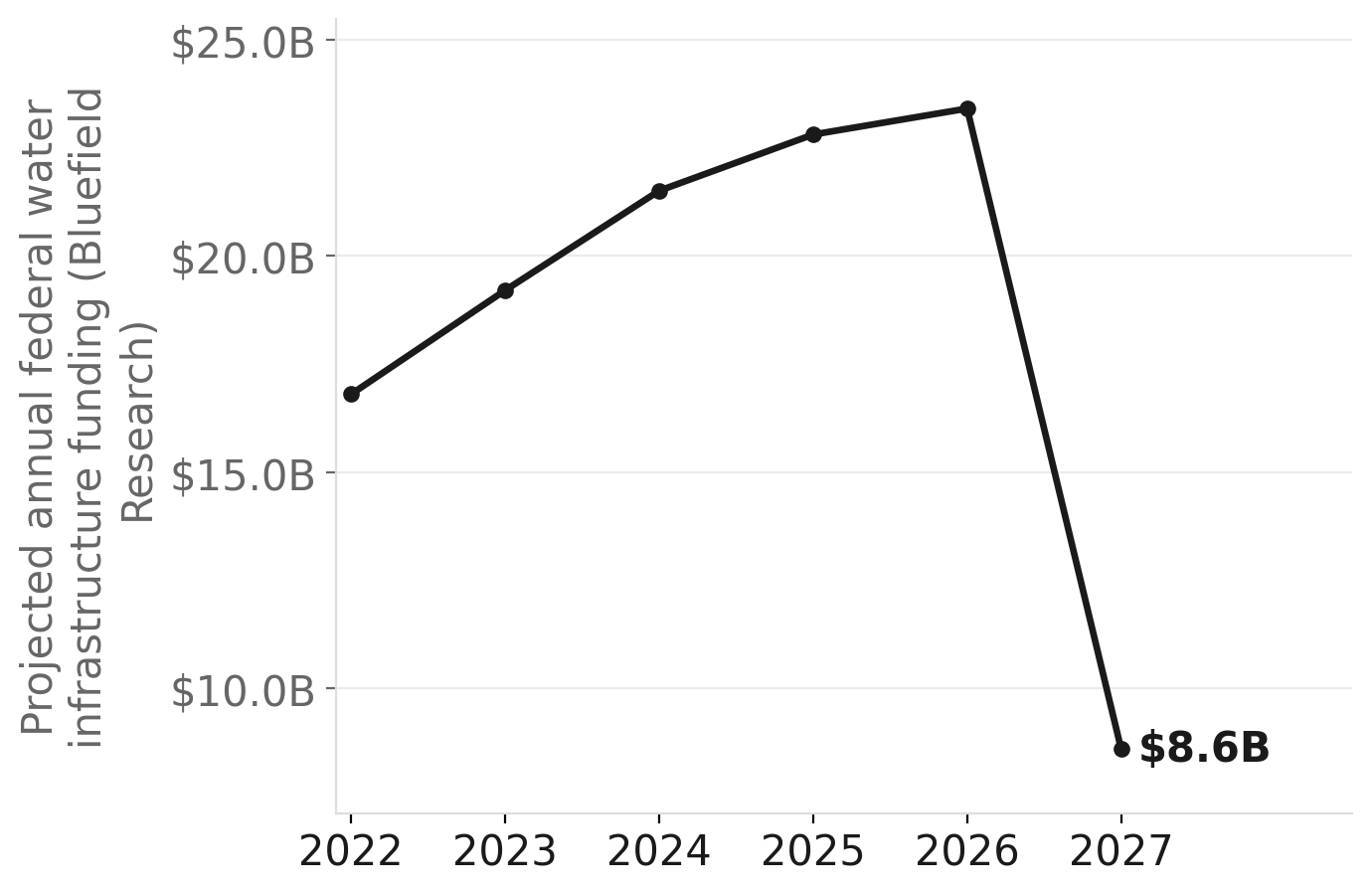
Source: NationGraph.
The breadth of institution types in this 30-day burst signals the urgency is not confined to any single sector. Santa Maria's water utility is procuring a comprehensive master plan covering roughly 345 miles of distribution mains. South Coast Water District is updating its full infrastructure master plan. The City of Soledad is rolling out approximately 3,500 smart meters under an AMI program. Pasadena, a city of 133,000, is moving on plumbing infrastructure rehabilitation. Anaheim Union High School District is procuring design and construction for two athletic field stormwater projects under the Clean Water SRF's nonpoint source eligibility. A pre-qualification RFP out of the Anaheim area covers water system construction work stretching from 2027 through 2032, which reads less like a one-off project and more like a utility locking in a contractor pipeline before federal leverage disappears.
That diversity matters. Cities, school districts, special districts, and state agencies are all responding to the same federal clock, which is what you'd expect when the underlying incentive is a hard appropriations expiry rather than a discretionary grant competition. The National League of Cities has publicly urged local agencies to finalize projects now to capture last-cycle principal forgiveness before the deadline, and California's State Water Board is actively disbursing both the CWSRF and DWSRF final tranches.
It is worth being precise about what's on the table. The IIJA-SRF federal grants flowing through the State Water Board are distinct from two other funding sources California layers on top: voter-approved state drinking water bonds administered since 2014, and a $224.9 million Greenhouse Gas Reduction Fund appropriation allocated to the State Water Board through the 2024 Budget Act, of which up to $151 million is available for drinking water project grants with an encumbrance deadline of June 30, 2027. Those state sources provide some cushion, but they have different eligibility rules, separate application cycles, and their own deadlines. Agencies that miss the federal SRF window cannot simply substitute state bond dollars for principal forgiveness grants on the same project.
There is also a PFAS dimension adding urgency in the drinking water channel. The DWSRF Intended Use Plan lists between $222 million and $265 million available for PFAS and emerging contaminants projects, a category that gained new regulatory weight following EPA's 2024 maximum contaminant level rulemaking for PFAS. Utilities with PFAS compliance obligations have a compounding reason to move now: the federal funding and the compliance clock are running in parallel.
What to watch next: California's State Water Board is expected to finalize both the FY2026-27 CWSRF and DWSRF Intended Use Plans and publish updated fundable lists this fall. Agencies that have issued RFPs in the past 30 days but have not yet secured board authorization or environmental clearance face a narrow path to meeting the September 30 federal appropriations deadline. The next signal will be how many of these nine procurement actions convert into signed loan agreements or principal forgiveness commitments before the clock runs out.