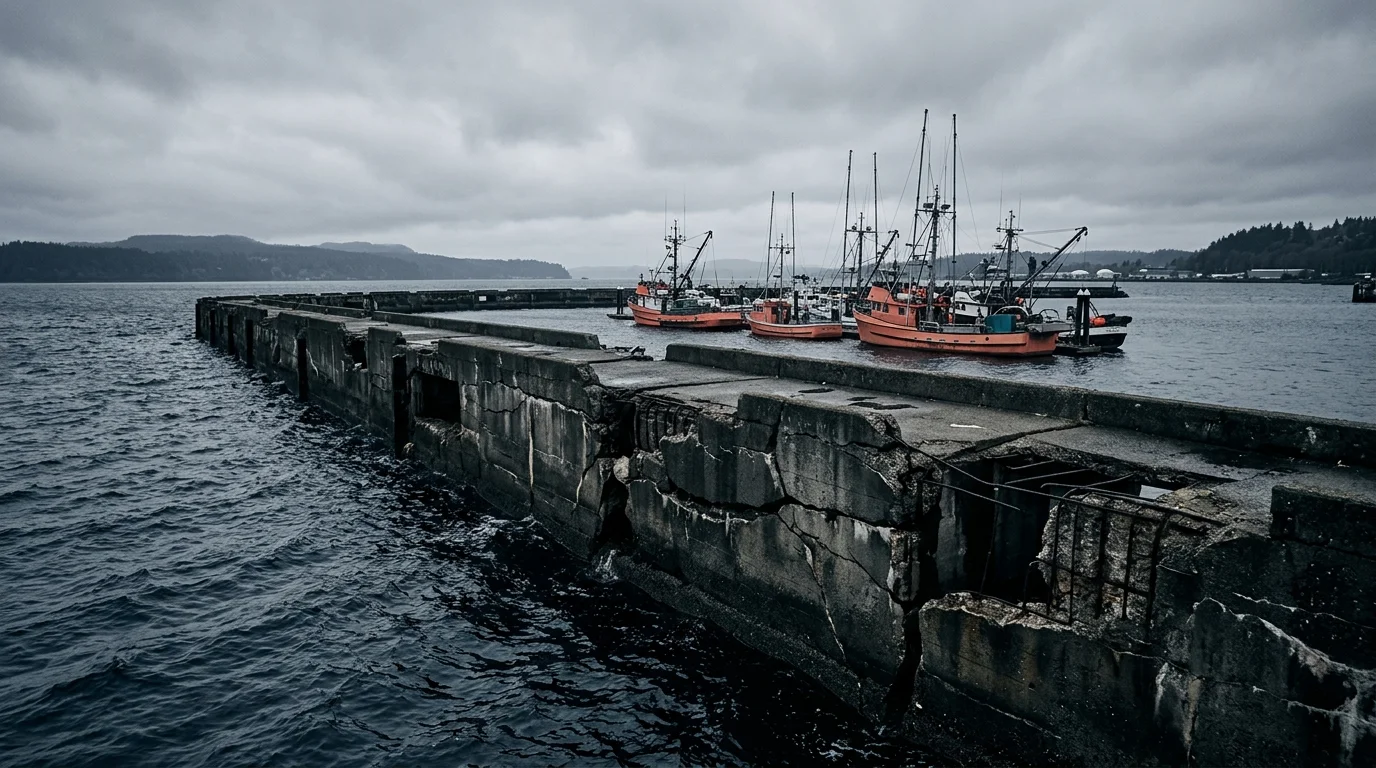
A crumbling 1,500-foot breakwater at the Port of Bremerton, Washington, is on borrowed time. Built nearly five decades ago, the structure protects tribal fishing vessels and public moorage from the swells of Sinclair Inlet, a sheltered arm of Puget Sound. Without it, the harbor becomes unusable during storms, and engineers say it is now damaged and at risk of failure.
The Port of Bremerton has secured a $9.4 million federal grant through the U.S. Department of Transportation's National Infrastructure Investments program to tear out the old structure and replace it entirely. The new breakwater will be built on the same footprint with concrete floats, an upgraded mooring system with roughly 60 cable anchors, and guide piles engineered to handle extreme weather events, an increasingly important design standard as Puget Sound faces more intense storms.
For Puget Sound's tribal nations, the stakes go beyond convenience. Under the 1974 Boldt Decision, federally recognized tribes hold treaty-protected rights to half the harvestable fish in their usual fishing grounds. Tribal fishing fleets operating out of Bremerton depend on the harbor's shelter to do that work safely. The federal grant explicitly tracks tribal fishing vessel calls as a key performance metric, a reflection of Washington's unique intersection of maritime infrastructure and treaty law.
Bremerton, a city of roughly 45,000 on the Kitsap Peninsula, is best known as home to the Puget Sound Naval Shipyard. But its civilian port serves a distinct purpose, providing moorage and services to fishing vessels and transient recreational and commercial boats alike. The breakwater, now 48 years old, has outlasted its designed service life. Its replacement is expected to last another 50 years.
The project also includes electrical upgrades to provide shore power for a fully electric transit fleet, a component that aligns with Washington's aggressive clean energy policies and reduces emissions from vessels sitting idle at dock. A fire suppression system will be installed as well, bringing the facility up to modern safety standards.
Bremerton's situation reflects a broader challenge facing smaller American ports. Much of the country's harbor infrastructure was built during a burst of federal investment in the 1960s and 1970s, and those structures are now aging out simultaneously. Smaller community ports rarely compete well against major commercial hubs for limited federal dollars, but funding expanded significantly under the 2021 Bipartisan Infrastructure Law, opening new opportunities for ports like Bremerton that serve fishing fleets and local communities rather than container shipping.
Construction will follow a design and permitting phase, with the old breakwater demolished once the new structure is in place.