Boulder County, Colorado is bringing in goats to help prevent the next Marshall Fire.
The county is launching a pilot program using herds of goats to graze down invasive weeds and reduce the dry vegetation that can carry grassland fires across its more than 100,000 acres of open space. The goat browsing pilot was posted late May as the county looks to add a chemical-free tool to its land management arsenal.
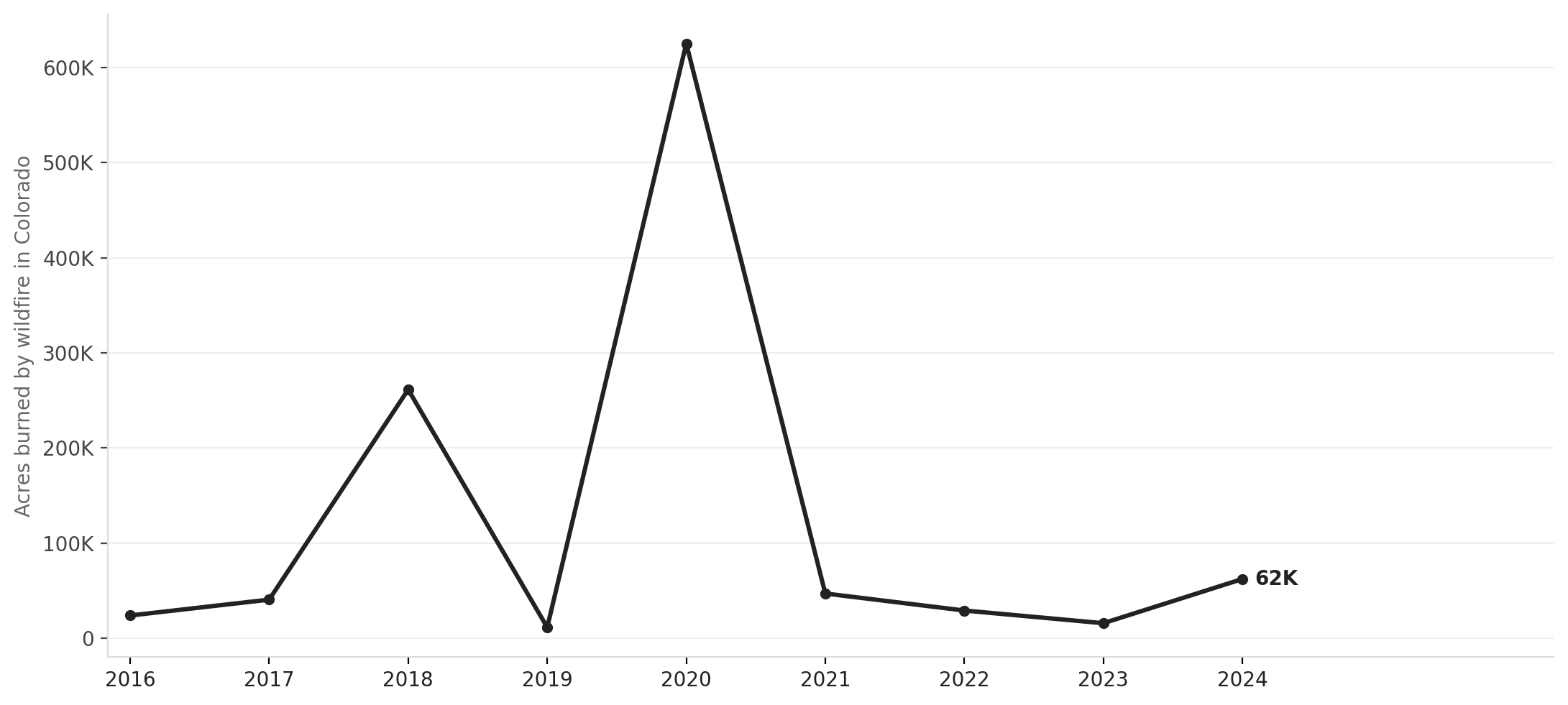
The stakes are not abstract. On December 30, 2021, the Marshall Fire swept through the suburban communities of Louisville and Superior, destroying 1,084 homes and causing roughly $2 billion in damage, all within Boulder County. Driven by drought-cured grasslands and powerful winds, it became the most destructive wildfire in Colorado history and forced a reckoning about how the county manages the open space that borders tens of thousands of homes.
Source: NationGraph
Goats address two problems at once. They preferentially eat many of Colorado's worst invasive species, including thistle, knapweed, and cheatgrass, while simultaneously cropping down the fine fuels that carry fast-moving grassland fires. Under Colorado's Noxious Weed Act, counties are legally required to manage invasive plants on their land, so the browsing program serves a regulatory obligation while also reducing fire risk.
The approach fits Boulder County's political environment in ways that other methods don't. Herbicide application has faced sustained public pressure in one of Colorado's most environmentally conscious communities. Mechanical mowing is expensive and carbon-intensive. Prescribed fire, while ecologically valuable, carries a risk profile that the Marshall Fire made politically difficult to sell to residents. Goats are effective, popular with the public, and carry no chemical controversy.
Other Western cities have taken the same path. Denver launched a goat grazing program on city parkland that became a recurring fixture, and jurisdictions across California, Nevada, and Idaho have used targeted browsing for both weed control and fire mitigation. Boulder County is framing this as a formal pilot, suggesting the county will evaluate results before deciding whether to scale it up permanently.
The county expects to select a contractor and begin work in 2026.