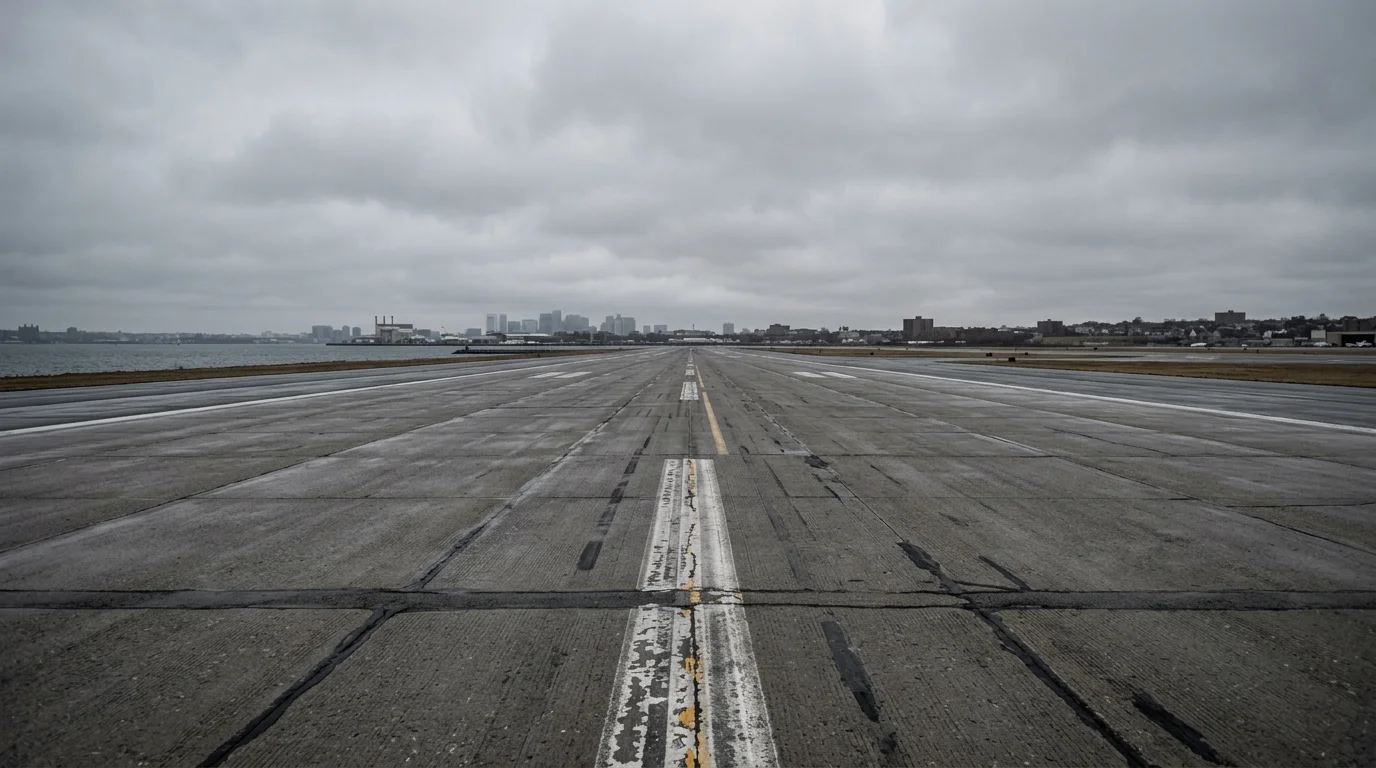
Boston Logan International Airport, which handles more than 40 million passengers a year on a patch of filled harbor land with nowhere left to grow, is moving to rehabilitate one of its six runways before the surface fails under the pressure of constant heavy use.
The Massachusetts Port Authority (MassPort) has launched the procurement process for the rehabilitation of Runway 4L-22R, the northeast-southwest oriented strip that is part of Logan's tightly choreographed runway system. Major runway surfaces typically need significant rehabilitation every 15 to 20 years, worn down by heavy aircraft, jet blast, chemical deicing, and New England's punishing freeze-thaw cycles.
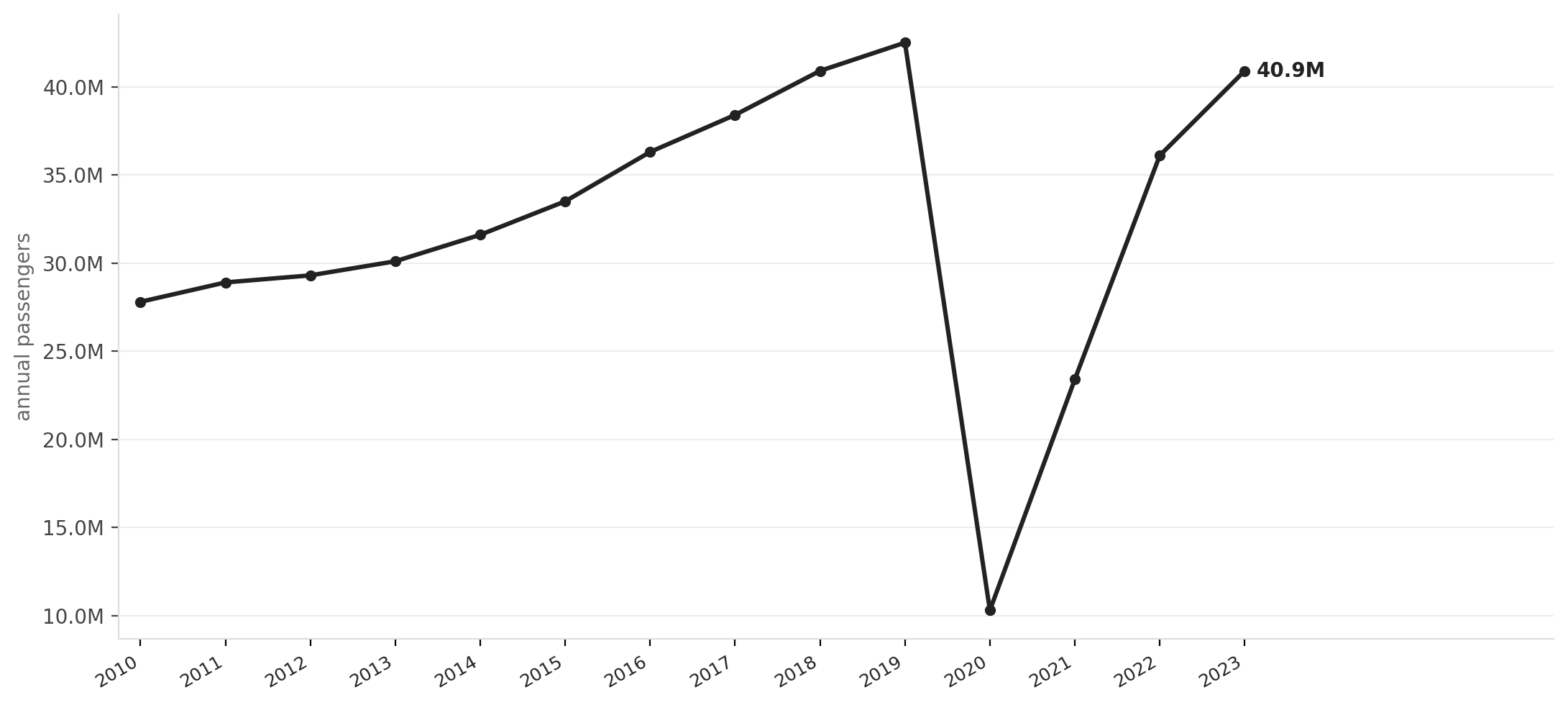
The stakes are higher at Logan than at most airports. Built on filled tidelands in Boston Harbor and surrounded by water and dense neighborhoods on all sides, Logan cannot build new runways or meaningfully expand. That means every existing runway has to keep working. The airport served roughly 40.9 million passengers in 2023, approaching its pre-pandemic record, and traffic is still climbing.
Source: NationGraph.
Taking any runway out of service for repairs creates real disruption. Logan's six runways are already operating near capacity, and the airport's configuration must constantly balance available landing paths with wind conditions and noise abatement commitments to the surrounding communities of East Boston, Winthrop, and others that sit directly under flight paths. Even a rehabilitation project that doesn't change a runway's footprint draws scrutiny from neighborhood groups over construction timelines and temporary shifts in flight patterns.
MassPort is a quasi-independent state authority that funds most capital work through its own revenue bonds and airline fees rather than the state budget, though federal Airport Improvement Program grants, expanded under the 2021 Bipartisan Infrastructure Law, help cover airfield projects like this one. The authority's overall capital program runs in the range of $2 to $3 billion, one of the largest of any U.S. airport authority. Recent projects have included a major expansion of the Terminal E international gateway, completed in phases through 2024.
As New England's only major hub, Logan's ability to reliably connect the region to the rest of the country carries outsized economic weight. A contractor has yet to be selected, and MassPort has not publicly announced a construction timeline or project cost for the runway work.